
Choosing the right pool equipment is an important step in building, upgrading, or maintaining a swimming pool. The quality of the equipment affects water circulation, filtration, heating, energy consumption, and overall maintenance requirements. With many manufacturers offering different products and technologies, comparing available options carefully can help pool owners, contractors, and commercial facility managers make informed decisions.
Rather than focusing only on price, it is important to evaluate product quality, technical specifications, compatibility, energy efficiency, and long-term support. A systematic comparison helps identify equipment that meets the pool’s requirements while providing reliable performance over time.
1. Assess Product Quality and Durability
Product quality should be one of the first considerations when comparing pool equipment manufacturers. Pumps, filters, heaters, chlorination systems, and control units operate under demanding conditions involving moisture, chemicals, pressure, and temperature changes. Poorly constructed equipment may experience premature wear, leading to repairs and unexpected expenses.
Examine the materials used in manufacturing, the quality of internal components, and the equipment’s resistance to corrosion. For example, pumps should be designed to withstand regular operation, while filters should maintain their structural integrity under normal working pressure.
It is also useful to review product specifications, independent testing information, and applicable industry certifications. These details provide a clearer understanding of how equipment is designed and whether it meets relevant safety and performance requirements.
2. Compare Energy Efficiency
Energy consumption is a significant factor in swimming pool operating costs. Pumps, heaters, and automated systems can account for a substantial portion of the electricity used to maintain a pool, especially in commercial facilities that operate for extended periods.
When evaluating manufacturers, compare the energy performance of similar products rather than relying solely on general efficiency claims. Variable-speed pumps, efficient heating systems, and intelligent control technologies can help reduce unnecessary energy use when properly selected and configured.
Consider the following factors:
- Pump efficiency: Compare power consumption at different flow rates and operating speeds.
- Heating performance: Review efficiency ratings and suitability for the local climate.
- Automation: Determine whether the system can coordinate filtration, heating, and circulation schedules.
- Operating requirements: Estimate energy use based on the pool’s size, usage patterns, and circulation needs.
A product with a higher purchase price may offer better long-term value if it reduces energy consumption throughout its service life.
3. Review the Range of Available Products
Different swimming pools have different technical requirements. A residential pool may need a relatively simple circulation and filtration system, while a hotel, fitness center, or aquatic facility may require higher-capacity equipment and more advanced controls.
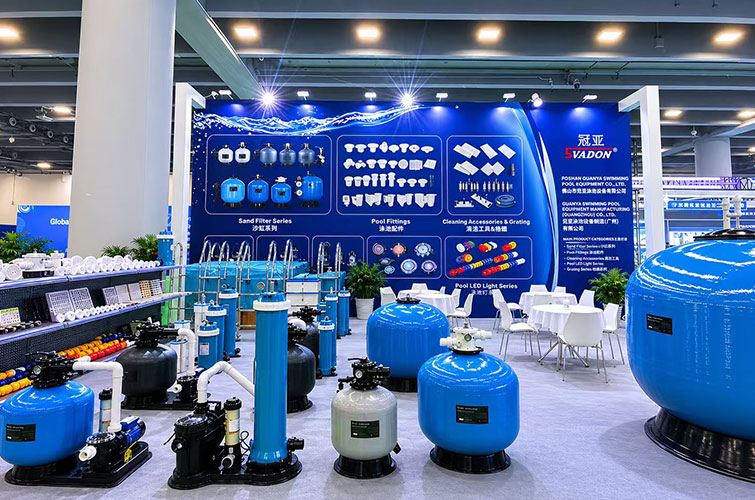
A manufacturer with a suitable range of products can make it easier to select equipment that meets the specific needs of a project. Check whether its catalog includes pumps, filtration systems, heating solutions, water treatment equipment, accessories, and automation components relevant to the installation.
However, a large catalog does not automatically indicate superior quality. Focus on whether the available products meet the required flow rates, filtration capacity, water chemistry needs, and operating conditions.
For larger projects, also consider whether the manufacturer provides technical documentation that helps engineers and contractors coordinate the different components.
4. Evaluate Technical Specifications and Performance
Technical specifications allow buyers to compare equipment objectively. Two products may appear similar but perform differently because of variations in capacity, pressure ratings, flow rates, control options, and installation requirements.
For pumps, review the flow rate, total dynamic head, motor efficiency, and power requirements. For filters, examine filtration capacity, recommended flow rates, pressure limits, and cleaning requirements. Heating equipment should be assessed according to heating capacity, efficiency, and compatibility with the pool’s environment.
Other important questions include:
- Does the equipment support the required pool volume and turnover rate?
- Can it operate reliably under the expected workload?
- Are replacement parts and technical manuals readily available?
- Does it integrate with existing plumbing and control systems?
- Are its specifications suitable for the intended installation environment?
Comparing these details helps prevent undersized or oversized equipment, both of which can create performance and operating-cost problems.
5. Check Compatibility With Existing Pool Systems
Compatibility is particularly important when replacing individual components in an existing swimming pool. A new pump, filter, heater, or automation controller must work effectively with the other equipment in the system.
Before purchasing, confirm the required pipe connections, electrical supply, flow range, pressure limits, communication protocols, and control interfaces. It is also important to ensure that the equipment is suitable for the pool’s sanitation method and water chemistry.
If several components need to be replaced, compare whether the manufacturer offers compatible products that simplify installation and maintenance. Nevertheless, verify compatibility using technical documentation rather than assuming that products from the same brand will automatically work together.
Consulting a qualified pool professional can help identify potential installation issues before equipment is ordered.
6. Examine Warranty Coverage and After-Sales Support
Reliable after-sales service can make a considerable difference throughout the life of pool equipment. Even well-designed products may eventually require maintenance, replacement components, or technical assistance.
When comparing manufacturers, examine the warranty period, coverage conditions, exclusions, and process for making a claim. Check whether the warranty covers parts, labor, or only specific components, and determine whether installation or maintenance requirements affect coverage.
Customer support is another important consideration. A manufacturer or authorized distributor should provide clear product documentation, troubleshooting guidance, and access to qualified service personnel where available.
For commercial pools, delayed repairs can interrupt operations and inconvenience customers. Therefore, support availability and response arrangements should be considered alongside product performance and initial cost.
7. Investigate Spare Parts Availability
Pool equipment often remains in service for many years, making the availability of replacement parts essential. A product that performs well initially may become difficult or expensive to maintain if key components are discontinued or difficult to source.
Ask manufacturers or their authorized distributors about the availability of seals, impellers, filter elements, valves, sensors, motors, and control components. Find out whether common replacement parts are stocked locally and whether specialized components must be imported.
It is also useful to check whether the manufacturer publishes parts diagrams and maintenance instructions. These resources can help technicians identify the correct components and complete repairs more efficiently.
Before making a purchase, consider the expected product lifespan and the manufacturer’s stated approach to supporting older models. Long-term parts availability can reduce equipment downtime and help control maintenance expenses.
8. Compare Initial Price With Total Cost of Ownership
Price is an important part of any purchasing decision, but the lowest upfront cost does not always provide the best overall value. A cheaper system may consume more electricity, require frequent servicing, or have a shorter useful life.
To compare manufacturers fairly, estimate the total cost of ownership over an appropriate period. Include the purchase price, installation, energy consumption, routine maintenance, replacement parts, and expected repair costs.
For example, a more efficient pump may cost more initially but save money through reduced electricity use. Similarly, a filter that is easier to clean may reduce labor requirements over time.
A practical comparison should consider:
- Initial equipment and installation expenses.
- Expected annual electricity or fuel consumption.
- Routine servicing and cleaning requirements.
- Likely replacement-part and repair costs.
- Warranty coverage and expected service life.
Using the same operating assumptions for each product makes the comparison more meaningful and helps buyers avoid decisions based solely on purchase price.
9. Review Certifications and Industry Compliance
Pool equipment must meet applicable safety, electrical, plumbing, and performance requirements. The exact standards depend on the product type, installation location, and intended use.
Review the certifications and test reports provided by each manufacturer. Confirm that any claimed certification applies to the specific model being considered, rather than assuming that every product in the company’s catalog has the same approval.
For commercial facilities, local building regulations and public-pool requirements may impose additional conditions. Equipment used in wet environments must also be suitable for the relevant electrical and installation conditions.
Clear documentation demonstrates that the manufacturer has addressed applicable technical requirements and makes it easier for designers, installers, and inspectors to verify suitability.
10. Consider Manufacturer Experience and Reputation
A manufacturer’s track record can offer useful insight into its products and business practices. Look for evidence of experience with equipment similar to what your project requires, whether residential, commercial, or institutional.
Customer reviews, professional recommendations, case studies, and installer feedback can help reveal common strengths and potential weaknesses. Pay attention to recurring comments about reliability, installation difficulty, product documentation, warranty handling, and the availability of technical support.
It is also worth asking whether the manufacturer provides training or guidance for installers and maintenance teams. Clear communication and dependable technical resources can simplify equipment selection and ongoing operation.
However, reputation should be assessed alongside verifiable product specifications. A well-known brand is not necessarily the best fit for every pool, and a less familiar manufacturer may offer suitable equipment if it meets the project’s requirements.
11. Assess Technology and Automation Features
Modern pool systems may include automated monitoring, programmable schedules, remote controls, and integrated water-treatment management. These features can improve convenience and help operators maintain consistent conditions.
When comparing manufacturers, determine whether automation features are included or require separate controllers and accessories. Check how the system communicates with pumps, heaters, lighting, and water-treatment equipment, and whether it can integrate with existing installations.
For commercial facilities, monitoring and alerts may help staff identify unusual operating conditions before they develop into larger problems. Residential users may benefit from scheduling functions that simplify routine pool care.
Automation should serve a clear operational purpose. Evaluate its reliability, ease of use, installation requirements, and long-term support rather than choosing a system solely because it offers more digital features.
12. Examine Installation and Maintenance Requirements
Installation complexity can influence both project cost and long-term reliability. Equipment that requires extensive modifications, specialized tools, or complicated commissioning may increase the overall expense of a pool project.
Compare installation instructions, connection requirements, access clearances, and recommended maintenance procedures. Check whether the manufacturer provides guidance for commissioning, routine inspections, cleaning, and troubleshooting.
Maintenance requirements should also match the available staff and technical resources. A system that is easy to inspect and service may be especially valuable for busy commercial pools, where maintenance windows can be limited.
Before selecting equipment, ask installers to identify any special requirements that could affect the project schedule, plumbing layout, electrical work, or future access to components.
13. Look at Environmental Performance
Environmental considerations are increasingly relevant to pool design and management. Efficient equipment can reduce electricity consumption, while suitable filtration and water-treatment systems may help improve resource use when correctly operated.
Compare pump efficiency, heating options, control features, and the maintenance practices required by each system. Consider whether the equipment supports practical water-management strategies, such as appropriate filtration, backwashing schedules, and leak detection.
Durability is also an environmental consideration. Equipment that can be maintained and repaired for many years may reduce the frequency of replacement and the resources required to manufacture new components.
Look for measurable performance information rather than relying on broad environmental claims. The most suitable choice will depend on the pool’s location, climate, operating schedule, and water-management requirements.
14. Evaluate the Supplier and Distribution Network
The manufacturer is only one part of the purchasing process. In many cases, equipment is purchased through distributors, dealers, contractors, or specialist pool suppliers. The quality of this support network can affect product availability, installation, and ongoing service.
If you are sourcing equipment for a project, compare suppliers based on technical knowledge, stock availability, delivery arrangements, and access to authorized service providers. Confirm who is responsible for warranty claims and how replacement parts will be obtained.
Businesses purchasing equipment in larger quantities should also clarify lead times, ordering procedures, documentation, and communication arrangements. These details can be especially important when coordinating equipment deliveries with construction schedules.
For additional guidance on evaluating a Pool Equipment Manufacturer, review the information available about the company’s pool-related solutions, product suitability, and support resources before making a final decision.
15. Use a Consistent Comparison Checklist
Comparing manufacturers becomes easier when each option is evaluated against the same criteria. Create a shortlist of suitable products and record the information needed to make a balanced decision.
A useful comparison checklist includes:
| Evaluation factor | What to verify |
|---|---|
| Product quality | Materials, construction, and durability |
| Performance | Flow rate, capacity, pressure, and efficiency |
| Energy consumption | Expected electricity or fuel requirements |
| Compatibility | Plumbing, electrical, and control-system requirements |
| Certifications | Applicable standards and documented approvals |
| Warranty | Coverage, exclusions, and claim procedures |
| Spare parts | Availability, lead times, and product support |
| Maintenance | Cleaning frequency, servicing, and repair complexity |
| Total cost | Purchase, installation, operation, and maintenance |
| Reputation | Verified customer feedback and industry experience |
Assigning importance to each factor based on the project helps avoid overemphasizing less significant features. For example, energy efficiency may be particularly important for a pool operating every day, while compact dimensions may matter more in a restricted residential installation.
Conclusion
Comparing different pool equipment manufacturers requires more than reviewing product prices or brand names. Buyers should assess durability, energy efficiency, technical specifications, compatibility, warranty coverage, spare-parts availability, and total operating costs. Installation requirements, certifications, customer feedback, and after-sales support also play important roles.
The best choice is the manufacturer whose equipment meets the pool’s technical needs while offering dependable performance and manageable long-term costs. By using a consistent checklist and verifying product information before purchasing, pool owners, contractors, and facility managers can make more informed decisions and build a reliable foundation for swimming pool operation and maintenance.