
Inflatable Interactive Games for Kids: Ideas for Active and Social Play
Children enjoy activities that allow them to move, explore, compete, and spend time with friends. Whether it is a birthday party, school carnival, community festival, or family fun day, interactive games can turn an ordinary gathering into an exciting experience. Inflatable attractions are particularly appealing because they combine colorful designs with opportunities for physical activity and group participation.
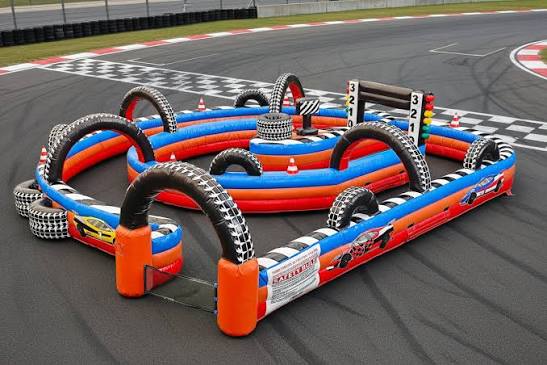
Inflatable Interactive Games offer children different ways to play, from jumping and navigating obstacles to aiming at targets and completing team challenges. When selected for the appropriate age group and operated according to the manufacturer’s instructions, these attractions can add variety to children’s recreational activities.
For parents, schools, event organizers, and entertainment businesses, the key is to choose games that encourage active and social play while considering space, supervision, and safety requirements.
Why Inflatable Interactive Games Are Popular for Kids
Inflatable games attract children through their bright colors, playful shapes, and hands-on activities. Unlike entertainment that requires children to remain seated, many inflatable attractions encourage movement and direct participation.
Their popularity comes from several practical advantages.
- Active entertainment: Many games involve running, jumping, aiming, climbing, or navigating obstacles, depending on the product design.
- Social interaction: Children can participate in group challenges, take turns, and celebrate achievements with friends.
- Variety of activities: Different attractions offer options for children with different interests and abilities.
- Flexible event applications: Suitable designs can be used at birthday parties, school events, festivals, and recreational venues.
- Easy-to-understand challenges: Many games use simple objectives that children can learn quickly with appropriate guidance.
Not every inflatable provides the same experience. Some focus on energetic movement, while others emphasize coordination, accuracy, or cooperation. Choosing a suitable mix can help make an event enjoyable for a wider range of children.
1. Inflatable Obstacle Courses
<AsyncImage query=”colorful children’s inflatable obstacle course at outdoor family event” aspectRatio=”16:9″ width=”100%” />
Inflatable obstacle courses are exciting options for children who enjoy movement and friendly competition. Depending on the design, they may include tunnels, soft barriers, climbing sections, and other obstacles that participants navigate to reach the finish line.
Children can take turns completing the course or participate in organized races when the product’s rules and capacity allow it.
Obstacle courses can be suitable for school sports days, outdoor celebrations, community events, and larger birthday parties. They also give organizers a clear activity around which to arrange friendly competitions.
Before choosing a course, check its dimensions, age and height restrictions, participant limits, and supervision requirements. Provide sufficient clearance around the structure and keep waiting children outside the active area.
2. Inflatable Basketball Shootouts
Basketball shootouts introduce children to a simple target-based challenge. Participants attempt to throw a suitable ball through a hoop, often earning points for successful shots.
Organizers can make the activity more engaging by introducing timed rounds, individual scorecards, or small team competitions.
The game can be particularly useful for school carnivals, sports-themed birthday parties, and community festivals because participants can usually understand the objective quickly.
Choose equipment designed for the intended age group and make sure balls, hoop heights, and playing arrangements are appropriate. A clearly marked waiting area can also help prevent crowding around the shooting zone.
3. Inflatable Football Target Games
Football target games combine kicking practice with a scoring challenge. Children aim a ball toward marked targets or designated scoring zones, trying to achieve the highest score.
This activity can appeal to children who enjoy football as well as those who want to try a new recreational challenge.
For group events, organizers can create teams, award points for accuracy, or hold short competitions. The rules should remain simple so children can participate without long explanations.
Set up a clearly defined kicking line and provide enough room for the activity. Participants should kick only when the target area is clear, following the manufacturer’s instructions and the event supervisor’s directions.
4. Inflatable Ball Pits
Inflatable ball pits provide a colorful play area filled with lightweight balls. Depending on the design, they can offer a simple recreational activity for younger children who enjoy exploring, moving, and interacting with their surroundings.
Ball pits may work well at indoor family events, children’s parties, and designated play zones at community gatherings.
When selecting one, consider the intended age group, depth, size, entry arrangements, and supervision needs. Establish rules for sharing the space and prevent overcrowding.
Organizers should also maintain a cleaning routine for the balls and play surface, following the manufacturer’s recommendations. Damaged equipment and unsuitable objects should be removed promptly.
5. Inflatable Interactive Playgrounds
An inflatable interactive playground may combine several play features within one structure. Depending on the product, it can include small slides, tunnels, bouncing areas, or other child-oriented challenges.
This type of attraction can be useful when an event needs a central activity that keeps children engaged for longer periods.
A playground-style inflatable may also offer different activities for children with different preferences. Some may enjoy navigating tunnels, while others prefer the bouncing or sliding sections.
However, not every playground design suits every age group. Check the manufacturer’s age restrictions, participant capacity, and operating instructions, and ensure that staff can monitor the different play areas effectively.
6. Inflatable Ring Toss Games
Inflatable ring toss games offer a simpler alternative to large, physically demanding attractions. Children throw rings toward designated targets, aiming to land them around posts or achieve a particular score.
This activity can be suitable for school fairs, birthday parties, indoor events, and community festivals where organizers want to provide several types of entertainment.
Ring toss encourages children to practice aiming and hand-eye coordination while taking turns with other participants.
You can make the game more engaging by creating different scoring levels or allowing children to work together toward a team target. Keep the throwing area clearly marked and use only the equipment intended for the game.
7. Inflatable Climbing and Sliding Games
Inflatable climbing and sliding attractions offer a combination of physical activity and adventure. Depending on the design, children may climb a designated section before descending a slide into a specified landing area.
These attractions can become a highlight at school celebrations, outdoor parties, and family entertainment events.
Because climbing and sliding involve movement at different heights, selecting age-appropriate equipment and maintaining suitable supervision are especially important.
Check the manufacturer’s instructions for participant restrictions, landing-zone clearance, installation conditions, and operating limits. Keep the entry and exit areas clear, and prevent children from climbing or sliding in directions not intended by the product design.
8. Inflatable Soccer Challenge Games
Inflatable soccer challenges can introduce children to football-inspired activities without requiring a full-sized playing field.
Depending on the design, games may involve shooting at targets, passing a ball through openings, or completing a sequence of simple challenges.
These attractions are useful for school activity days, sports-themed parties, and recreational programs that want to encourage participation rather than focus solely on formal competition.
Organizers can create short rounds and allow children to challenge their own previous scores. Make sure the game is designed for the participants and that the surrounding area provides enough space for safe movement.
9. Inflatable Team Challenge Games
Team challenge games encourage children to work together toward a shared goal. Depending on the attraction, teams might complete an obstacle sequence, score points through coordinated activities, or participate in a group competition.
These games can help create opportunities for communication, cooperation, and positive social interaction.
For school events and community celebrations, organizers can form small teams and rotate participants so everyone gets an opportunity to take part.
Keep the competition friendly and focus on participation rather than making winning the only objective. Staff should explain the rules clearly and adapt the activity to the participants’ age and abilities where the product permits.
10. Inflatable Multi-Activity Games
Multi-activity inflatables combine several recreational features in one attraction or connected play area. Depending on the design, they may include ball games, target challenges, obstacles, or other interactive elements.
They can be a practical choice for events with many children because the variety may appeal to different interests.
Before choosing a multi-activity inflatable, confirm how the individual sections are intended to operate. Some designs may permit certain activities to run together, while others require separate turns or supervised rotations.
A simple schedule can help organizers manage participation and prevent children from gathering in one section while other areas remain unused.
How Inflatable Interactive Games Encourage Social Play
In addition to providing entertainment, well-organized group activities can create opportunities for children to interact with their peers.
Taking Turns and Sharing
Many games require children to wait for their turn, follow a sequence, or share equipment. Clear rules and supportive supervision can help make these interactions more positive.
Communication and Cooperation
Team challenges give children opportunities to communicate, coordinate their actions, and work toward common objectives. These experiences can be particularly useful at school events and group celebrations.
Friendly Competition
Scoring games and obstacle races can encourage children to challenge themselves and celebrate one another’s achievements. Organizers should emphasize fair play and participation rather than creating unnecessary pressure.
Meeting New Friends
At community events and large parties, interactive attractions can provide a shared activity that makes it easier for children to join in and interact with others.
Every child has different interests and comfort levels. Offer alternatives where possible and avoid forcing children to participate in activities they do not enjoy.
How to Choose the Right Inflatable Interactive Games for Kids
The most suitable attraction depends on the children attending, the venue, and the event’s purpose.
Consider Age and Developmental Stage
Children of different ages may need different types of activities. Younger children may benefit from simple, low-intensity games, while older children may enjoy more complex challenges.
Always follow the manufacturer’s age, height, weight, and participant restrictions where specified. Do not assume that a product is suitable for a child simply because it appears visually appealing.
Match the Game to the Venue
Measure the available space before choosing an inflatable. Account for the complete installation footprint, required clearance, entry and exit areas, waiting zones, and emergency access.
For indoor events, check ceiling height and access restrictions. For outdoor events, assess the ground surface, anchoring requirements, drainage, and weather limitations.
Balance Energetic and Quieter Activities
A combination of active and simpler games can help create a more varied event. For example, an obstacle course may appeal to children who enjoy running, while ring toss can provide an alternative for those who prefer a lower-intensity activity.
The best mix depends on the event size and the available equipment.
Check Setup and Maintenance Requirements
Before renting or purchasing Inflatable Interactive Games, ask the supplier for product dimensions, installation instructions, participant limits, inflation requirements, cleaning guidance, and warranty information.
Consider whether you have enough time, space, staff, and equipment to operate the attraction as intended.
Safety Tips for Children’s Inflatable Games
Safety planning should be part of the selection and setup process rather than an afterthought. Inflatable games differ in design, and each product must be operated according to its own instructions.
Important precautions include:
- Inspect before use: Check the fabric, seams, anchoring points, inflation system, and accessories for visible damage.
- Follow capacity limits: Do not allow more participants than the manufacturer permits.
- Provide suitable supervision: Assign responsible attendants who understand the activity and its operating rules.
- Separate different age groups when required: Follow product-specific restrictions and avoid unsuitable combinations of participants.
- Secure the structure correctly: Use the specified anchoring or stabilization method for the installation conditions.
- Monitor weather: Stop outdoor operation when conditions exceed the manufacturer’s limits.
- Maintain clear access routes: Keep entrances, exits, and emergency routes unobstructed.
- Keep the equipment clean: Follow suitable cleaning and drying procedures, particularly when many children use the same attraction.
If damage, unstable installation, loss of required inflation, or another operating problem is detected, stop using the affected attraction until the issue has been assessed and resolved.
Tips for Organizing a Successful Inflatable Play Area
Thoughtful planning can make the experience easier for children, parents, and event staff.
Create a clear layout. Place signs near each activity and separate waiting areas from active play zones.
Use a simple rotation system. For large groups, assign time slots or rotate classes and teams to reduce congestion.
Explain rules before play. Children should understand how to enter, exit, take turns, and use the equipment appropriately.
Train the staff. Ensure attendants know the product’s operating instructions, participant restrictions, and procedures for stopping an activity.
Prepare a cleaning schedule. Establish when surfaces and accessories should be checked and cleaned during the event.
Offer suitable alternatives. Where possible, provide different activity types so children can choose games that match their interests and abilities.
These practical steps can help organizers maintain a welcoming environment and keep the play area manageable throughout the event.
Conclusion
Inflatable interactive games provide children with a variety of ways to stay active, enjoy friendly competition, and connect with others. From obstacle courses and basketball shootouts to ball pits, ring toss, and team challenges, there are options for different events, ages, and interests.
The best choice depends on the participants, venue, available space, and the level of supervision required. By selecting age-appropriate attractions, following manufacturer instructions, and planning clear activity zones, parents, schools, and event organizers can create a more enjoyable recreational experience.
When exploring Inflatable Interactive Games, compare product specifications, installation requirements, maintenance guidance, and supplier support before making a decision. With suitable equipment and thoughtful organization, an inflatable play area can become a memorable part of a child’s event while encouraging active and social play.