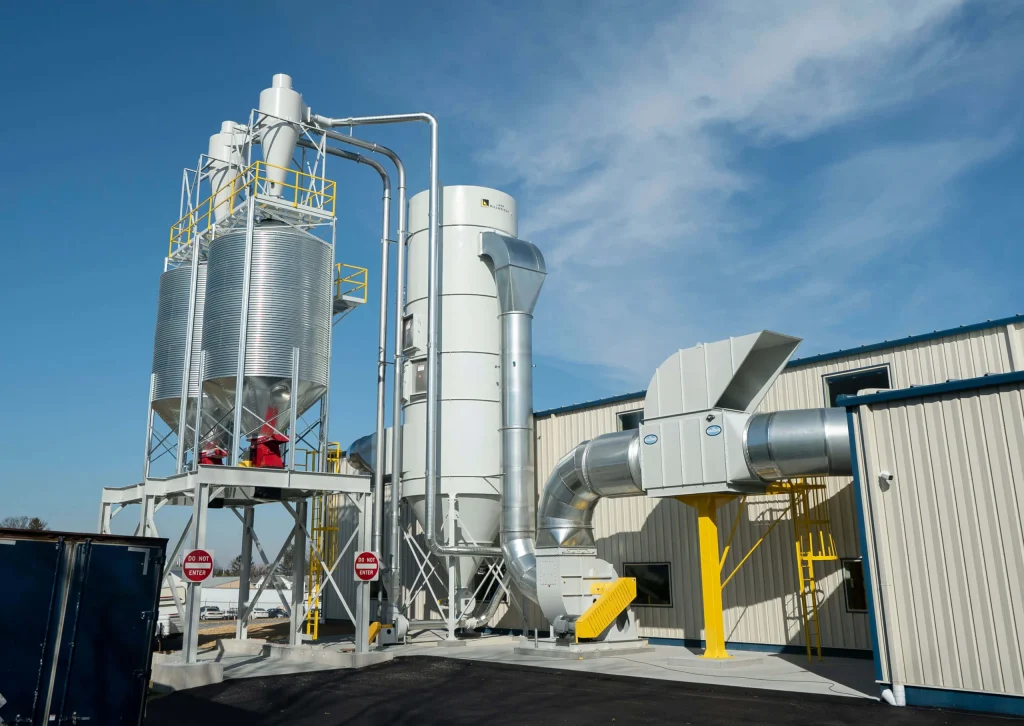

Industrial facilities often need dependable dust-control equipment to manage particles released during production and material handling. Processes such as grinding, cutting, mixing, sanding, and conveying can create airborne dust that spreads across work areas. If this material is not captured and collected appropriately, it may contribute to equipment contamination, product defects, housekeeping problems, and worker exposure. Electrically powered collection systems provide a practical way to operate fans, filtration equipment, and automated cleaning mechanisms.
An Electric Dust Collector uses electrically driven components to move dust-laden air through a collection and filtration system. Depending on its configuration, it may include a motor-driven fan, filter cartridges or bags, a dust hopper, a cleaning mechanism, and an electrical control panel. The system’s performance depends on its airflow capacity, filter characteristics, capture arrangement, and suitability for the dust being collected.
1. Provides Powered Air Movement
The fan is responsible for moving air from the dust-generating process toward the collector. Its motor and fan assembly must provide sufficient airflow and pressure to overcome resistance in the extraction hood, ducts, filters, and other system components.
A suitable design begins with the required capture conditions at each source. The fan should not be selected solely by its motor rating because airflow at the actual collection point depends on the resistance of the complete system.
Duct layout, pipe diameter, bends, and branch connections should be considered during engineering.
2. Supports Localized Dust Capture
Dust is generally easier to manage when it is collected near the point of generation. Extraction hoods and machine enclosures can direct particles into the airflow before they spread throughout the workplace.
For example, a collector may serve a grinding station, woodworking machine, powder-handling point, or packaging line. The hood should be positioned according to the direction and speed of the dust emission.
Open hoods, poorly fitted connections, or excessive distance from the source can reduce capture effectiveness. Testing and adjustment may be necessary after installation.
3. Uses Filtration to Separate Particles
Once dust-laden air enters the collector, filter media separate particles from the airflow. Cartridge filters and fabric bags are common options, while other technologies may be selected for specialized applications.
Filter choice depends on particle size, dust concentration, temperature, moisture, chemical compatibility, and required filtration performance.
A suitable filter must also work with the collector’s cleaning mechanism. Pulse-jet cleaning, for instance, uses compressed-air pulses to dislodge accumulated dust from compatible filter elements.
4. Can Automate Routine Operation
Electrical controls can coordinate fan operation, filter cleaning, discharge equipment, and other system functions.
Pressure sensors may monitor resistance across the filters and provide information about when cleaning or maintenance is needed. Control panels can also display operating status and fault conditions.
Where several production machines are connected, interlocks may coordinate extraction with machine operation. This can help ensure that dust collection is available when required, provided the control design accounts for all operating scenarios.
5. Supports Cleaner Production Areas
By capturing particles before they disperse, a dust collector can help limit contamination of nearby machinery, products, and work surfaces.
This may reduce some housekeeping requirements and support more consistent production conditions. However, a collector is only one part of dust management. Enclosures, general ventilation, suitable cleaning methods, and exposure controls may also be necessary.
The effectiveness of the system should be checked under real operating conditions rather than assumed from its rated specifications alone.
6. Requires Careful Electrical and Hazard Assessment
Electric motors, control panels, cables, and switching devices must be suitable for the installation environment. Dust, moisture, heat, and vibration may influence electrical equipment selection and enclosure requirements.
Combustible dust introduces additional concerns. Some fine particles can ignite or create explosive atmospheres under particular conditions. A qualified hazard assessment should determine the necessary protection, including suitable equipment design, isolation, venting, suppression, grounding, and other measures where required.
An ordinary electrically powered collector should never be assumed to be suitable for combustible dust without verification.
7. Manages Collected Dust for Disposal
Separated dust usually falls into a hopper or collection container. The discharge arrangement should suit the volume and characteristics of the material.
Options may include drums, bins, rotary valves, or other handling arrangements. Fine or hazardous material may require enclosed discharge to reduce the possibility of dust escaping during removal.
Disposal procedures should follow the material’s safety information and applicable waste-handling requirements.
8. Maintains Efficiency Through Inspection
Filter condition and airflow should be monitored throughout the equipment’s service life. Blocked filters, damaged seals, loose duct connections, or worn fan components can reduce collection performance.
Maintenance schedules should cover filters, motors, bearings, fans, valves, hoppers, sensors, and electrical connections. Operators should also check for unusual noise, vibration, temperature changes, and unexpected dust leakage.
Conclusion
Electric dust collectors combine powered airflow, filtration, and control equipment to manage industrial dust emissions. Their effectiveness depends on appropriate source capture, fan and duct design, filter selection, electrical suitability, and consistent maintenance. When specified for the actual production environment, they can support more organized and controlled dust-removal operations.