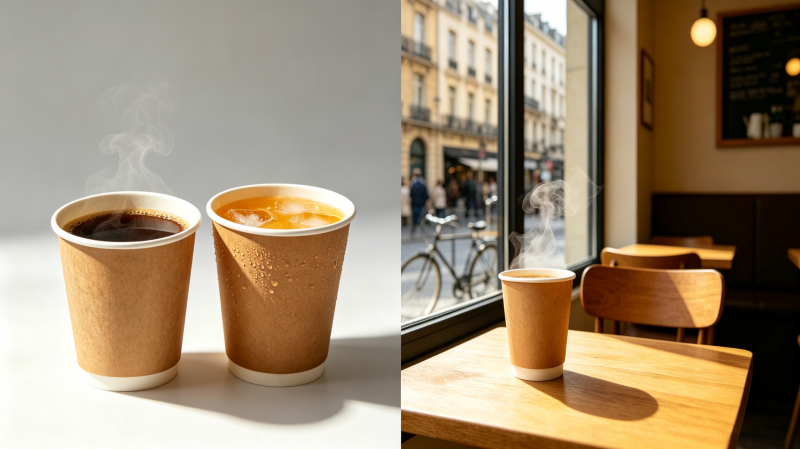

Food packaging comes in many forms, from disposable beverage cups and takeaway containers to wrappers and specialty paper-based products. Each format places different demands on its material. Paper can provide structure and a printable surface, but applications involving moisture often require an additional barrier. PE coated paper roll is one material used where a paper substrate and a polyethylene coating are required together.
Businesses considering Pe Coated Paper Roll should first identify the packaging application and its operating conditions. The appropriate grade depends on the type of food, expected contact conditions, converting process, and required material performance.
How PE Coated Paper Is Made
PE coated paper is produced by applying a layer of polyethylene to a paper substrate. The paper provides much of the structure, while the coating helps reduce direct moisture penetration into the fibres.
The material may be coated on one side or both sides. Single-sided coating may be appropriate where a barrier is needed on a particular surface. Double-sided coating may be considered where both surfaces require protection, depending on the package design.
The final properties depend on the paper grade, coating weight, coating uniformity, and manufacturing process. Two rolls carrying the same general product description may have different specifications and should not be treated as identical.
Use 1: Disposable Paper Cups
Paper cups are a familiar application for PE-coated paper. The material can be prepared as cup stock and converted into fan-shaped blanks for the cup sidewall.
The coating helps limit liquid contact with the paper substrate, while the paper provides the structure needed for forming. The material must also be compatible with side-seam and bottom-sealing operations.
Different cup sizes and beverage applications may require different grades. Manufacturers should consider paper weight, coating arrangement, and finished-cup performance before selecting a roll.
Use 2: Food Wrappers
Certain food wrappers use coated paper where contact with moisture or oils needs to be managed. The specific material requirements depend on the product being wrapped, its temperature, and the expected contact period.
PE coating can provide moisture resistance, but it should not be assumed to deliver every type of grease or oil barrier. Buyers should request performance information for the particular food application and test the finished wrapper under realistic conditions.
Use 3: Takeaway Packaging Components
Takeaway food businesses require packaging that can handle transport and short-term storage. Selected coated paper grades may be used for liners, packaging components, or other formats where a paper substrate is useful.
The suitability of the material depends on package design. A paper roll intended for cup manufacturing may not be appropriate for a folded container or wrapper because the forming, sealing, and structural requirements can differ.
Use 4: Bakery and Confectionery Packaging
Some bakery and confectionery products are packaged using paper-based materials. Coated paper may be considered when the package needs a barrier against moisture or contact with selected food products.
However, baked goods vary in moisture, fat content, temperature, and storage requirements. Material selection should therefore be based on the specific product rather than assuming one coating construction is suitable for every bakery application.
Use 5: Printed Food Packaging
PE-coated paper rolls may also be used in printed packaging formats. Brand graphics, product names, instructions, and other information can be added before the material is converted into the finished package.
Printing suitability depends on the paper surface, coating arrangement, ink system, and printing technology. Buyers should discuss the required artwork and printing process with their supplier.
A printed sample helps confirm color appearance, registration, and surface quality. It can also reveal whether the design needs adjustment before production.
Choosing the Right Technical Specification
Before placing an order, compare the following characteristics:
| Material detail | What to evaluate |
|---|---|
| Paper grammage | Weight per square metre |
| Thickness | Physical structure of the substrate |
| PE coating weight | Quantity of coating applied |
| Coating arrangement | One-sided or two-sided construction |
| Roll width | Compatibility with processing machinery |
| Roll diameter | Suitability for unwinding equipment |
| Surface condition | Printing and converting requirements |
The supplier should provide technical information and samples. Where possible, test the material on the actual equipment and assess the finished package rather than relying exclusively on a paper sample.
Food-Contact Safety
Food packaging must be suitable for its intended use. Request applicable declarations, test reports, and technical documentation covering the material construction.
The relevant requirements may depend on the food type, temperature, duration of contact, and market where the package will be sold. In printed packaging, inks and other components may also need consideration.
A product described as food grade should still be supported by documentation applicable to the specific application.
Environmental and Disposal Considerations
PE-coated paper contains a plastic layer, so its disposal characteristics differ from those of uncoated paper. Whether a finished package can be recycled depends on the local collection and processing system and the material’s complete construction.
Do not assume that a paper-based appearance guarantees recyclability or compostability. Verify available disposal routes before making environmental claims.
Making the Right Packaging Choice
PE-coated paper roll has a range of potential uses in food packaging, but each application needs its own technical assessment. Cups, wrappers, takeaway components, and bakery packaging do not necessarily require the same material properties.
By defining the intended use, reviewing the complete specification, checking food-contact documentation, and conducting practical trials, businesses can choose a material that fits their packaging requirements more reliably.