
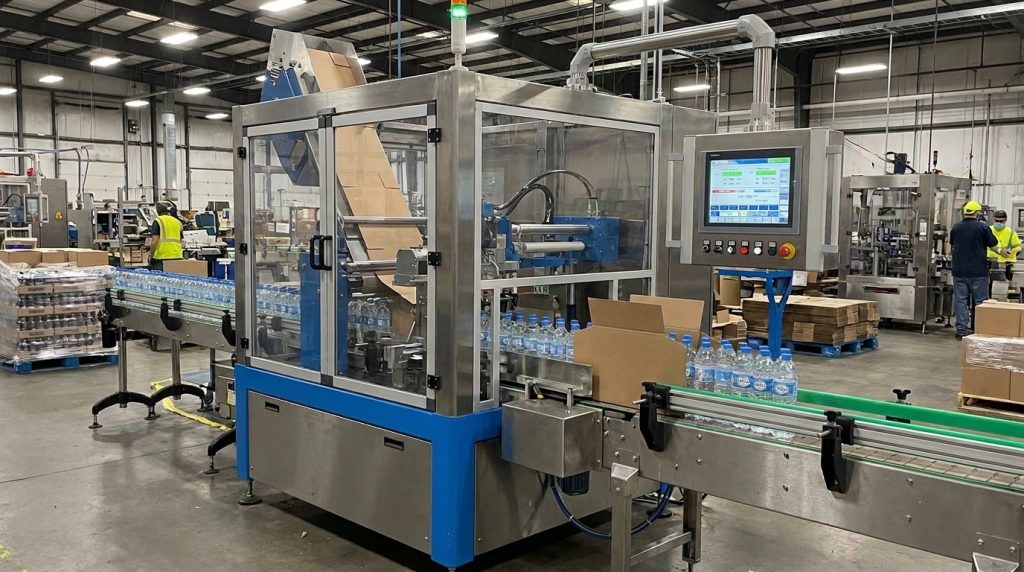

Downtime can quickly reduce the output of an automated packaging line. A short stoppage may seem harmless, yet repeated interruptions can add up across a production shift and create delays for downstream operations.
A wrap around packer depends on coordinated product handling, carton feeding, forming, folding, and sealing. When one stage encounters a problem, the entire packing cycle may stop or slow down. Techflow Pack helps manufacturers approach automated case packing with these production factors in mind.
Product Feeding Problems
Product feeding problems rank among the common reasons for packaging interruptions.
Products may arrive too closely together, lose alignment, or fail to reach the packing area at the expected time. These conditions can interfere with grouping and create jams.
Consistent product flow gives the machine a better chance of maintaining its intended operating rhythm.
Carton Feeding Issues
The machine also needs a reliable supply of carton blanks.
A blank may fail to separate properly, enter at an incorrect angle, or become stuck during feeding. Damaged cartons can create similar problems even when the machine settings remain correct.
Regular checks of carton quality and feeding components help reduce these interruptions.
Product Misalignment
Products need to reach the packing area in the correct position.
A product that shifts during transport may disrupt the intended group arrangement. The machine may then stop to prevent an incorrect pack or potential jam.
Guide adjustments, conveyor condition, and product consistency all influence alignment.
Incorrect Machine Settings
Machine settings need to match the product and carton format being produced.
Problems may occur after a changeover when operators use incorrect dimensions, spacing values, or packing parameters. Even a small setting error can affect several stages of the cycle.
Following a defined changeover procedure helps reduce setup-related downtime.
Carton Formation Problems
A carton needs to fold correctly around the product group.
Poor carton dimensions, damaged board, incorrect machine adjustments, or worn folding components may prevent proper formation.
When the carton does not follow the intended path, the machine may stop to prevent further damage.
Adhesive Problems
Glue-related issues can also interrupt production.
An adhesive system may experience buildup, incorrect temperature, poor application, or supply problems. These conditions can affect carton sealing and may require the operator to stop the machine.
Consistent adhesive quality and proper system maintenance help reduce this type of downtime.
Sensor Faults
Sensors monitor important parts of the packaging process.
A sensor may fail to detect a product, carton, or machine position correctly. Dust, cardboard particles, misalignment, damaged wiring, or component failure may contribute to false signals.
A sensor problem can stop a machine even when the mechanical components remain in good condition.
Worn Mechanical Components
Moving parts experience repeated mechanical stress during production.
Belts, chains, rollers, bearings, guides, and other components may gradually wear. Excessive wear can lead to unusual movement, noise, misalignment, or complete component failure.
Replacing wear parts before they fail can reduce unexpected stoppages.
Poor Carton Quality
Packaging material can contribute to downtime just as much as machine components.
Cartons with inconsistent dimensions, damaged edges, excessive moisture, or poor cuts may not move or fold correctly.
Manufacturers should maintain consistent carton specifications and inspect incoming packaging materials when recurring feeding or forming problems appear.
Product Variations
Changes in product dimensions can affect machine performance.
A production line may handle several bottle sizes, carton dimensions, or pack configurations. Each format needs suitable machine settings and compatible packaging materials.
Failing to adjust the equipment properly after a product change can create repeated stops.
Changeover Delays
Changeovers naturally reduce productive operating time, especially when a manufacturer handles many product formats.
Long adjustment periods, repeated test runs, and difficult access to machine settings can increase downtime.
Manufacturers should consider changeover requirements when selecting packaging equipment, not just maximum production speed.
Material Shortages
The machine cannot continue packing without the necessary packaging materials.
Running out of carton blanks, adhesive, or other required supplies can stop production unexpectedly. Poor material planning may therefore create avoidable downtime.
Operators can reduce these interruptions by monitoring supplies and preparing replacement materials before production reaches critical levels.
Operator Errors
Automation reduces repetitive manual work, but operators still control important parts of the process.
Incorrect settings, improper material loading, or failure to respond to machine alerts can lead to unnecessary stops.
Clear training and straightforward operating procedures help production teams respond more effectively.
Lack of Preventive Maintenance
Waiting until equipment fails creates a greater risk of unplanned downtime.
Small issues such as loose components, dirty sensors, adhesive buildup, or worn belts may gradually affect performance. Preventive inspections give maintenance teams an opportunity to address these conditions earlier.
A planned maintenance routine can therefore protect production availability.
How to Find the Real Cause of Downtime
Repeated stoppages often have an underlying pattern.
Production teams should record when the machine stops, which section triggers the fault, what product runs at the time, and what action restores operation.
Useful information includes:
- Time and duration of each stoppage
- Machine fault messages
- Product and carton format
- Frequency of the problem
- Component involved
- Corrective action taken
These records make recurring problems easier to identify.
Why Frequent Short Stops Matter
Downtime does not always involve a long machine failure.
A line may stop for only a few minutes because of carton misfeeds, product alignment, sensor signals, or minor adjustments. When these events happen repeatedly, they can remove a significant amount of production time.
Tracking micro-stoppages gives manufacturers a clearer picture of actual machine performance.
How Can Manufacturers Reduce Downtime?
Reducing downtime requires attention to both equipment and production practices.
Manufacturers can start by:
- Maintaining consistent product flow.
- Using cartons that meet machine specifications.
- Following proper changeover procedures.
- Training operators on normal machine operation.
- Monitoring recurring fault messages.
- Replacing worn components on schedule.
- Keeping sensors and working areas clean.
- Maintaining adequate packaging material supplies.
These actions address many common sources of avoidable interruptions.
Does Higher Machine Speed Increase Downtime?
Higher operating speeds may place greater demands on product handling, carton feeding, and machine components.
That does not mean a faster machine automatically creates more downtime. The equipment needs to match the product, carton, and production environment.
A properly configured machine can maintain a high production rate while supporting reliable operation.
How Line Integration Affects Downtime
A case packer works as part of a larger production system.
Problems upstream or downstream can affect its operation. For example, insufficient product supply may leave the packer waiting, while a downstream conveyor problem may force the packing machine to stop.
Manufacturers should evaluate the entire line rather than treating the packer as an isolated machine.
How Techflow Pack Can Help
Techflow Pack develops automated packaging solutions around the requirements of individual production environments.
Product characteristics, carton specifications, production rates, changeover needs, and line integration all influence machine configuration. Addressing these factors during equipment selection can help reduce avoidable operating problems.
Techflow Pack can help manufacturers assess these requirements when planning an automated case packing system.
When Does Downtime Become a Serious Problem?
Every production line experiences occasional interruptions. The bigger concern comes when stops happen frequently, last longer than expected, or repeat for the same reason.
Manufacturers should investigate recurring downtime rather than simply restarting the machine each time. Finding the underlying cause often provides a better long-term solution than repeatedly correcting the same symptom.
Final Thoughts
Downtime in an automated packing line can come from many sources. Product misalignment, carton feeding problems, adhesive issues, sensor faults, worn components, material shortages, incorrect settings, and changeover delays can all affect production availability.
The best approach combines reliable equipment with proper materials, operator training, preventive maintenance, and accurate downtime tracking. By understanding where and why interruptions occur, manufacturers can take practical steps to keep their packaging operation running more consistently.


