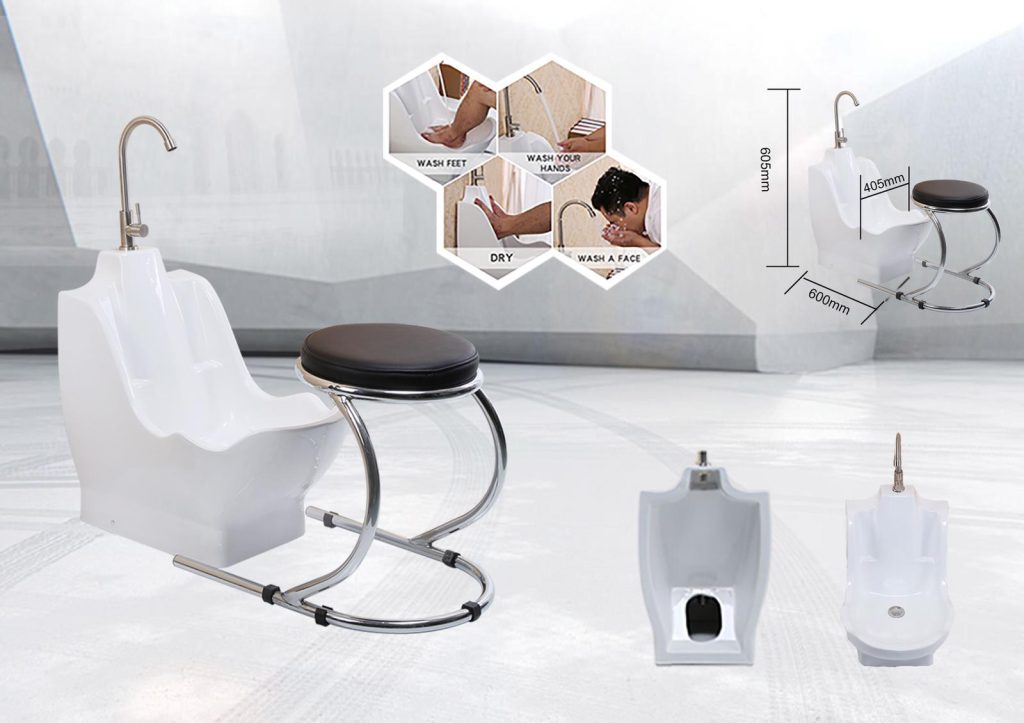

Modern ablution spaces in mosques, airports, schools, and commercial buildings are evolving quickly as expectations for hygiene, durability, and user comfort continue to rise. The Wudu Wash Basin is no longer just a basic utility fixture—it is now an essential part of architectural planning and public facility design.
For exporters and manufacturers, this shift has also created a competitive global market where material innovation plays a key role. Buyers increasingly compare traditional solutions with advanced options before making procurement decisions. A modern Wudu Sink from KingKonree Solid Surface highlights how new material technology is reshaping ablution facility standards worldwide.
Overview of Traditional Wudu Sink Materials
Traditional ablution basins are commonly made from ceramic, concrete, or basic stone materials. These materials have been used for many years due to their availability and low cost.
Typical characteristics include:
- Simple structural design
- Visible joints and seams
- Heavy and rigid installation
- Limited customization options
- Basic aesthetic appearance
While functional, these systems often lack modern performance features.
Introduction to Solid Surface Wudu Sinks
Solid surface materials represent a modern alternative designed for improved performance in hygiene, durability, and aesthetics. KingKonree solid surface technology is widely used in contemporary ablution designs.
Key characteristics include:
- Seamless construction
- Non-porous hygienic surface
- Lightweight yet strong composition
- Flexible design customization
- Smooth, modern appearance
These features make them suitable for advanced infrastructure projects.
Hygiene Comparison
Hygiene is one of the most important factors in ablution facility design.
Traditional Materials:
- Porous surfaces may absorb moisture
- Joints can trap dirt and bacteria
- Stains are harder to remove over time
- Requires frequent deep cleaning
Solid Surface Materials:
- Non-porous and resistant to bacteria
- Seamless design prevents dirt accumulation
- Easier daily and deep cleaning
- Maintains hygiene for longer periods
This makes solid surface solutions more suitable for high-traffic public areas.
Durability and Long-Term Performance
Durability determines how well a Wudu sink performs under continuous use.
Traditional alternatives:
- May crack under heavy impact
- Surface wear over time
- Higher risk of damage in crowded areas
Solid surface alternatives:
- High resistance to impact and wear
- Long-lasting structural stability
- Suitable for continuous heavy usage
- Easier repair and restoration options
This improves lifecycle value significantly.
Design Flexibility and Aesthetic Value
Design plays an important role in modern mosque and commercial architecture.
Traditional systems:
- Limited shapes and styles
- Difficult to customize
- Less integration with modern interiors
Solid surface systems:
- Highly customizable designs
- Seamless integration with architecture
- Modern minimalist appearance
- Suitable for large-scale design projects
This flexibility allows architects more creative freedom.
Maintenance and Cleaning Efficiency
Maintenance requirements are another major point of comparison.
Traditional materials:
- Require frequent scrubbing
- Stains and buildup are harder to remove
- Higher long-term maintenance cost
Solid surface materials:
- Easy to clean with mild agents
- Low maintenance requirements
- Resistant to long-term staining
- Faster upkeep in busy facilities
This reduces operational workload significantly.
Water Efficiency and Functional Design
Modern ablution systems also focus on water conservation and efficient use.
Traditional designs:
- Less control over water flow
- Higher risk of splashing and waste
- Basic drainage systems
Solid surface designs:
- Optimized water flow paths
- Reduced splash design
- Better drainage integration
- Improved sustainability performance
This supports modern environmental goals.
Installation and Infrastructure Requirements
Installation complexity also varies between the two options.
Traditional systems:
- Heavier materials
- More complex installation
- Limited modular options
Solid surface systems:
- Easier installation process
- Modular and flexible configurations
- Suitable for modern construction methods
This makes them more practical for large projects.
Export and Market Demand Perspective
From a global trade perspective, solid surface Wudu sinks are gaining strong demand due to their performance advantages.
Export benefits include:
- Strong demand in mosque construction projects
- Alignment with modern building standards
- High appeal to architects and contractors
- Competitive advantage in premium infrastructure markets
Manufacturers focusing on innovation are better positioned in international markets.
Conclusion
The comparison between KingKonree solid surface Wudu sinks and traditional alternatives clearly shows a shift toward modern materials that offer better hygiene, durability, and design flexibility. While traditional systems remain in use, they are increasingly being replaced in large-scale and modern infrastructure projects.
For exporters and manufacturers, this transition presents a strong opportunity. By promoting advanced solid surface solutions, businesses can meet growing global demand and strengthen their position in the evolving sanitary ware and ablution facility market.