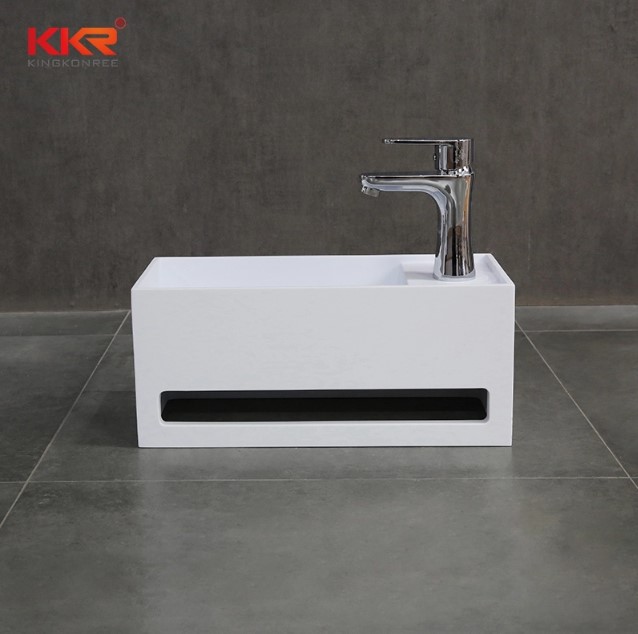

Basin depth has a direct effect on how comfortably people can wash their hands and how much water stays inside the bowl. A basin that is too shallow may cause splashing across the countertop or floor. One that is too deep can feel awkward to use, especially in a compact bathroom where the fixture already has limited clearance.
When selecting a small wash basin, it is important to look beyond its width and overall appearance. The distance from the top rim to the lowest point of the bowl affects water containment, faucet compatibility, and everyday comfort. The ideal depth depends on the basin’s shape, installation height, intended users, and available bathroom space.
What Does Basin Depth Actually Mean?
Basin depth can refer to two different measurements, so it is important to understand the distinction before comparing products.
Bowl depth measures the vertical distance from the top rim to the lowest point inside the basin. It determines how much space the bowl provides for water and handwashing.
Overall basin height refers to the fixture’s external vertical measurement. This can include the bowl body, underside, mounting structure, and other design features.
For choosing a comfortable basin, bowl depth is usually the more relevant measurement. However, overall height also matters when planning the installation and checking clearance beneath a countertop.
What Is a Suitable Depth for a Small Wash Basin?
There is no single depth that works for every compact bathroom. As a general starting point, many small handwashing basins have an internal bowl depth of around 10 to 15 cm. This range can provide enough room for routine handwashing without making the fixture unnecessarily bulky.
Shallower bowls may suit very restricted spaces or occasional-use toilets. Deeper bowls can offer better water containment, particularly when several people use the bathroom throughout the day.
These figures are general planning references rather than fixed standards. The manufacturer’s product dimensions and the actual bowl shape should guide the final selection.
Shallow Bowls
Shallow basins generally have a lower internal depth and a compact appearance. They can work well in narrow guest toilets where users mainly need to wash their hands.
Their main limitation is water containment. A shallow bowl may allow water to splash onto the surrounding surface when the faucet has a strong flow or the spout sits too high.
A shallow design works best when the faucet has a controlled flow and its outlet position matches the bowl.
Medium-Depth Bowls
Medium-depth bowls offer a practical balance between compact dimensions and everyday comfort. They provide more room for hand movement than very shallow designs without requiring a large fixture.
This depth range often suits family bathrooms, small apartment washrooms, and office toilets. It also gives designers more flexibility when matching the basin with different faucet styles.
Deeper Bowls
Deeper bowls provide additional space for handwashing and can reduce splashing when paired with a suitable faucet. They may suit bathrooms that receive frequent use or need a more comfortable washing area.
However, depth should not increase at the expense of usable room. A deep basin with a large external body may project too far into a narrow bathroom or create uncomfortable access.
How Basin Depth Affects Water Splashing
Water splashing is one of the most common problems associated with poorly matched basin and faucet designs. Depth plays a role, yet it is not the only factor.
The shape of the bowl determines how water moves after it reaches the surface. A steep, narrow bowl may direct water toward the drain, whereas a wide, shallow bowl may allow droplets to reach the rim more easily.
Faucet position also affects the result. A spout that sits too high can create a stronger impact when water hits the bowl. A short spout may direct water too close to the rear wall.
For better splash control, consider these details together:
- Bowl depth and internal shape
- Faucet height and spout reach
- Water pressure and flow rate
- Position of the water outlet
- Distance between the faucet and drain
A deeper bowl will not automatically solve splashing. The faucet and basin need to work as one system.
Choosing the Right Depth for Different Bathroom Types
The intended use of the bathroom can help narrow down the most suitable dimensions. A basin in a guest toilet may have different requirements from one in a shared family bathroom.
Small Guest Toilets
Guest toilets often have very limited floor and wall space. A shallow or medium-depth bowl can provide enough room for handwashing without making the entrance feel cramped.
Since these basins usually serve occasional users, space efficiency may carry more importance than providing a large washing area. A well-positioned faucet helps maintain comfort despite the smaller bowl.
Family Bathrooms
Family bathrooms experience more frequent use. Adults and children may use the same fixture throughout the day, so a medium-depth bowl can offer a useful balance.
Consider the height of the basin as well. A comfortable installation height makes it easier for different household members to reach the bowl without leaning too far forward.
Commercial Washrooms
Office toilets, restaurant facilities, and other commercial washrooms need fixtures that support repeated use. A basin with adequate depth can help reduce water splashing and keep the surrounding countertop cleaner.
Commercial projects should also consider cleaning access, material durability, and local accessibility requirements. A compact bowl must still provide enough space for comfortable handwashing.
Powder Rooms
Powder rooms often prioritize appearance and efficient use of space. A shallow basin may work well when the room has a narrow layout and the fixture serves basic handwashing needs.
However, the bowl should not be so shallow that normal faucet use creates constant water marks around the countertop. Testing the faucet position before final installation can help avoid this issue.
Does Basin Shape Change the Ideal Depth?
Two basins with the same internal depth may offer different levels of comfort. Their width, curvature, and drain position influence how much usable space the bowl provides.
Rectangular Basins
Rectangular bowls often provide a defined washing area with straight edges. Their shape can make good use of narrow countertops and wall sections.
The corners need careful consideration. Rounded internal corners are generally easier to clean than sharp transitions where dirt and soap residue may collect.
Oval Basins
Oval bowls have curved sides that guide water toward the center. Their shape can create a softer appearance and may help contain splashes when the faucet is correctly positioned.
An oval basin may require more width than a narrow rectangular model, so check the overall dimensions before selecting one for a restricted space.
Round Basins
Round bowls can suit compact countertops and contemporary bathroom interiors. Their usable depth depends on the bowl’s width and curvature.
A narrow round basin may feel restrictive even when its internal depth appears sufficient. Compare the diameter and depth together rather than relying on one measurement.
Asymmetrical Basins
Some compact designs use an offset bowl or an irregular shape to create more space for the faucet or surrounding countertop. These models can work well in bathrooms where standard dimensions do not fit the layout.
Check the position of the deepest area and the distance between the faucet outlet and the bowl. An unusual shape may require a specific faucet arrangement.
How to Match Basin Depth With Faucet Design
The faucet should be selected alongside the basin rather than treated as a separate purchase. Its height, spout reach, and water flow affect how comfortably the bowl can be used.
A tall faucet above a shallow bowl may create excessive splashing. A short spout paired with a deep basin may leave too little room for hand movement.
Before buying, check the following:
- Spout height: Confirm the vertical distance between the countertop or mounting surface and the water outlet.
- Spout reach: Make sure the water stream falls inside the bowl rather than near the rear edge.
- Flow rate: Choose a faucet that provides enough water for handwashing without excessive pressure.
- Mounting arrangement: Check whether the faucet fits the basin, countertop, or wall-mounted installation.
- Handle clearance: Leave enough room to operate the tap comfortably.
A practical combination allows water to fall near the center of the washing area. This reduces unnecessary splashing and makes better use of the bowl’s depth.
Measurements to Check Before Purchasing
Product photographs rarely show enough detail to determine whether a basin will fit a particular bathroom. Check the technical dimensions before placing an order.
The most useful measurements include:
- Internal bowl depth: The vertical distance from the rim to the lowest point inside the bowl.
- Basin width: The measurement across the fixture from side to side.
- Basin projection: How far the basin extends from the wall.
- Overall height: The external vertical dimension of the fixture.
- Drain position: The location of the waste outlet in relation to the plumbing.
- Faucet clearance: The available space for the tap and hand movement.
It is also useful to mark the basin’s proposed dimensions on the wall or countertop. This gives a clearer idea of how much room it will occupy once installed.
Common Mistakes When Selecting Basin Depth
Choosing a basin based on one measurement can create problems after installation. A few common mistakes are worth avoiding.
Focusing Only on External Dimensions
A basin may have a large outer body but a shallow internal bowl. Always check the actual bowl depth rather than assuming the external height represents the usable washing space.
Ignoring Faucet Compatibility
A suitable bowl can still splash water when paired with an incorrectly positioned faucet. Compare both products before finalizing the purchase.
Choosing Excessive Depth for a Small Room
A deep basin may provide more washing space, but its external dimensions can interfere with movement. Check its projection and surrounding clearance.
Forgetting the Intended Users
A guest toilet used occasionally has different requirements from a family or commercial bathroom. Consider how often people will use the basin and what level of comfort they need.
Overlooking Drainage
The bowl should guide water toward the drain without leaving large areas of standing water. Check the basin’s internal slope and outlet position before installation.
How to Find a Practical Balance Between Depth and Space
The ideal depth comes from balancing comfortable handwashing with the room’s physical limits. A basin that offers enough internal space, matches its faucet, and leaves suitable clearance around the fixture will usually perform better than one selected purely for its appearance.
For a compact guest toilet, a shallow or medium-depth bowl may be sufficient. A shared bathroom or commercial washroom may benefit from a deeper design that supports frequent use.
Product details from suppliers such as kingkonree can help buyers compare dimensions and available basin styles. Check the technical specifications carefully and confirm that the selected model suits the intended installation.
Final Thoughts
The ideal depth for a small washbasin depends on how the bathroom will be used and how much space is available. An internal bowl depth of around 10 to 15 cm can serve as a general starting point, although the best measurement varies with the basin’s shape and faucet arrangement.
Before purchasing, compare bowl depth with width, projection, drain position, and faucet reach. This approach helps prevent splashing, improves everyday comfort, and ensures the basin fits the bathroom without restricting movement.