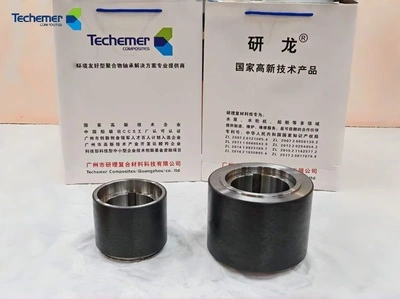

Hydroelectric turbines operate under continuous mechanical forces generated by rotating components, water pressure, and the weight of the turbine-generator assembly. These forces must be managed carefully to maintain stable operation and prevent unnecessary stress on mechanical components. Bearings play a major role in handling these forces while supporting smooth shaft rotation.
Understanding radial and axial loads is essential when selecting and maintaining hydro turbine bearings. Each load acts in a different direction and creates specific requirements for bearing design, material selection, and lubrication. Proper load management helps improve mechanical stability, reduce wear, and extend the service life of hydropower equipment.
What Are Loads in Hydro Turbine Bearings?
In mechanical engineering, a load refers to a force applied to a component during operation. Bearings experience these forces while supporting rotating shafts and maintaining their position within a machine.
In hydro turbines, loads mainly fall into two categories: radial loads and axial loads.
Radial loads act perpendicular to the shaft axis, while axial loads act parallel to it. Both types can occur simultaneously, depending on turbine configuration and operating conditions.
The ability of a bearing to manage these forces determines how effectively it can support the rotating assembly without excessive movement, friction, or surface damage.
Understanding Radial Loads in Hydro Turbines
A radial load is a force that acts perpendicular to the centerline of a rotating shaft. It pushes the shaft sideways rather than along its length.
In hydroelectric turbines, radial loads can develop because of hydraulic forces, rotor imbalance, magnetic forces, shaft weight distribution, and mechanical misalignment.
These forces can cause unwanted lateral movement if the bearing arrangement does not provide adequate support.
Sources of Radial Loads
Several factors contribute to radial loading in hydro turbine systems.
- Hydraulic forces: Water acting on the turbine runner can generate forces that affect shaft stability.
- Rotor imbalance: Uneven mass distribution creates centrifugal forces during rotation.
- Magnetic forces: Electromagnetic interactions within the generator can influence radial loading.
- Mechanical misalignment: Incorrect alignment can create uneven forces across bearing surfaces.
- Shaft and rotor weight: The distribution of rotating assembly weight can influence support requirements.
The magnitude of these forces depends on turbine design, rotational speed, operating conditions, and equipment condition.
How Radial Bearings Manage These Forces
Radial bearings support the shaft and restrict unwanted movement perpendicular to its axis.
Journal bearings are commonly used in large hydroelectric generators because they can distribute radial loads across a relatively large supporting surface.
Guide bearings also help maintain shaft alignment at different locations along the turbine-generator assembly.
When correctly selected and installed, these bearings help reduce vibration, maintain clearances, and protect connected components from excessive mechanical stress.
Understanding Axial Loads in Hydro Turbines
Axial loads act parallel to the shaft axis. Instead of pushing the shaft sideways, they create forces that attempt to move it lengthwise.
In many vertical-shaft hydroelectric installations, axial loads are particularly important because of the weight of the rotating assembly and hydraulic thrust generated by the turbine runner.
These forces must be transferred safely to the supporting structure to prevent excessive shaft displacement.
Sources of Axial Loads
Common sources of axial loading include:
- Hydraulic thrust: Water pressure acting on turbine runner surfaces can generate significant axial forces.
- Rotor weight: The weight of the generator rotor and other rotating components contributes to downward thrust.
- Operating pressure variations: Changes in hydraulic conditions can affect the magnitude and direction of thrust.
- Mechanical interactions: Certain equipment configurations can introduce additional axial forces.
- Operating transients: Changes during startup, shutdown, or load adjustments may influence axial loading.
Engineers must evaluate these forces carefully when designing the thrust-bearing arrangement.
How Thrust Bearings Manage Axial Forces
Thrust bearings are specifically designed to support loads acting along the shaft axis.
In large hydroelectric generators, hydrodynamic thrust bearings often consist of multiple bearing pads positioned around a rotating thrust collar.
During operation, a lubricant film forms between the pads and the rotating surface. This film supports the axial load while reducing direct contact and friction.
Proper thrust bearing design helps maintain shaft position, control axial displacement, and protect the turbine-generator assembly.
Key Differences Between Radial and Axial Loads
Although both load types affect bearing performance, their directions and supporting requirements are different.
| Feature | Radial Loads | Axial Loads |
|---|---|---|
| Force direction | Perpendicular to shaft axis | Parallel to shaft axis |
| Main effect | Pushes shaft sideways | Pushes or pulls shaft lengthwise |
| Common bearing type | Journal and guide bearings | Thrust bearings |
| Main purpose | Maintain radial shaft position | Control axial shaft movement |
| Common concerns | Vibration and lateral displacement | Axial movement and thrust stress |
Understanding these differences helps engineers determine the correct bearing arrangement for each turbine application.
Why Load Management Is Important for Bearing Performance
Proper load management is essential for maintaining stable turbine operation. Bearings must withstand the forces generated during normal operation without excessive deformation, wear, or overheating.
1. Preventing Premature Wear
When loads exceed bearing design limits, surface pressure can increase and accelerate material deterioration.
Uneven loading can also create localized wear, particularly in bearing arrangements where alignment is incorrect.
Selecting bearings with suitable load capacity helps distribute forces more effectively and reduce premature damage.
2. Maintaining Shaft Alignment
Radial and axial loads can influence shaft positioning in different ways.
Radial forces may cause lateral displacement, while axial forces can move the shaft along its length.
Properly designed bearing arrangements control both types of movement and help maintain the clearances required for safe operation.
3. Reducing Vibration
Excessive radial loading, imbalance, and misalignment can increase vibration throughout the turbine-generator assembly.
Although axial forces are primarily managed by thrust bearings, problems with thrust support can also affect overall mechanical stability.
Monitoring vibration levels helps identify changes that may indicate developing bearing problems.
4. Improving Lubrication Performance
Load conditions directly influence the performance of lubricating films.
Higher loads can increase pressure across bearing surfaces and place greater demands on lubricant film strength.
Engineers must therefore consider load capacity and lubrication requirements together when selecting bearing materials and designs.
5. Extending Equipment Service Life
When bearings operate within their specified load limits, they are less likely to experience excessive stress and premature deterioration.
Effective load distribution also helps protect shafts, housings, seals, and other connected components.
This contributes to longer equipment service life and more predictable maintenance requirements.
Bearing Types Used to Handle Radial and Axial Loads
Different bearing designs are used according to the direction and magnitude of the forces they must support.
Journal Bearings
Journal bearings support radial loads through a lubricating film between the shaft and bearing surface.
They are commonly used in large hydroelectric generators and turbine assemblies where continuous operation and stable radial support are required.
Their performance depends on suitable clearances, lubricant viscosity, operating speed, and load distribution.
Guide Bearings
Guide bearings control lateral shaft movement and maintain alignment.
They are often installed at different points along vertical turbine-generator assemblies to provide radial support.
Proper guide bearing performance helps reduce vibration and prevent unwanted shaft displacement.
Thrust Bearings
Thrust bearings support axial forces and maintain the correct longitudinal position of rotating components.
Hydrodynamic thrust bearings are widely used in large installations because they can support substantial continuous loads when properly designed and lubricated.
Combined-Load Bearings
Some bearing designs can accommodate both radial and axial loads.
Their suitability depends on the magnitude and direction of the forces, rotational speed, lubrication arrangement, and operating environment.
However, large hydro turbine systems often use separate radial and thrust bearing arrangements to manage their specific load requirements effectively.
Factors That Influence Radial and Axial Load Capacity
Bearing load capacity depends on several engineering considerations. Selecting an appropriate bearing requires evaluating the operating environment and the mechanical characteristics of the turbine.
Bearing Material
Material properties influence how effectively a bearing withstands mechanical stress, wear, and temperature variations.
Bronze alloys, white-metal linings, specialized steels, and engineered polymers are used in different bearing applications.
The appropriate material depends on load requirements, lubrication conditions, and environmental exposure.
Bearing Dimensions
Bearing diameter, width, pad geometry, and surface area influence load distribution.
Incorrect dimensions can create excessive pressure or insufficient support, increasing the risk of premature wear.
Operating Speed
Rotational speed influences friction, heat generation, and lubrication film formation.
The bearing must be suitable for the turbine’s operating speed and expected load conditions.
Lubrication Quality
Lubrication helps separate moving surfaces and distribute mechanical loads.
Insufficient oil supply, contamination, or unsuitable viscosity can weaken the protective film and increase surface stress.
Shaft Alignment
Incorrect alignment can create uneven radial and axial forces.
Precision installation and regular alignment checks help maintain proper load distribution throughout the rotating assembly.
Common Problems Caused by Improper Load Distribution
When radial or axial loads are not managed correctly, several mechanical problems may develop.
Excessive vibration: Uneven radial loading, rotor imbalance, or misalignment can increase vibration levels.
Bearing overheating: Excessive loads can increase friction and generate additional heat, particularly when lubrication is inadequate.
Surface deformation: Loads beyond design limits may damage bearing surfaces or cause permanent deformation.
Axial displacement: Insufficient thrust support can allow the shaft to move beyond its intended operating position.
Premature bearing failure: Continuous mechanical stress combined with poor lubrication can shorten bearing service life.
These problems can affect turbine reliability and increase the risk of unexpected maintenance shutdowns.
Best Practices for Managing Bearing Loads
Hydropower operators can improve bearing reliability by following appropriate engineering and maintenance procedures.
Important practices include:
- Calculate operating loads: Evaluate expected radial and axial forces during normal and changing operating conditions.
- Select suitable bearings: Match bearing design and load capacity to turbine specifications.
- Maintain shaft alignment: Use precision measurement procedures during installation and scheduled maintenance.
- Monitor vibration: Track changes in vibration patterns to identify mechanical instability.
- Maintain lubrication systems: Ensure consistent oil supply, suitable viscosity, and effective filtration.
- Inspect bearing surfaces: Look for wear, scoring, deformation, and abnormal temperature patterns.
- Follow manufacturer recommendations: Use approved operating limits and maintenance procedures.
Condition monitoring can also help identify developing problems before they result in serious equipment damage.
Technical information from Techemer can help engineers explore industrial bearing applications and understand important considerations when evaluating bearing requirements.
How Modern Technology Helps Monitor Bearing Loads
Modern hydropower facilities increasingly use monitoring systems to assess the condition of rotating machinery.
Vibration sensors, temperature monitoring equipment, and shaft-position measurement systems provide valuable information about bearing performance.
Some installations also use specialized instrumentation to measure axial thrust and monitor changes in shaft displacement.
By analyzing these measurements, maintenance teams can identify abnormal operating patterns and investigate potential problems before they cause major failures.
Predictive maintenance systems can further improve reliability by combining monitoring data with historical equipment performance.
Conclusion
Radial and axial loads are two fundamental forces that influence hydro turbine bearing performance. Radial loads act perpendicular to the shaft axis and require suitable radial support, while axial loads act parallel to the shaft and must be managed by thrust-bearing arrangements.
Understanding how these forces develop and interact helps engineers select appropriate bearings, maintain shaft alignment, and prevent excessive mechanical stress.
With proper bearing selection, effective lubrication, accurate installation, and regular condition monitoring, hydropower facilities can improve equipment reliability, reduce maintenance costs, and support consistent electricity generation.