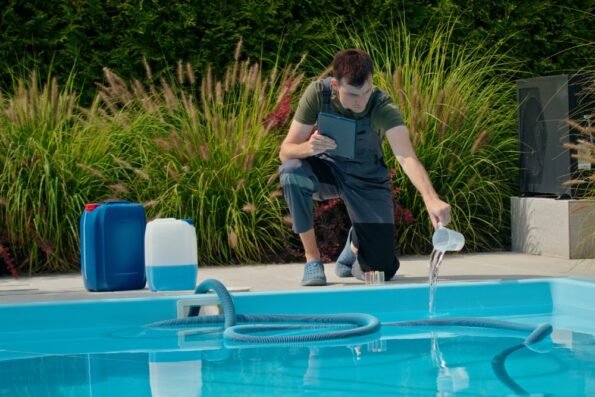

Maintaining clean and balanced swimming pool water requires a disinfectant that can control microorganisms while fitting the pool’s overall water chemistry management plan. Several chlorine-based sanitizers are available, but they differ in chemical composition, available chlorine content, dissolution behavior, and their effects on water balance. Understanding these differences helps pool operators select products that meet their maintenance requirements.
Dichlor is a stabilized chlorine compound widely used in certain swimming pool sanitation programs. Its relatively rapid dissolution and contribution of cyanuric acid distinguish it from several other pool sanitizers. When evaluating Dichlor Pool Chlorine, operators should consider not only its disinfecting properties but also its stabilizer contribution, product formulation, handling requirements, and compatibility with existing water treatment practices.
What Is Dichlor Pool Chlorine?
Dichlor is the common name for sodium dichloroisocyanurate, also known as sodium dichloro-s-triazinetrione. It is an organic chlorine-based disinfectant that releases available chlorine when dissolved in water.
The compound is commonly supplied in granular or powder form, although other formulated products may also be available. Its relatively high water solubility makes it convenient for selected pool maintenance applications.
Dichlor is described as a stabilized chlorine product because it contributes cyanuric acid to pool water. This stabilizer helps reduce chlorine degradation caused by ultraviolet sunlight, making it relevant to some outdoor pool treatment programs.
How Dichlor Works as a Swimming Pool Sanitizer
When Dichlor dissolves in water, it releases available chlorine. The active chlorine species can oxidize essential components of susceptible microorganisms, helping reduce microbial contamination under suitable treatment conditions.
The effectiveness of this process depends on several factors:
- Free chlorine concentration: Determines the amount of chlorine available for disinfection.
- pH: Influences chlorine chemistry and disinfection performance.
- Contact time: Microorganisms require sufficient exposure to the disinfectant.
- Water temperature: Can affect chemical reaction rates and microbial behavior.
- Organic contamination: Organic matter and other reactive substances can consume available chlorine.
- Water circulation: Helps distribute the disinfectant throughout the pool.
Regular testing is essential because the same chlorine product can produce different results under different water conditions.
What Makes Dichlor Different from Other Pool Sanitizers?
Dichlor has several characteristics that distinguish it from other commonly used swimming pool disinfectants.
It Dissolves Relatively Quickly
Dichlor is generally more readily soluble in water than some other stabilized chlorine products, such as trichlor tablets. This can make it convenient for pool maintenance procedures that require a dissolving chlorine source.
However, dissolution speed depends on the product’s formulation, particle size, water temperature, and mixing conditions. Rapid dissolution does not automatically mean better sanitation; proper chlorine residual and circulation remain essential.
It Adds Cyanuric Acid
One of the most important differences between Dichlor and unstabilized chlorine products is its contribution of cyanuric acid.
Cyanuric acid helps protect chlorine from ultraviolet degradation in outdoor pools. However, repeated Dichlor use can gradually increase stabilizer concentration, so pool operators need to monitor this parameter.
It Has Different Effects on Water Chemistry
Unlike calcium hypochlorite, Dichlor does not add calcium to pool water. This may be relevant for pools where calcium hardness is already high.
Its overall effect on water chemistry differs from other chlorine products, so product selection should consider pH, alkalinity, calcium hardness, and cyanuric acid together.
Dichlor Compared with Other Swimming Pool Sanitizers
Different chlorine sanitizers have distinct chemical properties and maintenance implications.
| Sanitizer | Main characteristics | Important water chemistry consideration |
|---|---|---|
| Dichlor | Stabilized, relatively fast-dissolving chlorine | Adds cyanuric acid |
| Trichlor | Stabilized chlorine, commonly supplied as tablets | Adds cyanuric acid and tends to lower pH |
| Calcium hypochlorite | Unstabilized chlorine source | Adds calcium and can raise pH |
| Sodium hypochlorite | Liquid, unstabilized chlorine source | Can raise pH and requires suitable storage |
The most appropriate sanitizer depends on the pool’s current water chemistry, equipment, maintenance schedule, and operating conditions. There is no single chlorine product that is ideal for every swimming pool.
Understanding Dichlor’s Available Chlorine Content
Available chlorine is an important specification used to compare chlorine-based disinfectants. Different Dichlor formulations have different available chlorine percentages.
Anhydrous Dichlor
Anhydrous sodium dichloroisocyanurate is commonly specified at approximately 62% available chlorine. It contains no water of crystallization in its chemical formula.
Dichlor Dihydrate
Dichlor dihydrate is commonly specified at approximately 56% available chlorine. Its composition includes water of crystallization, which reduces the available chlorine percentage by weight compared with the anhydrous form.
Actual product specifications can vary. Buyers should confirm the available chlorine content through the manufacturer’s technical documentation and batch-specific certificate of analysis.
The Role of Cyanuric Acid in Pool Water
Cyanuric acid is often called chlorine stabilizer or conditioner. Its main function in outdoor swimming pools is to reduce the rate at which ultraviolet sunlight degrades chlorine.
Benefits of Stabilizer
When maintained at an appropriate level, cyanuric acid can help outdoor pools retain chlorine for longer periods under sunlight exposure.
This can support more consistent sanitation and reduce rapid chlorine loss during sunny conditions.
Risks of Excessive Stabilizer
Too much cyanuric acid can reduce chlorine effectiveness at a given measured free chlorine concentration. A pool may therefore show a measurable chlorine residual without achieving the expected disinfection performance.
Regular testing helps operators recognize stabilizer accumulation before it becomes a significant water management issue.
Managing Stabilizer Levels
Pool operators should evaluate cyanuric acid alongside free chlorine and follow applicable pool standards. If stabilizer levels become excessive, changing the chlorine product or partially replacing pool water may be considered as part of a suitable corrective strategy.
Common Applications of Dichlor in Pool Maintenance
Dichlor can be considered for several swimming pool maintenance situations when the product is approved and used according to its label.
Routine Pool Disinfection
Some pool operators use Dichlor as a chlorine source in routine sanitation programs. Its dissolution characteristics can make it suitable for selected maintenance procedures.
Regular testing of free chlorine, pH, and cyanuric acid is important when using it repeatedly.
Outdoor Swimming Pools
Outdoor pools receive ultraviolet exposure that can accelerate chlorine degradation. The stabilizer contribution from Dichlor may be useful in an appropriately managed treatment program.
However, stabilizer accumulation must be monitored to avoid reducing chlorine effectiveness.
Seasonal Pool Maintenance
At the beginning of a swimming season, operators may need to assess water quality, filtration performance, circulation, and disinfectant levels.
Dichlor may be one option within a broader treatment plan, but product selection should be based on water test results and manufacturer instructions.
Important Water Parameters to Monitor
Using Dichlor effectively requires a complete pool water management program.
- Free chlorine: Confirms the amount of chlorine available for disinfection.
- pH: Influences chlorine effectiveness, water balance, and swimmer comfort.
- Total alkalinity: Helps buffer pH changes.
- Calcium hardness: Helps prevent scaling or corrosive water conditions.
- Cyanuric acid: Tracks stabilizer accumulation from repeated Dichlor use.
These parameters should be tested at appropriate intervals and adjusted according to pool requirements and relevant guidance.
Safe Handling and Storage Requirements
Dichlor is an oxidizing chemical and must be handled carefully. Incorrect storage or mixing with incompatible materials can cause hazardous reactions.
Store in a Cool, Dry Area
Keep the product in its original, tightly closed packaging in a cool, dry, well-ventilated location. Protect it from moisture, excessive heat, and contamination.
Keep Away from Incompatible Substances
Never mix Dichlor with acids, ammonia, other chlorine products, reducing agents, or cleaning chemicals. Such combinations can cause dangerous reactions and release toxic gases.
Store the product separately from oils, grease, combustible materials, and other incompatible substances.
Use Appropriate Protective Equipment
Follow the manufacturer’s safety data sheet and workplace procedures. Chemical-resistant gloves, eye protection, and suitable protective clothing may be required.
Avoid breathing dust and prevent direct contact with skin and eyes. Follow product-specific instructions for handling, spill response, and disposal.
How to Select a Suitable Dichlor Product
Choosing a reliable product involves reviewing several technical and commercial factors.
Verify Product Specifications
Check the chemical formulation, available chlorine content, physical form, and relevant quality parameters. A batch-specific certificate of analysis can help confirm that the supplied material meets the agreed specification.
Consider Dissolution Characteristics
Particle size and formulation can affect how the product dissolves. Select a form that is compatible with the pool’s maintenance procedures and equipment.
Review Packaging and Storage Information
Packaging should protect the material from moisture and contamination during transportation and storage. Check the manufacturing date, shelf-life information, and recommended storage conditions.
Request Technical Documentation
A reliable supplier should provide a technical data sheet, safety data sheet, and certificate of analysis. Buyers should also confirm that the product is authorized for the intended pool application.
Conclusion
Dichlor pool chlorine differs from many other swimming pool sanitizers through its relatively rapid dissolution, stabilized chlorine chemistry, and contribution of cyanuric acid. These characteristics make it a useful option for selected pool maintenance programs, particularly where a soluble stabilized chlorine source is required.
However, its suitability depends on existing water chemistry and the way the pool is managed. Regular monitoring of free chlorine, pH, alkalinity, calcium hardness, and cyanuric acid is essential. By comparing product specifications and understanding the differences between available sanitizers, pool operators can make informed choices and maintain a consistent water treatment program.