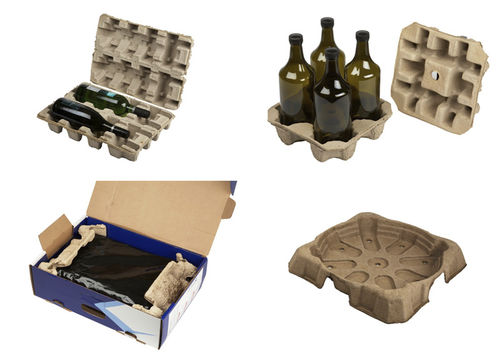

As global demand for sustainable packaging continues to rise, molded pulp packaging has become a key solution for industries looking to reduce environmental impact while maintaining product protection. From electronics to food packaging, businesses are rapidly adopting fiber-based alternatives to plastic due to their biodegradability and recyclability.
In this evolving landscape, molded pulp manufacturers are leveraging advanced technologies to improve production efficiency, product quality, and environmental performance. These innovations are transforming molded pulp packaging into a highly versatile and scalable solution for modern industries.
The Role of Technology in Molded Pulp Manufacturing
Technology plays a central role in the production of molded pulp packaging. It allows manufacturers to achieve consistent quality, reduce waste, and create highly customized packaging solutions for different industries.
Modern systems are designed not only for efficiency but also for sustainability, ensuring minimal energy consumption and optimized use of raw materials.
Advanced Pulping Technology
The first stage of production involves converting recycled paper and fiber materials into pulp. Advanced pulping systems ensure that the fiber mixture is uniform, clean, and suitable for molding.
Key improvements in pulping technology include:
- High-efficiency fiber separation systems
- Improved contaminant removal processes
- Controlled water-to-fiber ratio systems
- Enhanced mixing consistency for stronger materials
These innovations result in higher-quality pulp, which directly improves the strength and durability of the final packaging.
Precision Molding Systems
Molding technology is one of the most important advancements in the industry. Modern molded pulp manufacturers use precision-engineered molds to create packaging that matches exact product dimensions.
Benefits of advanced molding systems include:
- High dimensional accuracy
- Consistent product quality across batches
- Reduced material waste
- Ability to create complex shapes and structures
This level of precision is especially important for industries like electronics and cosmetics, where product protection is critical.
Automated Production Lines
Automation has significantly improved the efficiency of molded pulp manufacturing. Automated systems handle multiple stages of production, including molding, transfer, and initial drying.
Advantages of automation include:
- Faster production speeds
- Reduced labor dependency
- Lower risk of human error
- Improved scalability for large orders
Automation also ensures consistent quality, making it easier for manufacturers to meet global demand.
Advanced Drying Technologies
Drying is a critical stage in molded pulp production, as it determines the final strength and stability of the packaging. Modern drying systems use controlled heat distribution and airflow management to ensure uniform drying.
Common technologies include:
- Hot press drying systems for smooth finishes
- Energy-efficient tunnel drying systems
- Controlled humidity chambers
- Infrared drying solutions for precision control
These systems improve structural integrity while reducing energy consumption.
Digital Design and Prototyping Tools
Modern molded pulp manufacturers rely heavily on digital tools to design and test packaging before production. Computer-aided design (CAD) software allows engineers to create highly accurate models tailored to specific products.
Key benefits include:
- Faster product development cycles
- Reduced material waste during prototyping
- Precise customization for different industries
- Improved design efficiency and accuracy
This technology ensures that packaging is both functional and cost-effective.
Quality Control and Testing Technology
Quality assurance is essential in molded pulp manufacturing, especially for industries requiring high levels of protection. Modern testing systems help ensure that packaging meets strict performance standards.
Common testing methods include:
- Compression strength testing
- Drop impact resistance testing
- Moisture resistance analysis
- Dimensional accuracy verification
These technologies help maintain consistent quality across production batches.
Sustainable Manufacturing Technologies
Sustainability is a core focus of modern molded pulp production. Manufacturers are adopting technologies that reduce environmental impact while maintaining efficiency.
Key sustainable innovations include:
- Closed-loop water recycling systems
- Energy-efficient machinery
- Waste minimization systems
- Use of renewable raw materials
These technologies support circular economy principles and reduce the overall carbon footprint of packaging production.
Lianpack’s Role in Technological Advancement
Companies like Lianpack are actively contributing to the advancement of molded pulp packaging through the use of modern manufacturing technologies. By integrating automation, precision molding, and sustainable production systems, they help businesses transition to eco-friendly packaging solutions without compromising performance.
Their focus on innovation ensures that molded pulp packaging remains competitive in both cost and functionality.
Future of Molded Pulp Manufacturing Technology
The future of molded pulp manufacturing is expected to be driven by further technological innovation. Manufacturers are exploring smarter automation systems, AI-driven design optimization, and advanced material engineering.
Emerging trends include:
- AI-assisted packaging design
- Fully automated smart production lines
- Enhanced moisture-resistant fiber technologies
- Expansion of high-performance molded fiber materials
These advancements will continue to improve efficiency, scalability, and sustainability.
Conclusion
Modern molded pulp manufacturers rely on a wide range of advanced technologies to produce efficient, sustainable, and high-quality packaging solutions. From pulping and molding to automation and digital design, each innovation plays a critical role in improving performance and reducing environmental impact.
As global demand for eco-friendly packaging continues to grow, companies like Lianpack are helping drive technological progress in the industry. Their adoption of advanced systems ensures that molded pulp packaging remains a leading solution for sustainable and protective packaging worldwide.