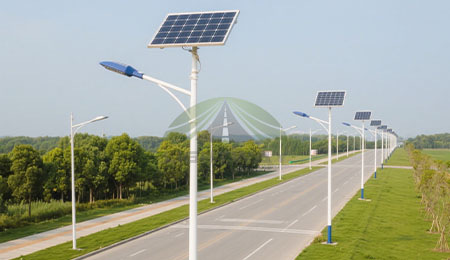

Solar street lights have become an increasingly popular solution for outdoor lighting because they use renewable energy, reduce dependence on grid electricity, and can help lower long-term operating costs. They are widely used in residential communities, public roads, parking lots, industrial facilities, parks, and commercial developments.
However, choosing the right product requires more than comparing prices or appearance. Solar street lights vary in battery capacity, solar panel efficiency, LED performance, construction quality, and intelligent control features. Selecting a reliable manufacturer is equally important because it can influence product consistency, technical support, and long-term performance.
For buyers planning outdoor lighting installations, identifying a Top Solar Street Light Brand involves evaluating several technical and commercial factors. Understanding these considerations can help contractors, distributors, developers, and project managers make informed purchasing decisions.
1. Evaluate Product Quality and Manufacturing Standards
Product quality should be one of the first considerations when comparing solar street light brands. Outdoor lighting equipment must withstand changing weather conditions, temperature variations, moisture, dust, and continuous operation.
A dependable manufacturer should use suitable materials and components designed for outdoor applications.
Pay attention to the following features:
- Housing material: Aluminum alloy housings can provide durability and effective heat dissipation.
- Surface protection: Suitable coatings help protect the fixture against corrosion and environmental exposure.
- Sealing design: Proper seals reduce the risk of water and dust entering the electrical components.
- Structural strength: The fixture should withstand the environmental conditions expected at the installation site.
- Assembly quality: Consistent workmanship can reduce the likelihood of premature component failure.
Ask manufacturers about their production procedures and quality inspection processes. Product samples and factory inspections can also provide useful evidence of manufacturing consistency.
2. Check Solar Panel Efficiency
The solar panel is responsible for converting sunlight into electrical energy that charges the battery. Its performance directly affects how effectively a solar street light operates.
When evaluating different brands, examine the panel type, rated power, conversion efficiency, and expected charging performance.
Monocrystalline solar panels are commonly used in outdoor lighting because they generally offer good efficiency and power output relative to their size.
Buyers should also consider local sunlight conditions. A system installed in an area with frequent cloudy weather may require a larger panel or a more carefully designed energy storage system.
Rather than focusing only on the panel’s rated wattage, request information about the complete system’s energy balance. The panel should generate enough energy under expected conditions to support the light’s daily operating requirements.
3. Examine Battery Capacity and Battery Technology
The battery stores the electricity generated by the solar panel and supplies power to the LED fixture after sunset.
Battery quality is therefore essential to the reliability of a solar street light, especially in locations where sunlight conditions are inconsistent.
Lithium iron phosphate (LiFePO4) batteries are widely used in modern solar lighting systems because of their thermal stability and suitability for repeated charging and discharging.
Important battery specifications include:
- Rated voltage and capacity.
- Usable energy storage.
- Charge and discharge cycle performance.
- Operating temperature range.
- Battery management system protection.
- Expected service life under specified operating conditions.
Buyers should also ask how many nights the system can operate without sufficient sunlight. This is often described as autonomy and is an important consideration for remote locations or regions with seasonal cloud cover.
4. Compare LED Performance and Lighting Efficiency
The LED module determines how much useful illumination the solar street light produces.
A product with high wattage does not necessarily provide better lighting. Buyers should compare actual lumen output, luminous efficacy, optical performance, and light distribution.
Consider these technical factors:
Luminous efficacy: Measured in lumens per watt, this indicates how efficiently electrical power is converted into visible light.
Color temperature: Common options include warm white, neutral white, and cool white. The appropriate choice depends on the application and local lighting requirements.
Color rendering index: CRI describes how accurately colors appear under the light source.
Optical design: Lens and reflector configurations influence how light is distributed across roads, walkways, and other outdoor spaces.
Request photometric reports or IES files when available. These documents can help lighting designers evaluate illumination levels, uniformity, and coverage before installation.
5. Verify Weather Resistance and Protection Ratings
Solar street lights are usually installed outdoors and remain exposed to rain, dust, humidity, and temperature changes throughout the year.
A suitable protection rating is important for preventing environmental damage to electrical components.
Check the IP rating of the complete lighting fixture and understand what it covers. For example, IP65 indicates protection against dust ingress and water jets under specified testing conditions.
In particularly demanding environments, buyers should also consider:
- Corrosion resistance in coastal areas.
- Resistance to high temperatures.
- Protection against strong winds.
- UV resistance of exposed materials.
- Suitable cable connections and sealing systems.
Do not assume that every component in a solar lighting system has the same protection level. Ask for documentation that confirms the ratings of the relevant assemblies.
6. Look for Intelligent Lighting Control Features
Modern solar street lights may include intelligent control systems that improve energy management and operating flexibility.
These features can help extend battery autonomy and adjust illumination according to actual lighting needs.
Common functions include:
- Automatic dusk-to-dawn operation.
- Motion detection and brightness adjustment.
- Programmable dimming schedules.
- Battery level monitoring.
- Overcharge and over-discharge protection.
- Remote monitoring on supported models.
For example, a motion-sensing system may operate at reduced brightness when an area is empty and increase illumination when movement is detected.
However, buyers should confirm how these features work and whether they are included in the quoted product. Control functions should be tested as part of the product evaluation rather than accepted based only on catalog descriptions.
7. Review Certifications and Compliance Documentation
A reliable solar street light brand should be able to provide relevant technical documentation for its products.
The required certifications and testing standards depend on the destination country, product design, and intended application.
Depending on the market and product category, buyers may need to review CE-related conformity documentation, RoHS compliance information, electrical safety reports, electromagnetic compatibility testing, and applicable environmental or battery transportation documentation.
When reviewing certificates and test reports, confirm that:
- The documents apply to the exact product model.
- The product specifications match the tested configuration.
- The issuing organization is appropriately qualified.
- The standards are relevant to the destination market.
- The documents are current and verifiable.
Certification claims should always be checked carefully. A manufacturer’s general statement about compliance does not necessarily demonstrate that every model meets the same requirements.
8. Assess the Manufacturer’s Experience and Reputation
A manufacturer’s experience can provide useful insight into its ability to develop, produce, and support solar street lighting products.
Companies with established experience may have encountered different installation environments and customer requirements. This knowledge can help them recommend suitable products for specific projects.
Before selecting a brand, research its:
- Manufacturing history.
- Product range and technical capabilities.
- Experience with international markets.
- Previous project applications.
- Customer feedback and business references.
- Quality management procedures.
Where possible, request examples of completed installations or references from previous customers.
It is also useful to communicate directly with the manufacturer. Clear and technically accurate answers can indicate whether the company understands its products and can support buyers throughout the purchasing process.
9. Compare Product Pricing and Overall Value
Price is an important factor, especially for contractors and distributors managing large outdoor lighting projects. However, choosing the lowest-priced product may lead to higher maintenance and replacement expenses later.
A proper comparison should consider the total cost of ownership rather than the initial purchase price alone.
Evaluate the following:
- Solar panel capacity and efficiency.
- Battery technology and usable capacity.
- LED performance and optical design.
- Controller functions.
- Installation requirements.
- Warranty coverage.
- Replacement component availability.
- Expected maintenance expenses.
A slightly more expensive product may provide better long-term value if it offers stronger components, reliable energy storage, and lower maintenance requirements.
Buyers should request detailed quotations that clearly identify the included components and technical specifications.
10. Consider Customization and Project-Specific Solutions
Different outdoor lighting projects have different requirements. A residential road may need a different lighting arrangement from a large parking facility or industrial access road.
Some manufacturers offer customization options to meet specific project needs.
These may include:
- Different LED power ratings.
- Customized solar panel capacities.
- Alternative battery configurations.
- Various pole heights and mounting arrangements.
- Different light distribution patterns.
- Private labeling and packaging options.
Before ordering customized products, confirm technical feasibility, minimum order quantities, additional costs, and production lead times.
For large installations, it is also advisable to request a lighting design or simulation based on road width, pole spacing, mounting height, and required illumination levels.
11. Check Warranty and After-Sales Support
Even well-designed solar street lights may require maintenance or replacement components during their service life.
A manufacturer’s warranty and after-sales support can make a significant difference when problems occur after installation.
Ask for written warranty terms covering the LED module, battery, solar panel, controller, and other major components.
Clarify the warranty duration for each component because coverage may differ across the system.
You should also confirm:
- How to report product defects.
- Whether technical troubleshooting is available.
- Whether replacement batteries and controllers can be purchased.
- How warranty claims are evaluated.
- Who covers transportation costs for replacement components.
A clear support process helps buyers manage maintenance requirements and protect the long-term value of their projects.
12. Request Samples and Test Before Bulk Purchasing
Product samples allow buyers to evaluate actual construction and performance before placing a large order.
Where possible, test the solar street light under conditions similar to the intended installation environment.
Check charging behavior, nighttime operating duration, brightness consistency, motion sensor response, and automatic switching performance.
For larger projects, consider a pilot installation before purchasing the complete quantity. This can reveal practical issues related to pole placement, solar exposure, lighting coverage, and battery autonomy.
Independent inspection and testing may also be appropriate for high-value orders.
Common Mistakes to Avoid When Selecting a Solar Street Light Brand
Even experienced buyers can make costly mistakes when they focus on only one product specification or overlook important system requirements.
Common mistakes include:
- Choosing products based only on advertised wattage.
- Ignoring actual battery capacity and autonomy.
- Comparing brands without reviewing solar panel specifications.
- Accepting unsupported performance claims.
- Overlooking local weather and sunlight conditions.
- Failing to verify certifications and test reports.
- Ignoring warranty exclusions.
- Placing large orders without testing samples.
Avoiding these mistakes requires a structured evaluation process that considers the complete solar lighting system.
Conclusion
Identifying the right solar street light brand requires careful attention to product quality, solar panel efficiency, battery performance, LED output, weather resistance, intelligent controls, and compliance documentation.
Manufacturing experience, customization capabilities, competitive pricing, and after-sales support are equally important when evaluating potential suppliers.
For contractors, distributors, and project developers, the best choice is not necessarily the brand with the lowest price or the highest advertised wattage. It is the manufacturer that can provide suitable technical specifications, consistent product quality, reliable support, and solutions that match the project’s actual requirements.
By comparing products systematically, requesting samples, verifying documentation, and testing performance before bulk purchasing, buyers can make more confident decisions and build dependable outdoor lighting projects.