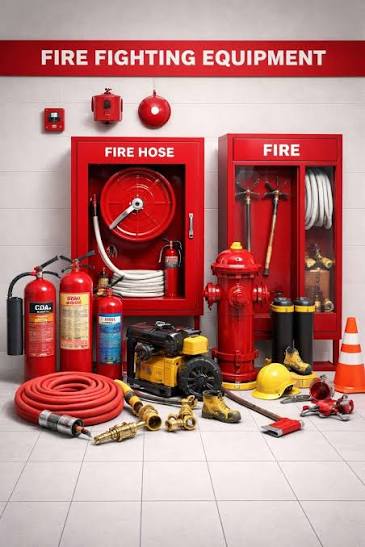

Firefighting equipment needs to be ready before an emergency begins. A hose that is difficult to locate, tangled, or blocked by stored materials can delay access at a time when clear action matters. Storage arrangements are therefore part of fire safety planning, not merely a way to keep equipment tidy. A fire reel provides a designated method of holding a hose so that it can be deployed in a controlled manner within the area it is intended to serve.
A Fire Reel generally refers to a reel assembly designed to store and manage a firefighting hose. Depending on the product and installation, it may include a drum, mounting bracket, hose, water connection, valve, and nozzle. The exact configuration should be selected according to the building’s approved fire protection design and applicable requirements. A reel’s presence alone does not guarantee adequate protection; it must be correctly installed, accessible, compatible with the water supply, and maintained.
The purpose of organized hose storage
A reel keeps a hose arranged in a predictable location. This can make the equipment easier to identify during routine checks and may reduce the chance of the hose becoming tangled or damaged through careless storage. The winding arrangement also helps control how the hose is released, provided the reel is designed and installed correctly.
Loose hose storage can create practical problems. Sections may become twisted, placed beneath other objects, or exposed to sharp edges. A dedicated reel helps provide a defined storage position and can make it easier to return the hose after inspection or use.
Choosing a suitable reel design
Reels are available in different sizes and configurations. Some are designed for wall mounting, while others may use a cabinet or another approved enclosure. The appropriate type depends on the installation layout, hose length, water connection, available space, and the operating method required by the system.
The reel should be compatible with the hose and its fittings. Drum dimensions must accommodate the specified hose without forcing it into a tight bend or creating excessive strain. The assembly’s mounting arrangement must also be suitable for the wall or supporting structure. Product documentation should provide installation dimensions and operating requirements.
Location and access
A reel is useful only if people can reach it. Its location should be determined through the building’s fire protection plan, considering the intended coverage area, access routes, and applicable standards. It should not be hidden behind furniture, stock, temporary partitions, or locked barriers that prevent authorized access.
Signage can help occupants and trained staff identify the equipment. The surrounding area should remain clear, and the hose should have a practical route for deployment. Installers should consider doors, corners, stairways, and other features that might obstruct movement or create trip hazards.
Hose management and deployment
The hose should unwind smoothly and without snagging. Its length and flexibility must suit the reel and the intended operating area. A hose that is too long can create unnecessary storage and handling challenges, while one that is too short may not reach the locations anticipated by the system design.
The nozzle and valve arrangement should be compatible with the reel. Users need to understand the correct sequence for releasing the hose, opening the water supply, and controlling discharge. Procedures vary among designs, so training should be based on the actual installed equipment.
Materials and environmental protection
The reel body, drum, fasteners, and hose may be exposed to humidity, dust, temperature changes, and accidental impact. Materials and finishes should suit the installation environment. Outdoor or damp locations may require particular attention to corrosion resistance and protection against weather.
The hose should be kept away from sharp edges, oils, chemicals, and excessive heat unless the manufacturer confirms that its materials can tolerate those conditions. The reel should not be used as a general-purpose hook or storage point for unrelated objects.
Inspection and maintenance
Routine inspection should confirm that the reel is secure, the hose is correctly wound, the nozzle is present, and the operating parts move as intended. Check for leaks, cracks, abrasion, corrosion, loose fasteners, damaged seals, and restrictions around the hose path. Where the equipment has a cabinet, confirm that its door can be opened without obstruction.
Testing and servicing should follow the manufacturer’s schedule and applicable local requirements. Any defect should be referred to qualified personnel. Maintenance records help demonstrate that equipment has been checked and that reported issues have been addressed.
Storage is part of operational readiness
A reel contributes to fire safety when it keeps suitable equipment protected, identifiable, and ready for its intended use. Correct positioning, clear access, compatible components, user training, and scheduled inspection all support that objective. By treating hose storage as an operational requirement rather than a housekeeping detail, building managers can help preserve the usefulness of their fire protection equipment.