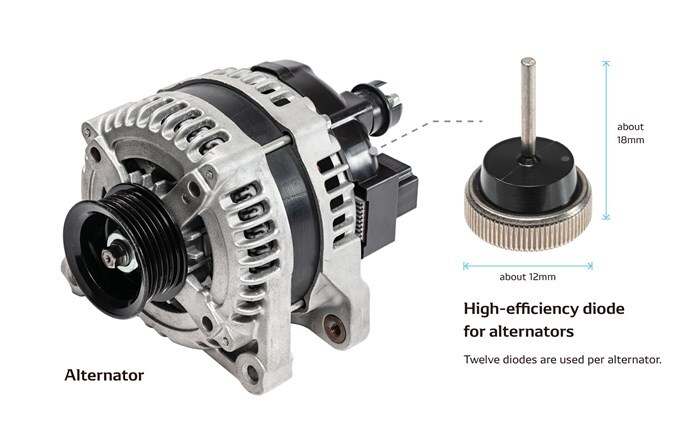

An automotive alternator plays an essential role in maintaining a vehicle’s electrical system. It generates alternating current (AC) when the engine is running, while the vehicle’s battery and electrical components require direct current (DC) for normal operation. To make this conversion possible, the alternator uses a rectifier assembly containing multiple diodes. These semiconductor components allow current to flow in the required direction and help deliver a stable DC output for battery charging and electrical system operation.
Selecting the correct diode is important for ensuring efficient rectification, reliable charging, and long-term alternator performance. Factors such as current capacity, reverse voltage rating, forward voltage drop, temperature tolerance, and recovery characteristics all influence component suitability. Understanding how a Diode For Alternator applications works can help automotive technicians, engineers, and component buyers make informed decisions when selecting replacement or original equipment parts.
What Is the Role of a Diode in an Alternator?
An alternator produces AC electricity through electromagnetic induction. However, most vehicle electrical systems operate on DC power. The rectifier assembly solves this difference by converting the generated AC into usable DC.
A typical three-phase automotive alternator uses a rectifier bridge containing six main diodes. These are arranged so that the output current flows toward the positive electrical terminal and returns through the negative side of the circuit.
The diodes perform several important functions:
- Convert three-phase AC output into DC.
- Allow current to flow in the intended direction.
- Prevent unwanted reverse current paths under normal operating conditions.
- Support battery charging.
- Supply electrical power to vehicle accessories and electronic systems.
Some alternators also include additional diodes for field excitation, voltage regulation arrangements, or other specialized functions.
How Alternator Rectification Works
The alternator’s stator generates three-phase alternating current as the rotor’s magnetic field rotates. The rectifier bridge uses positive and negative diode groups to direct the current into a DC output.
During each portion of the AC waveform, the appropriate diodes conduct while the others block current. As the phases change, conduction transfers between different diode pairs. This produces a pulsating DC output that can be used by the vehicle’s charging system.
The battery helps smooth voltage variations and stores electrical energy for use when the engine is not running. The voltage regulator controls alternator output by adjusting the rotor field current, helping maintain the required charging voltage under changing engine speeds and electrical loads.
Important Factors When Choosing an Alternator Diode
Selecting a suitable alternator diode requires evaluating the electrical and environmental conditions in which it will operate.
1. Forward Current Rating
The forward current rating indicates how much current a diode can conduct under specified conditions.
Alternators may supply substantial current to support battery charging and vehicle electrical loads. Therefore, the selected diode must have sufficient current-handling capacity for the alternator’s output and rectifier design.
Important considerations include:
- Maximum expected alternator output current.
- Current distribution among the rectifier diodes.
- Cooling conditions inside the alternator.
- Operating temperature and manufacturer derating requirements.
Choosing a diode with an inadequate current rating can cause overheating, reduced reliability, or premature failure.
2. Reverse Voltage Rating
An alternator diode must withstand reverse voltage without entering unintended breakdown.
The reverse voltage rating should provide adequate protection against the electrical conditions that may occur during normal operation and automotive transients. Designers should also consider the alternator’s phase voltages and the electrical characteristics of the complete rectifier assembly.
A suitable voltage margin helps reduce the risk of diode damage caused by unexpected voltage peaks.
3. Forward Voltage Drop
Forward voltage drop is the voltage lost across a diode while it conducts current.
A lower forward voltage drop can reduce power dissipation and improve rectifier efficiency. This is particularly important in automotive alternators because the rectifier assembly may carry substantial current.
However, the actual voltage drop depends on diode technology, current, and junction temperature. Datasheet specifications should be checked at operating conditions similar to those expected in the vehicle.
4. Operating Temperature
Alternator diodes operate in a relatively demanding thermal environment. Heat can come from the engine compartment, the alternator itself, and power losses within the rectifier.
The selected diode should support the expected junction temperature and thermal conditions. Its maximum operating temperature, thermal resistance, and current derating characteristics should be reviewed carefully.
5. Package and Mounting Compatibility
Automotive alternator rectifiers use specific mounting arrangements and electrical connections. A replacement diode must match the required package dimensions, terminal configuration, polarity, and installation method.
Even when two diodes have similar electrical ratings, differences in physical construction may prevent one from fitting the existing rectifier assembly.
Types of Diodes Used in Alternator Rectification
Different semiconductor diode technologies are available for rectification and automotive power applications. The most appropriate choice depends on the alternator’s design and operating requirements.
1. Silicon Rectifier Diodes
<text color=”secondary” size=”sm”>Common use: Standard automotive alternator rectification</text>
Silicon rectifier diodes are widely used in conventional alternators because they provide suitable current and reverse-voltage capabilities for automotive charging systems.
They are available in different current ratings and package configurations. Their established manufacturing processes and electrical characteristics make them a common choice for automotive rectifier assemblies.
2. Avalanche-Rated Rectifier Diodes
<text color=”secondary” size=”sm”>Common use: Automotive circuits exposed to voltage transients</text>
Avalanche-rated diodes are designed to withstand specified reverse-energy conditions associated with avalanche breakdown.
In automotive applications, this capability can be useful when electrical transients occur. However, the diode must be selected according to its specified avalanche energy and operating limits rather than assuming all rectifier diodes provide the same protection.
3. Schottky Diodes
<text color=”secondary” size=”sm”>Common use: Specialized low-voltage rectification applications</text>
Schottky diodes are known for their relatively low forward voltage drop and fast switching characteristics.
They can be useful in certain low-voltage rectification designs, although their reverse-voltage ratings and leakage current characteristics must be considered. Conventional automotive alternators often use silicon rectifier diodes, so Schottky devices should only be used when the electrical and thermal design specifically supports them.
How Diode Quality Affects Charging System Performance
The quality and suitability of the rectifier diodes have a direct influence on alternator operation. A properly functioning rectifier helps maintain a consistent DC output, while damaged or unsuitable diodes can create charging problems.
Stable Battery Charging
Healthy rectifier diodes allow the alternator to supply the DC power required by the vehicle. If one or more diodes fail, the available output may decrease, making it difficult to keep the battery properly charged.
Reduced Electrical Ripple
A functioning three-phase rectifier produces a smoother DC output than an unrectified AC source. When a diode fails, the rectifier waveform can become irregular, increasing ripple voltage.
Excessive AC ripple may affect sensitive electronic systems and can be an indication of a faulty rectifier.
Improved Energy Conversion
Diode losses contribute to heat generation inside the alternator. Selecting suitable components with appropriate electrical and thermal characteristics helps reduce unnecessary losses and supports efficient operation.
Greater System Reliability
Reliable diodes help protect the charging system against common operating stresses. Correct component selection, proper mounting, and adequate cooling all contribute to longer service life.
Common Signs of a Faulty Alternator Diode
A damaged alternator diode may cause symptoms that resemble other charging system problems. Proper testing is necessary before replacing components.
Common warning signs include:
- Battery warning light appearing on the dashboard.
- Weak or inconsistent battery charging.
- Unusual AC ripple in the alternator output.
- Flickering headlights or interior lights.
- Electrical accessories behaving inconsistently.
- Battery discharge while the vehicle is parked, in cases involving reverse leakage.
- Excessive heating or unusual electrical noise from the alternator.
A technician can use a multimeter, oscilloscope, or suitable automotive diagnostic equipment to check diode condition and charging performance.
Comparing Important Diode Selection Specifications
The following table summarizes the main characteristics to evaluate when choosing an alternator rectifier diode.
| Specification | Why It Matters |
|---|---|
| Forward current rating | Determines safe current-handling capability |
| Reverse voltage rating | Helps prevent unwanted reverse breakdown |
| Forward voltage drop | Influences rectifier losses and heat generation |
| Junction temperature | Determines thermal operating limits |
| Surge current capability | Helps withstand specified short-duration current peaks |
| Reverse leakage current | Indicates current flowing during reverse bias |
| Package and polarity | Ensures correct physical and electrical installation |
| Thermal resistance | Influences heat transfer from the diode junction |
The exact required values should come from the alternator manufacturer’s specifications or the original rectifier design.
Best Practices for Replacing Alternator Diodes
Replacing alternator diodes requires attention to electrical compatibility and mechanical installation. Using an unsuitable replacement can lead to repeated failures or poor charging performance.
Before installation, identify the alternator model and confirm the original rectifier specifications. Check the diode’s polarity, mounting dimensions, electrical ratings, and terminal configuration.
During replacement, inspect the rectifier heat sink and surrounding connections for corrosion, damaged solder joints, or signs of overheating. Ensure that the mounting surfaces provide proper electrical contact and heat transfer where required.
After installation, test the alternator under different engine speeds and electrical loads. Verify charging voltage, output current, and AC ripple to confirm that the rectifier is operating correctly.
For many modern vehicles, following the manufacturer’s service procedure is especially important because charging systems may interact with electronic control modules and intelligent battery-management functions.
Conclusion
Choosing the right diode for alternator rectification is essential for reliable battery charging and efficient automotive electrical system operation. A suitable diode must provide adequate forward current capacity, reverse voltage protection, low power losses, and reliable thermal performance.
Silicon rectifier diodes remain widely used in conventional automotive alternators, while other technologies may suit specialized applications. By checking electrical specifications, confirming package compatibility, and following correct installation and testing procedures, technicians and manufacturers can support dependable charging performance and reduce the risk of premature rectifier failure.