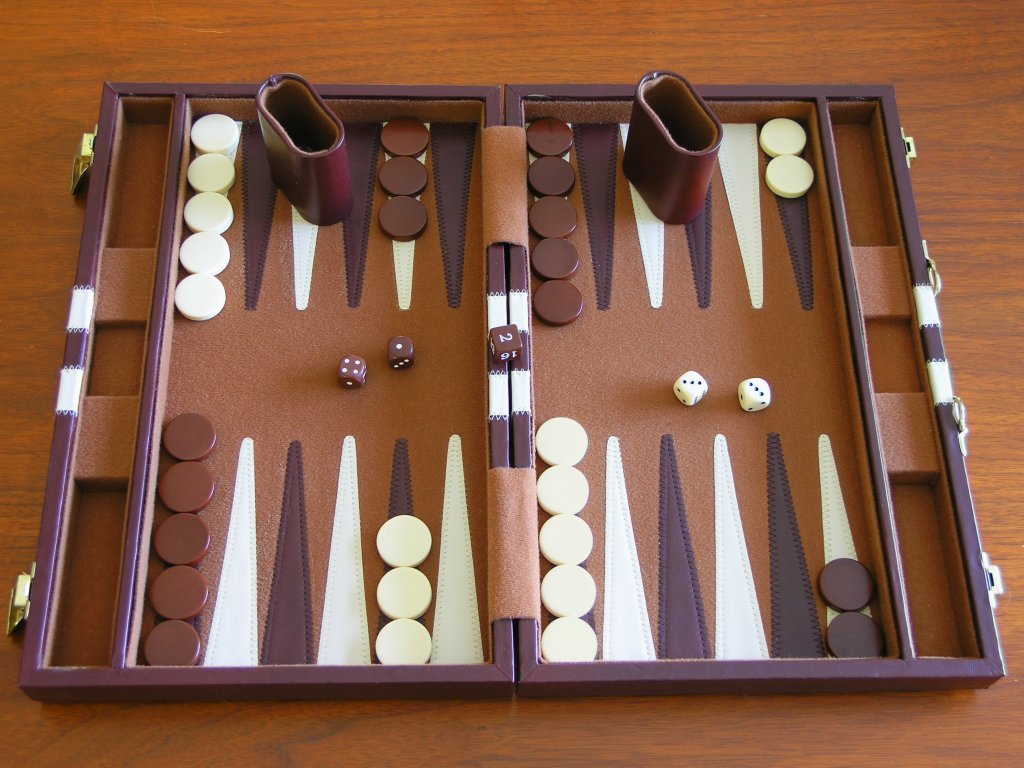

Board games have entertained people for centuries, offering opportunities to develop logical thinking, practice decision-making, and enjoy friendly competition. Among the many traditional games played around the world, backgammon stands out for its combination of luck, strategy, and tactical planning. Its distinctive board, numbered dice, and movable pieces create an engaging experience for beginners and experienced players alike.
Game Backgammon is a two-player board game in which participants move their pieces around a board according to dice rolls. The objective is to move all 15 pieces into the player’s home board and then remove them from the board before the opponent does. Although dice introduce an element of chance, successful play also requires careful planning, risk assessment, and an understanding of different tactical possibilities.
What Is Backgammon?
Backgammon is one of the world’s oldest known board games, with a history connected to several ancient civilizations and traditional forms of play. Its modern version is played on a board divided into 24 narrow triangles called points.
Each player controls 15 checkers, usually in contrasting colors. The players move their checkers in opposite directions around the board, following the numbers shown on two dice.
The game combines luck and skill. Dice determine the available movement, but players decide how to use each roll. They must consider their own position, protect vulnerable checkers, and create obstacles for their opponent.
Backgammon can be played casually at home or competitively in clubs and tournaments. Its familiar rules and strategic depth have helped it remain popular across generations.
Essential Equipment for Playing Backgammon
A traditional backgammon set contains several components that work together to create the playing experience.
1. Backgammon Board
The board is the main playing surface. It usually folds in half for convenient storage and has 24 triangular points arranged in four sections.
The points are commonly divided into four groups:
- The player’s home board
- The player’s outer board
- The opponent’s home board
- The opponent’s outer board
The alternating colors of the points make it easier to identify individual spaces and follow checker movement.
2. Playing Checkers
A standard set includes 30 checkers, with 15 assigned to each player. They are usually made from wood, plastic, or other durable materials.
Players move their checkers around the board according to their dice rolls. The pieces should be easy to handle and large enough to sit securely on the points.
3. Dice
Each player uses a pair of six-sided dice to determine movement. The numbers rolled indicate how many points the checkers can move.
A roll of double numbers provides four movements of the same value, creating additional strategic possibilities.
4. Dice Cups
Dice cups are often included to help players shake and roll the dice fairly. They also help keep the game organized and reduce the chance of accidental interference with the playing surface.
5. Doubling Cube
Many backgammon sets include a doubling cube marked with the numbers 2, 4, 8, 16, 32, and 64.
It is used in competitive and more advanced play to increase the stakes of a game. Beginners can initially learn without using it.
6. Storage Case
A folding board or storage case keeps the checkers, dice, and accessories together. A well-designed case makes the set easier to transport and protects its components when not in use.
Understanding the Backgammon Board Layout
Learning the board layout is an important first step for beginners. The 24 triangular spaces are called points, and each player follows a specific route around them.
The points are grouped into four sections of six. The home board is where a player must eventually bring all their checkers before beginning to bear them off.
Players move in opposite directions, so the same point can have different strategic importance depending on which side of the board is being considered.
Understanding the board helps players recognize important positions, plan routes, and identify opportunities to block or hit opposing checkers.
Basic Backgammon Rules Explained
The rules of backgammon are relatively straightforward once players understand the movement of checkers and the objective of the game.
Starting the Game
Each player begins with 15 checkers arranged in a standard starting formation. The initial arrangement is identical for both players but mirrored across the board.
To determine who moves first, both players roll one die. The player with the higher number starts, using the numbers rolled by both players for the opening move. If they roll the same number, they roll again.
After the opening move, players take turns rolling two dice.
Moving the Checkers
Each die represents a separate movement. For example, a roll of 3 and 5 allows a player to move one checker three points and another checker five points, or move the same checker twice if both intermediate and final positions are legal.
Players must use both dice when possible. If only one number can be played, they must use the higher number when the rules require it.
When a player rolls doubles, they receive four moves of the number shown.
Occupied Points
A player may move a checker to:
- An empty point
- A point occupied by their own checkers
- A point occupied by exactly one opposing checker
A point occupied by two or more opposing checkers is blocked and cannot be entered.
Hitting an Opponent’s Checker
A single checker standing alone on a point is called a blot. If an opponent lands on that point, the blot is hit and placed on the bar in the middle of the board.
A player with a checker on the bar must re-enter it into the opponent’s home board before moving any other checker.
Bearing Off
Once all 15 of a player’s checkers have reached their home board, they can begin bearing off. This means removing checkers from the board according to the dice rolls.
The first player to bear off all 15 checkers wins the game.
Understanding Backgammon Scoring
Backgammon has several possible winning outcomes, depending on the final position of the losing player’s checkers.
Single Game
A single game occurs when the losing player has borne off at least one checker before the opponent removes all their pieces. The winner receives one point.
Gammon
A gammon occurs when the losing player has not borne off any checkers by the time the winner removes all 15 pieces. It is generally worth two points.
Backgammon
A backgammon occurs when the losing player has not borne off any checkers and still has at least one checker in the winner’s home board or on the bar. It is generally worth three points.
The doubling cube can increase the value of a game when players choose to use it.
Important Backgammon Strategies for Beginners
Although dice introduce randomness, players can improve their results by learning basic strategic principles.
1. Build Strong Points
A point occupied by two or more of your checkers is called a made point. Making points can protect your checkers and prevent your opponent from using those spaces.
Building consecutive made points can create a barrier that makes movement more difficult for the opposing player.
2. Protect Vulnerable Checkers
A single checker can be hit by an opponent, so leaving too many blots may create unnecessary risks.
Sometimes a player must accept a risk to make progress, but it is useful to consider whether an alternative move offers better protection.
3. Create a Prime
A prime is a sequence of consecutive made points. A long prime can prevent opposing checkers from passing through the blocked section.
Building a prime is particularly useful when trying to trap an opponent’s checker or restrict their movement.
4. Bring Checkers Home Efficiently
Moving checkers toward the home board is essential because players cannot begin bearing off until all their pieces have arrived.
Avoid leaving checkers unnecessarily far behind when there are safe opportunities to advance them.
5. Use Dice Rolls Flexibly
Every dice combination creates different movement possibilities. Before making a move, consider how each number can be used and whether moving one checker twice or two separate checkers is more beneficial.
6. Balance Risk and Reward
Some moves create immediate scoring or blocking opportunities but expose checkers to attack. Strong players consider both short-term gains and the possible consequences of their decisions.
Common Backgammon Mistakes to Avoid
New players often make mistakes because they focus only on the current dice roll instead of considering the overall board position.
Leaving too many blots: Single checkers can be hit and sent to the bar. Avoid unnecessary exposure when safer moves are available.
Ignoring the opponent’s position: A move that looks useful in isolation may create an opportunity for the opponent to hit or block your checkers.
Failing to use both dice: Players should check all legal movement combinations before deciding which move to make.
Delaying home-board development: Keeping too many checkers far away can make bearing off more difficult later in the game.
Moving without a plan: Each turn should support a broader objective, such as building points, escaping vulnerable positions, or preparing to bear off.
Forgetting the bar rule: A player with checkers on the bar must re-enter them before moving other pieces. This rule can significantly affect the available moves.
Benefits of Playing Backgammon
Backgammon provides an enjoyable combination of entertainment and mental challenge. Regular play can encourage several useful skills.
Develops Strategic Thinking
Players must consider multiple possible moves and anticipate how their decisions may affect later turns. This encourages forward planning and tactical reasoning.
Encourages Decision-Making
Each dice roll creates a set of choices. Players learn to compare alternatives, assess risks, and select moves based on the current position.
Supports Mathematical Skills
The game involves counting spaces, adding dice values, calculating scores, and understanding probabilities. These activities provide opportunities to practice basic mathematics.
Improves Concentration
Players need to follow the board carefully, remember movement rules, and monitor the positions of their own and their opponent’s checkers.
Promotes Patience
A game can change significantly after a single dice roll. Players learn to remain patient, adapt their plans, and continue making thoughtful decisions.
Encourages Social Interaction
Backgammon is traditionally played between two people, making it a useful activity for family members, friends, and board-game enthusiasts.
Combines Luck and Skill
The dice create uncertainty, while strategic choices influence how effectively players respond. This balance helps make every match different.
How to Choose a Quality Backgammon Set
Selecting the right backgammon set can improve comfort, appearance, and long-term enjoyment. Buyers should consider the following features before making a choice.
Board Material
Backgammon boards are available in wood, leather-style finishes, plastic, and other materials.
Wooden boards are often appreciated for their traditional appearance and solid construction. Lightweight alternatives may be more practical for travel or frequent transport.
Board Construction
Check that the board opens and closes properly and that its playing surface is even. The points should be clearly marked and arranged consistently.
A secure closing mechanism can also help keep the pieces in place during storage.
Checker Quality
Checkers should have smooth edges and a comfortable size. They should be easy to pick up and move without slipping or overcrowding the points.
Dice Quality
Dice should have clearly visible numbers and balanced construction. Consistent dice help maintain a fair playing experience.
Included Accessories
A complete set may include:
- A folding board
- 30 playing checkers
- Two pairs of dice
- Dice cups
- A doubling cube
- Storage accessories
Check the product description to confirm which components are included.
Portability
If you plan to play while travelling or visiting friends, consider a compact board with a secure storage design. A carrying case can make transportation more convenient.
Appearance and Finish
Choose a design that suits your preferences. Traditional wooden finishes offer a classic look, while modern designs may feature different colors and materials.
Make sure the surface is smooth and that all components are finished properly.
Backgammon for Beginners, Families, and Experienced Players
Backgammon can be enjoyed by people with different levels of experience. The basic rules are easy to learn, while advanced strategy offers plenty of opportunities for improvement.
Beginners
New players should focus on learning the board layout, checker movement, hitting, re-entering from the bar, and bearing off. Playing without the doubling cube initially can make the game easier to understand.
Families
Backgammon can be an enjoyable activity for family members who like traditional board games. Younger players can learn counting, turn-taking, and simple decision-making through supervised play.
Experienced Players
More advanced players can explore concepts such as priming, racing, holding games, back games, and doubling-cube decisions. These strategies introduce additional depth and challenge.
Different Ways to Enjoy Backgammon
Traditional backgammon has several playing formats that can make matches more varied.
Casual Games
Casual games focus on enjoyment and learning. Players can take their time, discuss possible moves, and practice different strategies without competitive pressure.
Match Play
In match play, participants compete to reach a predetermined number of points. Gammons, backgammons, and the doubling cube can influence the result.
Tournament Play
Organized tournaments follow established rules and often use timed matches. Participants compete through a series of games to determine the overall winner.
Online Backgammon
Digital versions allow players to compete with friends or other participants remotely. They can also provide practice opportunities for people who want to improve before playing with a physical board.
Caring for and Maintaining Your Backgammon Set
Proper care helps preserve the board and accessories for long-term use.
- Keep the board in a dry location when it is not being used.
- Avoid placing heavy objects on the board.
- Clean the playing surface with a suitable soft cloth.
- Store checkers, dice, and cups in their designated compartments.
- Keep wooden components away from excessive moisture.
- Check hinges and closing mechanisms periodically.
- Follow the manufacturer’s care instructions for specialist materials.
A suitable storage case can help protect the set from dust, scratches, and accidental damage.
Backgammon Compared With Other Classic Board Games
Backgammon shares several qualities with traditional board games, but its combination of dice and strategic movement gives it a distinctive style.
| Feature | Backgammon | Chess | Checkers |
|---|---|---|---|
| Players | 2 | 2 | 2 |
| Main equipment | Board, checkers, dice | Board and pieces | Board and pieces |
| Role of luck | Dice influence movement | No dice involved | No dice involved |
| Main objective | Bear off all checkers | Checkmate the opponent | Capture or block opposing pieces |
| Main skills | Strategy, probability, risk management | Planning and tactical calculation | Planning and tactical movement |
| Game experience | Strategy combined with chance | Pure strategic play | Strategic movement and captures |
Each game offers a different challenge, making backgammon a valuable addition to a traditional board-game collection.
Conclusion
Game Backgammon is a classic board game that combines strategic thinking, probability, decision-making, and social entertainment. Its simple equipment and recognizable rules make it approachable for beginners, while its deeper tactical possibilities continue to challenge experienced players.
Choosing a quality set involves considering board construction, checker design, dice, accessories, and storage options. Learning the basic rules and practicing simple strategies can help new players develop confidence and enjoy more competitive matches.
Whether played at home, during family gatherings, or in organized tournaments, backgammon offers a rewarding way to enjoy traditional board-game entertainment while exercising the mind.