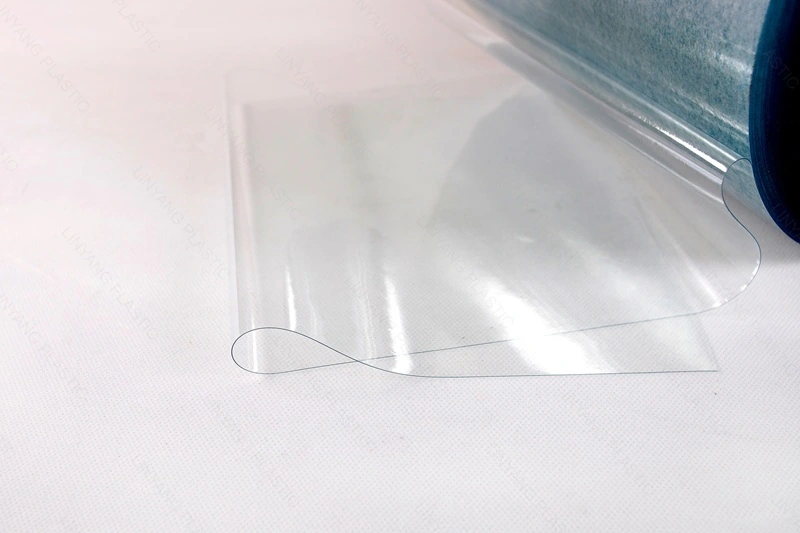

Choosing a PVC film supplier involves more than comparing product prices or reviewing a product catalogue. Businesses need to know whether a supplier can manufacture the required material consistently, manage order volumes, maintain quality standards, and deliver products within agreed timelines. These capabilities directly affect production schedules, inventory management, and long-term purchasing decisions.
Evaluating PVC Film Suppliers carefully helps buyers understand what a manufacturer or distributor can realistically provide. Production capacity, equipment, quality control, customization options, and supply chain management are all important considerations. A structured assessment can help businesses identify dependable partners and reduce the risks associated with material shortages or inconsistent product quality.
1. Examine Manufacturing Capacity
Production capacity indicates how much material a supplier can manufacture within a specific period. This is particularly important for businesses that purchase PVC film in large quantities or require regular deliveries.
Ask potential suppliers about their monthly or annual production capacity, current workload, and ability to accommodate increases in demand. It is also useful to understand whether their stated capacity represents maximum output or their typical production volume.
A supplier with sufficient capacity is better positioned to manage larger orders without creating unnecessary delays. However, capacity figures should be considered alongside actual production performance and delivery records.
2. Review Manufacturing Equipment and Technology
The equipment used in PVC film production can influence product consistency, dimensional accuracy, and manufacturing efficiency.
Modern production facilities may use specialized extrusion, calendaring, coating, and finishing equipment, depending on the type of PVC film being manufactured.
When evaluating a supplier, consider asking:
- What production processes are used?
- Is the equipment suitable for your required film specifications?
- How frequently is machinery inspected and maintained?
- Can the facility produce customized thicknesses and dimensions?
- What measures are used to maintain consistent output?
Advanced machinery can support efficient production, but equipment alone does not guarantee quality. Skilled operators and appropriate process controls are equally important.
3. Assess Product Range and Customization Capabilities
A supplier’s product range can indicate how well it can support different manufacturing applications. PVC film requirements vary depending on the intended use, with differences in thickness, transparency, color, flexibility, and surface finish.
Check whether the supplier offers:
- Flexible and rigid PVC film options.
- Different thicknesses and roll widths.
- Transparent, translucent, and colored materials.
- Matte, glossy, and embossed finishes.
- Customized specifications for particular applications.
Also ask about minimum order quantities for customized products. Some suppliers may offer a broad product range but have limitations when it comes to special formulations or smaller production runs.
4. Investigate Quality Control Procedures
Consistent quality is essential when PVC film is used in ongoing manufacturing operations. Variations in thickness, appearance, flexibility, or surface condition can affect processing efficiency and finished-product performance.
A reliable supplier should have documented procedures for checking raw materials, monitoring production, and inspecting finished products.
Important quality checks may include:
- Thickness and dimensional measurements.
- Visual inspection for surface defects.
- Transparency and color consistency.
- Physical property testing.
- Roll length and packaging verification.
Ask whether the supplier can provide technical data sheets, inspection records, or relevant test reports. If your business follows specific industry standards, confirm that the supplier can meet the applicable requirements.
5. Evaluate Raw Material Sourcing
The quality of finished PVC film depends partly on the materials and additives used during manufacturing. Consistency in raw material sourcing can therefore influence the reliability of the final product.
Discuss how the supplier selects raw materials and whether it works with established material providers. Ask how changes in raw material availability or formulation are managed.
For businesses with strict product specifications, it is also important to understand whether the supplier notifies customers before making significant changes that could affect material performance.
Clear sourcing and material management procedures help reduce unexpected variations between orders.
6. Check Production Lead Times and Order Management
Production lead time affects how efficiently a business can plan its purchasing and manufacturing activities. Even a supplier with strong production capacity may struggle to meet deadlines if order scheduling and communication are poorly managed.
Request realistic estimates for:
- Sample preparation.
- Customized product development.
- Standard order production.
- Large-volume manufacturing.
- Packaging and dispatch.
Find out whether the supplier provides order confirmations and production updates. Clear communication about potential delays allows buyers to adjust their schedules before disruptions become serious.
7. Examine Inventory and Supply Continuity
A supplier’s ability to maintain material availability is especially important for businesses that depend on regular PVC film deliveries.
Ask whether commonly requested products are kept in stock or manufactured after an order is confirmed. For customized materials, understand how raw material inventory and production scheduling are managed.
It is also useful to discuss how the supplier responds to unexpected demand increases, raw material shortages, or transportation disruptions.
A well-organized supply system can help buyers maintain more predictable inventory levels and reduce the likelihood of production interruptions.
8. Assess Packaging and Transportation Arrangements
PVC film must be packaged appropriately to protect it during storage and transportation. Poor handling can result in damaged rolls, surface contamination, deformation, or other quality problems.
Before placing an order, confirm:
- How are individual rolls protected?
- Are suitable cores and wrapping materials used?
- How are products labeled and identified?
- Can packaging be adapted for long-distance transportation?
- What shipping arrangements and documentation are available?
International buyers should also discuss export experience, customs documentation, shipping responsibilities, and estimated transit times.
9. Review Experience and Industry References
A supplier’s experience can provide useful insight into its understanding of different applications and customer requirements.
Ask about the industries it serves and the types of PVC film products it regularly manufactures or distributes. Relevant experience may help the supplier identify suitable specifications and anticipate common production challenges.
Where possible, request references, product samples, or examples of previous projects. These provide more practical evidence of capability than general marketing claims.
However, experience should not be the only selection criterion. It should be evaluated alongside current production resources, quality procedures, and service performance.
10. Compare Pricing With Overall Supply Value
Price is an important purchasing factor, but the lowest quotation does not necessarily represent the best commercial option.
A meaningful comparison should consider the complete supply arrangement, including product specifications, quality consistency, minimum order quantities, packaging, shipping costs, and delivery schedules.
Ask suppliers to provide quotations based on the same technical requirements. This makes it easier to identify differences in product quality, included services, and commercial terms.
Businesses should also consider the potential costs of delayed deliveries, rejected materials, and production interruptions. A slightly higher purchase price may be justified when the supplier offers more dependable performance.
11. Ask the Right Questions Before Making a Decision
Before entering into a supply agreement, prepare questions that help verify the supplier’s operational capabilities.
Consider asking:
- What is your regular and maximum production capacity?
- Which PVC film specifications can you manufacture?
- Can you accommodate customized sizes, colors, and thicknesses?
- What quality inspections are performed during production?
- Can you provide samples and technical documentation?
- What are your standard and customized order lead times?
- How do you manage large or recurring orders?
- What packaging options are available for export shipments?
- How do you handle product complaints or specification discrepancies?
- Can you support changes in order volume over time?
The answers should be specific and supported by relevant documentation wherever possible.
12. Create a Supplier Evaluation Checklist
Using a consistent evaluation method helps businesses compare potential suppliers objectively. Rather than relying on a single factor, assess each supplier across several operational areas.
| Evaluation area | What to verify |
|---|---|
| Production capacity | Ability to meet current and future demand |
| Equipment | Suitable machinery and maintenance practices |
| Product range | Availability of required PVC film types |
| Customization | Flexibility in dimensions, colors, and finishes |
| Quality control | Inspection procedures and test documentation |
| Raw materials | Consistent sourcing and material management |
| Lead times | Realistic and reliable production schedules |
| Inventory | Ability to maintain supply continuity |
| Logistics | Suitable packaging and shipping arrangements |
| Commercial terms | Transparent pricing and order conditions |
This checklist can be adapted to the specific needs of a business. For example, a company purchasing customized film may place greater importance on technical flexibility, while a high-volume buyer may prioritize production capacity and delivery reliability.
Conclusion
Evaluating the production and supply capabilities of a PVC film supplier requires a thorough review of manufacturing resources, product customization, quality control, inventory management, and logistics. Each factor contributes to the supplier’s ability to meet business requirements consistently.
Buyers should request clear technical information, examine relevant documentation, review samples, and discuss realistic production schedules before making a commitment. By comparing suppliers against consistent criteria, businesses can make more informed sourcing decisions and establish supply relationships that support stable manufacturing operations and long-term growth.