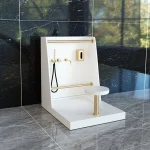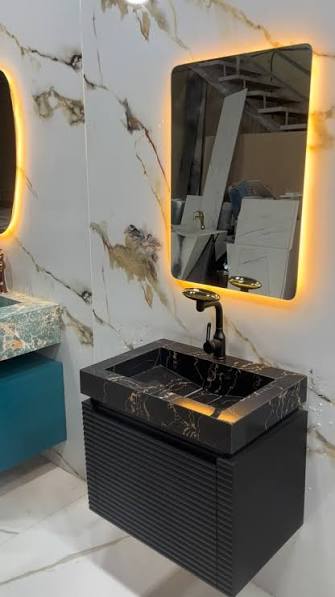

The design of washing facilities varies considerably between private homes and large religious buildings. A residential bathroom may require a compact fixture that fits within a limited footprint, while a mosque needs an arrangement capable of accommodating multiple worshippers. Despite these differences, both environments benefit from thoughtful basin selection, appropriate materials, and a layout that supports comfortable ablution.
When exploring available designs, a Muslim basin should be considered in relation to the building’s purpose, architectural character, and expected frequency of use. Different styles can serve different requirements, but the most suitable choice is one that combines practical washing dimensions with appropriate installation and maintenance arrangements.
Residential Basin Styles for Everyday Use
Homes generally have greater flexibility in choosing an interior style but less available space than many institutional buildings.
Compact Contemporary Models
Compact designs are useful for apartments and houses where a dedicated ablution corner needs to share space with an existing bathroom.
Simple geometric forms and neutral finishes can help the installation blend into the residential interior.
The basin should still provide sufficient space for the washing activities involved in Wudu.
Integrated Bathroom Arrangements
Some homeowners prefer an ablution station that forms part of a larger bathroom installation.
This approach can coordinate the washing fixture with existing countertops, storage, and wall finishes.
Careful positioning is necessary to prevent water from spreading toward dry circulation areas.
Dedicated Prayer Room Installations
Homes with separate prayer rooms may have space for an adjoining washing area.
A dedicated arrangement can provide greater convenience and keep the main prayer space away from unnecessary moisture.
Styles Suitable for Religious Buildings
Mosques and Islamic centers have different operational requirements.
Their washing facilities may experience concentrated use before prayers, requiring carefully planned circulation and multiple washing positions.
Linear installations can work well in long rooms where fixtures are arranged along a wall.
Coordinated multi-user systems may suit larger facilities where several worshippers need access simultaneously.
Customized installations can help address irregular room dimensions or specific architectural preferences.
The choice should be guided by congregation size and available floor space.
Selecting a Suitable Material
Material selection should reflect the installation environment.
Solid-surface materials may offer design flexibility and opportunities for coordinated finishes. Ceramic is widely used in sanitary applications, while stainless steel may suit particular commercial environments.
Natural stone can provide a distinctive appearance but requires attention to weight, porosity, and maintenance.
Each option should be evaluated using manufacturer documentation. Buyers should check the product’s intended application, cleaning requirements, and installation instructions.
Match the Design to the Building’s Architecture
A modern home may feature minimalist interiors with simple surfaces and concealed storage.
A traditional mosque may incorporate patterned tiles, arches, and warm natural colors.
A contemporary religious building might combine geometric architectural details with streamlined washing fixtures.
The basin should support the wider design rather than compete with it.
Color samples are useful when selecting finishes that need to coordinate with existing materials.
Consider the Different Needs of Users
The facility should accommodate its intended users comfortably.
For residential installations, family members may have different heights and mobility requirements.
In religious buildings, the design may need to accommodate children, older worshippers, and people with limited mobility.
Suitable seating, convenient faucet positioning, and clear circulation routes can improve usability.
Address Maintenance and Installation
Before ordering, confirm dimensions, weight, mounting requirements, and plumbing compatibility.
The floor should provide appropriate slip resistance, while drainage must prevent water accumulation.
Cleaning instructions should be available to whoever manages the property.
Regular inspections of faucets, seals, and drainage outlets can help maintain the installation.
Choosing a Style That Serves Its Environment
Modern homes and religious buildings may require different basin configurations, but both benefit from well-planned washing facilities.
By considering the building’s architectural style, available space, user requirements, and material characteristics, buyers can identify a suitable installation.
A successful design is not necessarily the most elaborate one. It is the arrangement that supports comfortable ablution while fitting naturally into the building’s everyday operation.