
The development of contemporary Islamic facilities reflects changing architectural preferences, improved building materials, and a growing emphasis on user experience. Modern mosques and community centers are expected to provide practical services while maintaining an atmosphere that respects religious traditions. Ablution facilities are an important part of this architectural approach because they serve worshippers before daily prayers and larger congregational gatherings.
A thoughtfully selected Wudu wash basin can contribute to both the functional and visual quality of these spaces. Contemporary products are available in different materials, configurations, and installation styles, allowing designers to respond to the requirements of individual projects. Exploring these possibilities helps architects, mosque committees, and property developers make informed decisions about their ablution facilities.
The Evolution of Contemporary Ablution Design
Traditional ablution spaces often relied on relatively simple arrangements of taps, water channels, and seating.
Modern projects have introduced more coordinated installations, improved surface finishes, integrated drainage arrangements, and fixtures designed specifically for user convenience.
This evolution reflects a broader architectural objective: making supporting religious facilities as carefully considered as the main prayer hall.
However, modern design should not replace the fundamental purpose of the washing area. Every new concept must continue to provide convenient access to water, appropriate washing dimensions, and a safe environment.
Exploring Modern Basin Configurations
Several contemporary arrangements are suitable for different Islamic facilities.
Individual Contemporary Units
Individual basins offer flexibility for smaller prayer rooms, private religious facilities, and buildings with irregular layouts.
They can be coordinated with existing interior finishes and may allow individual fixtures to be replaced without disturbing an entire installation.
Integrated Multi-User Designs
Integrated systems are particularly useful for busy mosques.
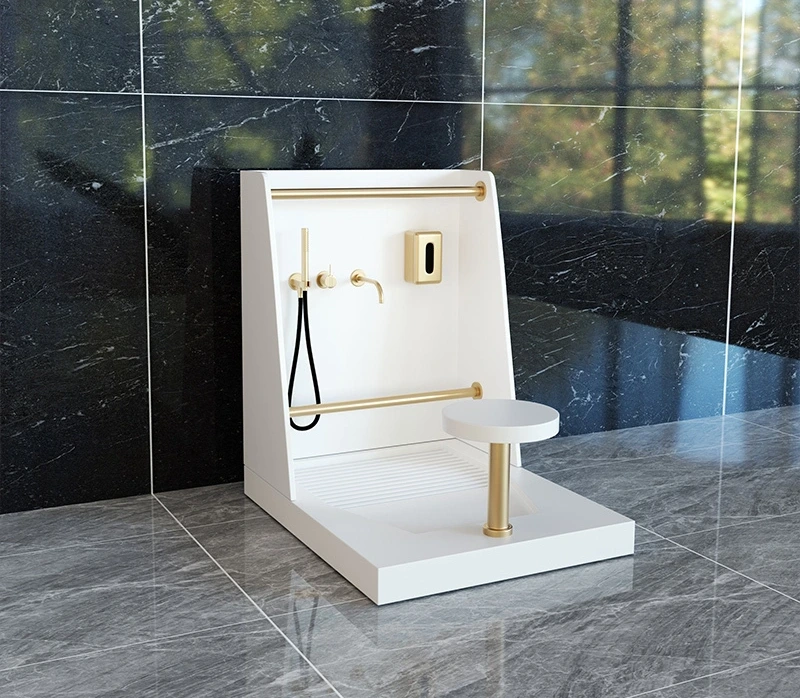
Multiple washing positions can be arranged within one coordinated structure, creating a consistent architectural appearance and supporting simultaneous use.
The design should provide sufficient space between users and allow convenient access to each faucet.
Custom Architectural Installations
Some projects require customized dimensions or distinctive design details.
Custom solutions can accommodate unusual room shapes, specific seating requirements, or preferred materials. They should be supported by accurate technical drawings and verified installation information before manufacturing.
Contemporary Materials and Finishes
Material selection is one of the strongest influences on the appearance of an ablution facility.
Ceramic: A versatile option with a familiar finish and established cleaning characteristics.
Solid surface: Suitable for certain integrated and customized designs, with flexibility in shaping and appearance.
Stainless steel: Often considered for practical public installations where durability and straightforward maintenance are priorities.
Natural stone: Provides distinctive texture and architectural character, although it may require additional care and surface treatment.
The choice should be guided by the product’s documented performance, the intended environment, and the available maintenance resources.
Integrating Technology into Washing Facilities
Modern building design increasingly incorporates technology to improve convenience and manage resources.
Sensor-operated faucets may be useful in public facilities where reducing unnecessary water flow is a priority. Other options include lever-operated controls and suitable aerators.
However, technology should be selected according to the facility’s needs. Sensor systems may require power, periodic servicing, and compatible plumbing arrangements.
Simple, reliable controls can sometimes be more appropriate than complex features, especially where maintenance resources are limited.
Sustainability and Responsible Water Use
Water management is an important consideration in contemporary ablution design.
Although Wudu requires access to running water, unnecessary consumption can be reduced through appropriate faucet selection, leak prevention, and sensible flow control.
Drainage systems should also be designed to handle regular usage without creating standing water.
Durable products and repairable components may support longer service life, reducing the need for premature replacement.
Accessibility and Inclusive Design
Contemporary Islamic facilities should accommodate worshippers with different physical abilities.
Accessible routes, seated washing stations, comfortable faucet positions, and adequate maneuvering space can make ablution facilities more inclusive.
The surrounding floor must provide suitable slip resistance, and seating should remain stable under normal use.
These provisions should be integrated into the architectural concept and checked against local accessibility requirements.
Interior Design and Cultural Identity
Modern ablution rooms can reflect the wider identity of an Islamic building through coordinated finishes and restrained decorative features.
Geometric patterns, natural stone textures, neutral colors, and carefully positioned lighting can create a distinctive yet peaceful environment.
The basin design should complement these elements rather than compete with them.
Good ventilation and moisture-resistant materials are equally important for maintaining the interior’s appearance.
Selecting a Design That Remains Relevant
Contemporary Wudu basin design offers considerable flexibility, but successful projects still depend on practical decision-making.
Architects and facility managers should evaluate dimensions, material quality, water management, installation requirements, accessibility, and long-term maintenance before approving a product.
By combining modern architectural ideas with the essential requirements of ablution, Islamic facilities can create washing environments that are functional, welcoming, and visually harmonious.
The most valuable contemporary designs are those that improve everyday usability while respecting the religious and cultural purpose of the buildings they serve.