
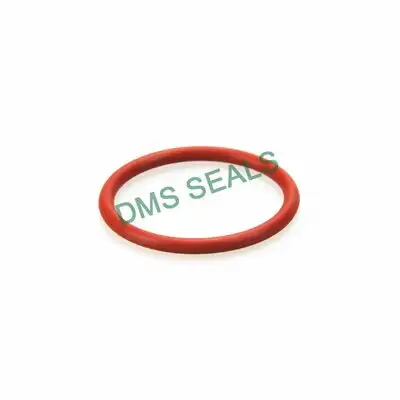

O-rings are small components, but their reliability can have a significant impact on the safety and efficiency of industrial equipment. Used in hydraulic systems, pumps, engines, pipelines, and many other applications, these seals must maintain their shape and sealing ability under different operating conditions. Even minor variations in material composition or dimensions can lead to leakage, premature wear, or equipment failure.
Maintaining dependable performance requires more than simply producing seals in large quantities. A professional O Ring Manufacturer follows a controlled production process that combines material selection, precision manufacturing, inspection, and performance testing. Each stage helps reduce inconsistencies and ensures that finished products meet the requirements of their intended applications.
Selecting Suitable Materials
Material selection is one of the first steps in producing a reliable O-ring. Different applications expose seals to varying temperatures, pressures, chemicals, and mechanical stresses. Manufacturers must understand these conditions before choosing an appropriate elastomer.
Common O-ring materials include:
- Nitrile rubber (NBR): Frequently used in applications involving petroleum-based oils, fuels, and hydraulic fluids.
- Fluorocarbon (FKM): Suitable for many high-temperature environments and applications requiring chemical resistance.
- Silicone: Offers flexibility across a broad temperature range and is commonly used in specialized industrial and food-related applications.
- EPDM: Often selected for water, steam, and weather-resistant sealing applications.
- Neoprene: Provides a balance of properties for certain industrial and environmental conditions.
The correct material helps prevent swelling, cracking, hardening, and other forms of deterioration. Manufacturers also consider hardness, elasticity, compression set, and compatibility with the operating medium when developing a suitable compound.
Maintaining Consistency in Rubber Compounding
Once the material type is selected, manufacturers prepare the rubber compound. This process involves combining the base elastomer with carefully measured ingredients such as curing agents, fillers, pigments, and processing additives.
Accurate proportions are important because even small formulation differences can affect the finished seal’s physical properties. Variations may influence hardness, tensile strength, flexibility, and resistance to heat or chemicals.
To maintain consistency, manufacturers use controlled mixing procedures and monitor production parameters. Batch records and material traceability can also help identify the source of a problem if a finished product does not meet specifications.
Using Precision Molding Techniques
Molding determines the O-ring’s shape and contributes to its dimensional accuracy. Manufacturers generally use one of three common methods, depending on production volume, material, design, and application requirements.
Compression Molding
Compression molding involves placing a measured amount of rubber compound into a heated mold cavity. Pressure and heat form the material into the required shape.
This method is widely used for producing O-rings in different sizes and materials. Proper control of mold temperature, pressure, and curing time helps minimize defects and dimensional variations.
Injection Molding
In injection molding, prepared rubber compound is injected into closed mold cavities. The process supports efficient production and can provide consistent results when the equipment and process settings are properly controlled.
It is particularly useful for larger production runs where repeatability and manufacturing efficiency are important.
Transfer Molding
Transfer molding uses a separate chamber to move the rubber compound into the mold cavities under pressure. It can be suitable for certain designs and production requirements where controlled material distribution is needed.
Regardless of the method, manufacturers must monitor mold condition, temperature, pressure, and cycle time to maintain uniform results.
Controlling the Curing Process
Curing, also known as vulcanization, gives rubber many of the properties needed for effective sealing. During this stage, heat activates chemical reactions that create crosslinks within the elastomer.
The curing process affects elasticity, strength, hardness, and resistance to permanent deformation. Under-curing may leave an O-ring too soft or mechanically weak, while over-curing can make it excessively hard or brittle.
Manufacturers establish suitable curing conditions for each compound and product design. Consistent temperature and curing time are essential to achieving the intended physical properties across production batches.
Applying Dimensional and Visual Inspections
An O-ring must fit its groove correctly to create an effective seal. Differences in inside diameter, outside diameter, or cross-sectional thickness can affect compression and sealing performance.
Quality inspection helps identify problems before products reach customers. Common checks include:
- Dimensional measurement: Verifies that critical measurements meet the required specifications.
- Visual inspection: Identifies surface defects such as cracks, cuts, air bubbles, flash, or incomplete molding.
- Hardness testing: Checks whether the material has the specified resistance to indentation.
- Weight and appearance checks: Help identify inconsistencies between production batches.
- Surface condition assessment: Ensures that imperfections do not compromise sealing performance.
Depending on the product and application, manufacturers may use calibrated measuring instruments, optical equipment, and automated inspection systems to improve accuracy.
Conducting Performance and Material Tests
Dimensional accuracy alone does not guarantee that an O-ring will perform reliably. Manufacturers also evaluate the physical and mechanical properties of rubber compounds to confirm that they meet defined requirements.
Typical tests include tensile strength, elongation at break, compression set, and resistance to temperature or selected fluids. These tests provide information about how a material may behave under stress and during extended service.
Compression set is especially relevant to sealing applications. It measures the extent to which rubber retains permanent deformation after being compressed for a specified period under controlled conditions. A high compression set can reduce an O-ring’s ability to maintain contact pressure and prevent leakage.
For demanding applications, additional testing may be required to assess chemical compatibility, aging resistance, or performance under simulated operating conditions.
Following Documented Quality Management Procedures
Reliable production depends on repeatable processes rather than occasional inspections. Quality management procedures help manufacturers define how materials are received, products are manufactured, defects are handled, and finished goods are approved.
A documented system may include:
- Incoming material inspection and supplier verification.
- Approved production instructions and process settings.
- Equipment calibration and preventive maintenance.
- In-process inspection at important manufacturing stages.
- Final product testing and batch approval.
- Recordkeeping, traceability, and corrective action procedures.
Standards such as ISO 9001 can provide a framework for managing quality processes. For O-rings, specifications such as ISO 3601 are also relevant to dimensions, tolerances, and certain product requirements. The applicable standard depends on the intended use and customer specifications.
Reducing Defects Through Process Improvement
Even established manufacturing operations can experience defects if production conditions change or equipment begins to wear. Consistent quality therefore requires ongoing monitoring and improvement.
Manufacturers may review inspection data, customer feedback, rejected batches, and production records to identify recurring issues. If a problem is detected, corrective actions can address its underlying cause rather than simply removing defective products.
For example, repeated dimensional variations may indicate worn tooling, unstable molding conditions, or inconsistent material preparation. Investigating these factors can help prevent the same issue from occurring in future production runs.
Regular employee training and equipment maintenance also contribute to dependable manufacturing outcomes.
Packaging and Storage Considerations
Quality control does not end when an O-ring passes inspection. Improper packaging or storage can affect rubber products before they are installed.
O-rings should generally be protected from direct sunlight, excessive heat, ozone sources, contamination, and unnecessary mechanical stress. Packaging should prevent deformation and keep products clean during transportation and storage.
Manufacturers may provide guidance on recommended storage conditions and handling practices. Following these instructions helps preserve the product’s properties until installation.
What Buyers Should Look for in a Manufacturer
Businesses sourcing O-rings should evaluate more than price and production capacity. A manufacturer’s quality procedures, technical knowledge, and ability to meet application-specific requirements are equally important.
Before placing an order, buyers can consider the following questions:
- Can the manufacturer supply the required material grades?
- Are product dimensions and tolerances clearly documented?
- What inspection and testing procedures are used?
- Can the manufacturer provide material or batch traceability?
- Are custom sizes and specifications available?
- Does the manufacturer have suitable production capacity for repeat orders?
- Can technical documentation be provided when required?
Clear communication about operating temperature, pressure, fluid compatibility, and installation conditions helps manufacturers recommend suitable products and avoid unnecessary specification errors.
Conclusion
Consistent O-ring quality depends on careful control throughout the manufacturing process. Material selection, rubber compounding, precision molding, curing, inspection, and performance testing all contribute to the reliability of the finished seal.
Manufacturers that maintain documented procedures and continuously improve their production methods are better positioned to deliver products with dependable dimensions and material properties. For buyers, understanding these quality practices makes it easier to evaluate suppliers and select O-rings that meet the demands of their equipment and operating environments.
