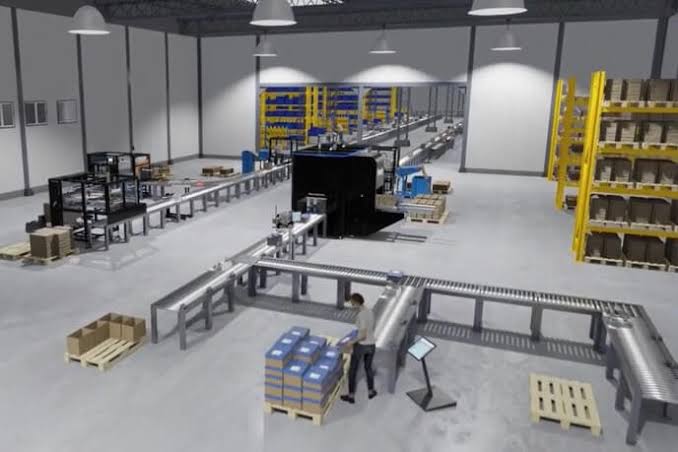

End-of-line packaging automation helps manufacturers improve production efficiency, reduce repetitive manual work, and prepare finished products for distribution. However, implementing and operating an automated packaging system can involve several technical and operational challenges. Issues such as machine compatibility, production bottlenecks, equipment downtime, and packaging inconsistencies can affect the performance of an entire production line.
End of Line Packaging Automation combines different machines and technologies to handle activities such as carton forming, case packing, sealing, labeling, palletizing, and wrapping. Although these systems offer significant advantages, achieving reliable performance requires careful planning, proper integration, and ongoing maintenance. Understanding common challenges and their solutions can help manufacturers build more efficient packaging operations.
1. Integration Problems Between Different Machines
One of the most common challenges is connecting different machines into a coordinated packaging system.
Manufacturers may use equipment from different suppliers, with each machine having its own operating speed, control system, communication protocol, and mechanical specifications. If these components are not compatible, the packaging line may experience interruptions or inefficient product movement.
Solution:
Before purchasing equipment, manufacturers should evaluate the compatibility of all machines. Important factors include conveyor dimensions, transfer heights, production speeds, control interfaces, and communication requirements.
Using suitable programmable logic controllers (PLCs) and industrial communication systems can help coordinate equipment operations. A complete integration plan should also include testing to confirm that products move smoothly between packaging stations.
2. Production Bottlenecks
A packaging bottleneck occurs when one machine cannot process products as quickly as the preceding operation supplies them.
For example, a case packing machine may handle fewer cartons per minute than the upstream production equipment. This can cause products to accumulate on conveyors and interrupt the overall workflow.
Solution:
Manufacturers should evaluate the capacity of every machine rather than selecting equipment based only on the speed of one component.
Production analysis can identify operations that require additional capacity. Possible improvements include upgrading a slow machine, adjusting conveyor speeds, adding accumulation systems, or reorganizing packaging stations.
Proper synchronization helps maintain a balanced production flow.
3. Unexpected Equipment Downtime
Automated packaging lines depend on mechanical, electrical, pneumatic, and control components. A failure in any important component can interrupt operations.
Common causes of downtime include worn belts, damaged sensors, electrical faults, pneumatic leaks, and mechanical alignment problems.
Solution:
A preventive maintenance program is essential for maintaining equipment reliability.
Manufacturers should establish regular inspection schedules and check important components for signs of wear. Maintenance teams should also monitor machine alarms, replace damaged parts, and keep essential spare components available.
Operator training can help employees recognize early warning signs before minor problems develop into major equipment failures.
4. Difficulty Handling Different Product Sizes
Manufacturers often process multiple product types with different dimensions, shapes, and weights. Equipment designed for one product format may not automatically accommodate another.
Frequent product changes can create setup delays and reduce production efficiency.
Solution:
Businesses should select packaging machinery that supports their required product range.
Adjustable guides, programmable settings, interchangeable gripping tools, and recipe-based controls can make product changeovers easier.
Before investing in equipment, manufacturers should provide suppliers with detailed product samples, dimensions, weights, and packaging specifications.
This helps ensure that the proposed machinery can handle current and expected product variations.
5. Incorrect Carton Forming and Sealing
Carton forming and sealing are essential packaging activities. Poorly formed boxes or incomplete closures can affect product protection and create problems during transportation.
Common causes include incorrect machine settings, unsuitable carton materials, worn mechanical components, and inconsistent carton dimensions.
Solution:
Manufacturers should use cartons that meet the specifications of the selected equipment.
Automatic case erectors and sealing machines must be adjusted according to carton dimensions and material characteristics. Regular inspections should verify folding accuracy, tape placement, adhesive application, and closure quality.
Replacing worn components and maintaining correct machine settings can help reduce packaging defects.
6. Inconsistent Palletizing Patterns
Palletizing involves arranging finished cartons onto pallets in stable configurations. Incorrect stacking patterns can create uneven loads that may shift during transportation.
Manual palletizing can produce variations, while automated systems may also experience problems if carton dimensions or stacking instructions are incorrect.
Solution:
Manufacturers should define suitable pallet patterns according to carton size, weight, pallet dimensions, and transportation requirements.
Robotic and conventional palletizers can follow programmed stacking arrangements. Load stability should be tested before regular production begins.
Stretch wrapping systems can then secure completed pallet loads to help reduce movement during storage and shipping.
7. Sensor and Control System Malfunctions
Sensors and control systems help automated packaging equipment detect products, manage machine timing, and coordinate operations.
A faulty sensor may fail to identify a carton, while incorrect control settings can interrupt machine sequences.
Solution:
Sensors should be inspected regularly for damage, contamination, incorrect positioning, and electrical connection problems.
Control programs should be configured according to the actual packaging process. Manufacturers should also maintain clear documentation of machine settings and control-system changes.
Technicians with appropriate training can troubleshoot recurring faults and verify that sensors communicate correctly with the PLC.
8. Limited Factory Space
Installing an automated packaging line can be difficult when a manufacturing facility has limited floor space.
Packaging machines, conveyors, palletizing equipment, and operator access areas all require sufficient room. Poor layout planning can create restricted movement and make maintenance difficult.
Solution:
Manufacturers should prepare a detailed factory layout before purchasing equipment.
The design should consider machine dimensions, conveyor routes, product movement, electrical connections, material storage, operator access, and maintenance clearance.
Compact machinery and modular packaging systems may be suitable for facilities with limited space.
A well-planned layout can also reduce unnecessary product movement between production and warehouse areas.
9. High Initial Investment
Automated packaging systems require investment in machinery, installation, integration, and employee training.
For small and medium-sized manufacturers, the initial cost may create financial challenges.
Solution:
Businesses should begin by identifying the packaging operations that create the greatest labor costs or production delays.
Instead of automating the entire line immediately, manufacturers can introduce equipment in stages.
For example, a business may first install an automatic carton sealer and later add case packing or palletizing equipment.
A cost-benefit analysis should compare the investment with expected improvements in productivity, labor utilization, packaging consistency, and material consumption.
10. Shortage of Skilled Operators and Maintenance Personnel
Automated packaging equipment requires employees who understand machine operation, basic troubleshooting, and maintenance procedures.
A lack of trained personnel can result in incorrect settings, delayed fault resolution, and unnecessary equipment downtime.
Solution:
Manufacturers should arrange practical training for operators, supervisors, and maintenance technicians.
Training should cover machine startup and shutdown, operating controls, safety procedures, product changeovers, basic troubleshooting, and preventive maintenance.
Clear operating instructions and equipment documentation can also help employees manage routine activities more effectively.
11. Packaging Material Compatibility Issues
Packaging materials can influence machine performance. Cartons with inconsistent dimensions, weak board construction, or unsuitable surface characteristics may cause feeding and sealing problems.
Similarly, stretch film with unsuitable thickness or elasticity can affect pallet wrapping performance.
Solution:
Businesses should select packaging materials that meet equipment specifications and product protection requirements.
Suppliers should provide material samples for machine testing before large-scale purchasing decisions are made.
Manufacturers should also monitor material quality during regular production to identify changes that may affect packaging performance.
12. Product Damage During Automated Handling
Automated packaging equipment must handle products carefully, especially when dealing with fragile containers, irregular shapes, or sensitive goods.
Incorrect gripping pressure, poorly positioned guides, or excessive conveyor speeds can cause damage.
Solution:
Equipment should be configured according to product characteristics.
Manufacturers may need specialized robotic grippers, adjustable conveyor guides, protective handling components, or controlled transfer mechanisms.
Testing with actual products is important before full-scale operation. Regular inspection can help identify handling problems and prevent repeated damage.
13. Labeling and Coding Errors
Incorrect labels, missing batch numbers, and unreadable barcodes can create difficulties in inventory management and distribution.
These problems may occur because of incorrect printing settings, sensor faults, label feeding issues, or outdated product information.
Solution:
Automated labeling and coding equipment should be configured using verified product data.
Barcode scanners and machine vision systems can help check whether labels are present and readable. Manufacturers should also establish procedures for updating product information during changeovers.
Regular testing of printed codes and label placement can help maintain identification accuracy.
14. Lack of Real-Time Production Monitoring
Without adequate monitoring, manufacturers may struggle to identify recurring machine interruptions, performance problems, and packaging defects.
This can make it difficult to determine which part of the production line requires improvement.
Solution:
Businesses can integrate monitoring systems that collect information about machine status, production output, downtime, and rejected packages.
Human-machine interfaces allow operators to view machine conditions and respond to alarms. More advanced production monitoring systems can provide information for performance analysis and maintenance planning.
Using this data helps managers identify recurring issues and make informed operational decisions.
15. Difficulty Expanding Existing Packaging Lines
As businesses grow, their packaging requirements may change. A system designed for a particular production volume may eventually become insufficient.
Expanding an existing line can be challenging if the original equipment layout or control architecture does not support additional machinery.
Solution:
Manufacturers should consider future production requirements during the initial system design.
Modular equipment, flexible conveyors, expandable control systems, and adjustable packaging machinery can make future upgrades easier.
Businesses should also discuss expected production growth with equipment suppliers before finalizing their automation plans.
Best Practices for Maintaining Reliable End-of-Line Packaging Operations
Addressing individual equipment problems is important, but manufacturers also need a structured approach to maintaining overall system performance.
Several practices can support more reliable operations:
- Schedule preventive maintenance: Inspect mechanical, electrical, and pneumatic components regularly.
- Monitor production performance: Track machine output, downtime, and packaging defects.
- Train employees: Ensure operators understand equipment settings, safety procedures, and basic troubleshooting.
- Maintain spare parts: Keep essential replacement components available to reduce repair delays.
- Inspect packaging materials: Verify that cartons, labels, tape, and wrapping film meet required specifications.
- Review machine synchronization: Confirm that connected equipment operates at compatible speeds.
- Evaluate system performance: Identify recurring bottlenecks and make improvements based on production data.
Combining these practices helps manufacturers reduce avoidable interruptions and maintain consistent packaging quality.
Conclusion
End-of-line packaging automation can improve manufacturing efficiency, but successful implementation requires businesses to address challenges involving machine integration, equipment downtime, production bottlenecks, packaging materials, and employee training. Problems with carton handling, labeling, palletizing, and system synchronization can affect the performance of the entire packaging line if they are not managed properly.
Manufacturers can overcome these challenges through careful equipment selection, preventive maintenance, operator training, system monitoring, and effective production planning. A well-designed automation solution should match current packaging requirements while allowing room for future expansion.
For businesses exploring integrated packaging machinery and ways to improve their final production processes, Techflow Pack provides a relevant industry reference when evaluating equipment solutions for more efficient and reliable packaging operations.