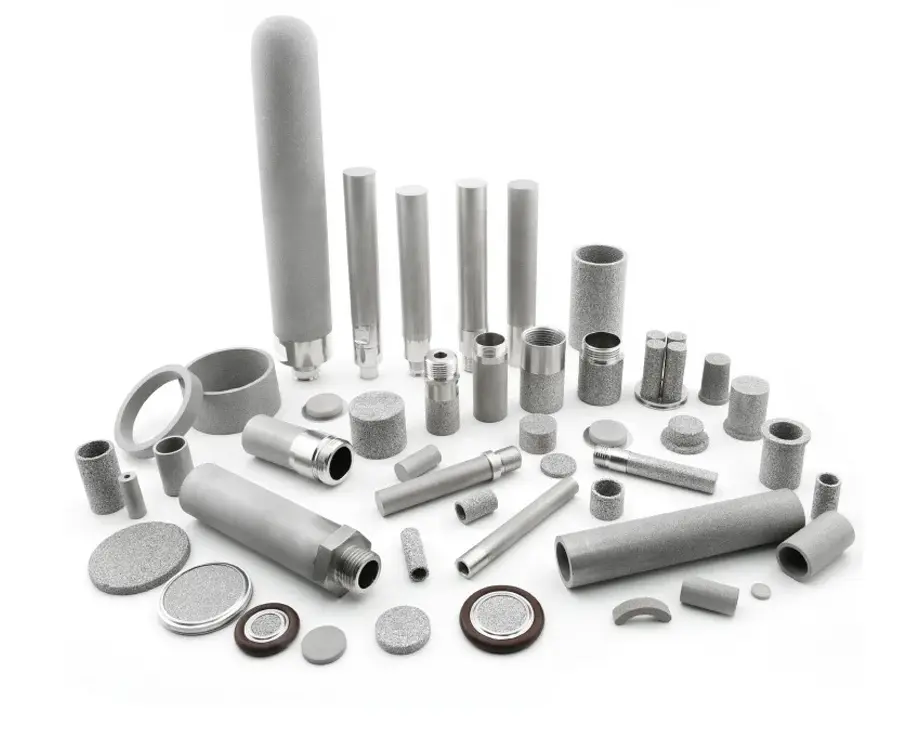

Industrial filtration systems must separate unwanted particles from liquids or gases without creating unacceptable restrictions in the process flow. The filter material must withstand the fluid, operating pressure, temperature, and cleaning method involved. In applications where durability and controlled porosity are important, porous metal components can provide an alternative to disposable paper or polymer media. Sintered metal filters are manufactured by bonding metal particles while preserving a network of pores through which fluid can pass.
When specifying Sintered Metal Filters, engineers should evaluate filtration rating, permeability, material compatibility, pressure conditions, and cleaning requirements together. The filter’s pore structure is central to its function, but overall performance also depends on the housing, seals, flow direction, and operating process.
Understanding the porous structure
A sintered metal filter is commonly produced from metal powder selected for chemical and mechanical compatibility with the process fluid. The powder is shaped and heated under controlled conditions so that particles bond together. The resulting material contains interconnected openings that allow fluid or gas to pass through while retaining particles according to the filter’s design.
The pore network can be influenced by powder characteristics, particle size distribution, compaction, and sintering conditions. Manufacturers use these variables to develop a structure with a defined balance between permeability, filtration performance, and mechanical strength.
Pore size should not be confused with a simple guarantee that every particle of a particular dimension will be captured. Actual filtration efficiency depends on the pore distribution, media thickness, flow conditions, particle characteristics, and the test method used to establish the rating.
Materials and construction options
Stainless steel is commonly considered for applications requiring corrosion resistance, cleanability, and mechanical durability. Other metal materials may be suitable where the fluid chemistry, temperature, or cost requirements differ. The choice should be based on compatibility with the process rather than on material name alone.
Filter elements can be produced in different forms, including discs, tubes, plates, and custom-shaped components. Tubular filters may provide a large filtration surface within a compact housing, while discs can be used in assemblies where flow passes through a flat element.
The component may also be designed for a particular connection, support structure, or installation orientation. These details matter because an otherwise suitable filter can perform poorly if bypass occurs around the element or if the assembly cannot withstand operating pressure.
Advantages in industrial service
A key advantage of sintered metal media is mechanical strength. Compared with many disposable filter materials, a suitable metal element can withstand demanding operating conditions and may be cleaned for reuse. This can reduce replacement frequency in applications where the media remains chemically compatible and structurally sound.
Metal filters can also tolerate elevated temperatures when the selected alloy and design are appropriate. This makes them relevant to processes involving hot gases, heated liquids, or conditions unsuitable for certain polymer media.
Their rigid structure can help maintain a stable filtration geometry. In addition, manufacturers can develop custom dimensions and configurations for specific equipment, subject to practical production limits.
Reusability should not be assumed in every situation. Cleaning effectiveness depends on the contaminant, pore structure, cleaning method, and degree of loading. Some applications may require replacement after a defined service period.
Where these filters are used
Sintered metal filters are used in chemical processing, petrochemical operations, water treatment, food and beverage equipment, pharmaceutical manufacturing, gas handling, and industrial machinery. They may remove particles from process liquids, protect downstream equipment, distribute gases, or provide filtration in specialized production systems.
The required performance differs between sectors. A chemical process may prioritize corrosion resistance, while a gas system may emphasize pressure capability and flow stability. In a sensitive manufacturing environment, material cleanliness and documentation may be especially important.
Understanding filtration performance
Several technical values should be reviewed before choosing a filter. These include nominal or absolute filtration rating, permeability, pressure drop, maximum operating pressure, temperature range, and expected contaminant loading.
Flow rate and pressure drop are closely connected. A finer filtration structure may retain smaller particles but can create greater resistance to flow. Selecting an element without considering the system’s pump or compressor capacity may lead to inadequate throughput.
Engineers should also determine whether filtration occurs from inside to outside or outside to inside. This affects housing design, contaminant collection, and cleaning arrangements.
Cleaning, inspection, and service life
Cleaning procedures should be compatible with both the metal and the contaminant. Backwashing, ultrasonic cleaning, chemical cleaning, or other methods may be considered where approved by the manufacturer. Excessive mechanical force or unsuitable chemicals can damage the porous structure.
Inspection should assess deformation, cracks, corrosion, blockage, and changes in pressure drop or flow performance. A filter that cannot be restored to its required performance should be replaced.
Selecting a filter for the process
Sintered metal filters are valuable where controlled porosity, mechanical strength, and potential cleanability support industrial requirements. The best selection balances filtration performance with flow, pressure, temperature, material compatibility, and maintenance needs. Defining these conditions before procurement helps ensure that the filter is suited to the process rather than simply to the nominal filtration rating.