
Introduction
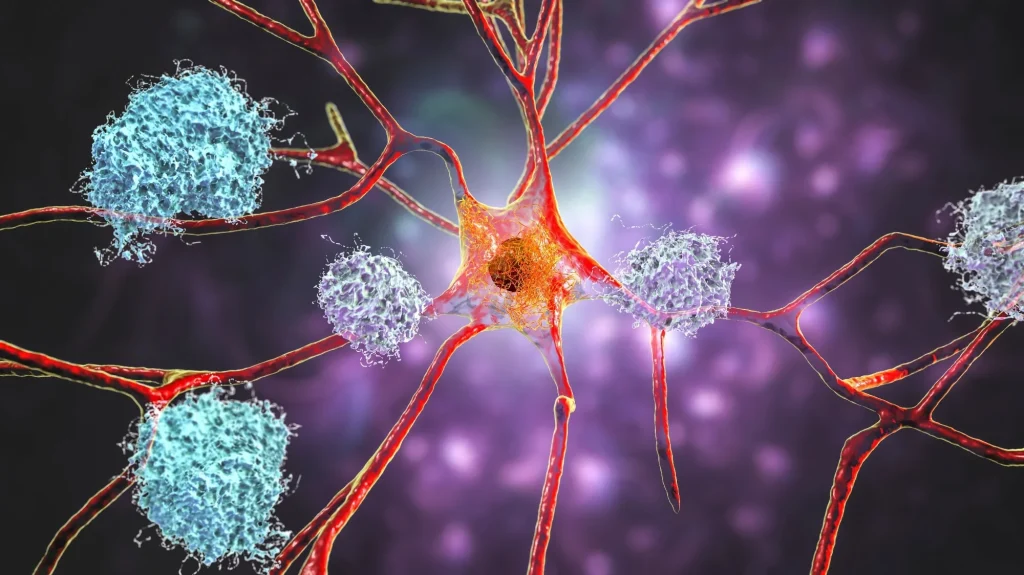
Phosphorylated tau at threonine 181, commonly known as p-tau 181, is an important biomarker investigated in Alzheimer’s disease and neurodegenerative disease research. Measuring this protein helps researchers explore tau-related biological changes, compare experimental samples, and investigate relationships between different biomarkers. As research laboratories seek more consistent analytical procedures, automated chemiluminescence immunoassay (CLIA) platforms have become an important option to consider for quantitative biomarker workflows.
An automated clia p-tau 181 workflow combines instrument-controlled analytical steps with antibody-based target recognition and light-based signal measurement. Depending on the analyzer and compatible reagent system, automation can help standardize selected operations, reduce manual handling, and support efficient sample processing. Understanding each stage, from sample preparation to result review, helps researchers evaluate workflow requirements and maintain reliable analytical performance.
Understanding CLIA Technology for p-tau 181 Measurement
Chemiluminescence immunoassays use specific antibodies to recognize a target molecule and a chemical reaction to generate measurable light. In a p-tau 181 assay, the antibody system is designed to recognize tau phosphorylated at threonine 181.
The intensity of the emitted light is measured by a compatible analyzer. Through calibration, the measured signal can be related to the concentration of p-tau 181 in the sample.
Automated CLIA systems may control several steps, including reagent handling, incubation, washing, signal generation, and measurement. The exact functions depend on the instrument model and assay configuration.
Automation does not eliminate the need for validated reagents, proper sample handling, calibration, and quality control. Each component contributes to the reliability of the final result.
1. Sample Collection and Preparation
The workflow begins before samples enter the analyzer. Proper collection and preparation are essential because sample-related variation can affect subsequent measurements.
Select the Appropriate Sample Type
P-tau 181 research may involve different biological matrices, including:
- Plasma
- Serum
- Cerebrospinal fluid (CSF)
Not every assay is validated for all these sample types. Researchers should confirm that the intended matrix is supported by the specific reagent system.
Standardize Sample Collection
Collection procedures should be consistent across study samples. Relevant factors include collection materials, processing intervals, and sample identification.
Process and Store Samples Correctly
Samples should be processed and stored according to validated procedures and the assay manufacturer’s instructions. Unnecessary delays, inappropriate storage conditions, and repeated freeze-thaw cycles may affect sample integrity.
Check Sample Quality
Before analysis, researchers should review sample identification, volume, appearance, and any matrix-specific acceptance criteria. Samples that do not meet predefined requirements should be handled according to the laboratory’s documented procedures.
2. Reagent Preparation and Instrument Readiness
Once samples are prepared, the laboratory must ensure that the reagents and analyzer are ready for the analytical run.
Reagent Preparation
Depending on the assay format, reagents may include capture antibodies, detection antibodies, buffers, calibrators, and signal-generating components.
Laboratory personnel should follow the manufacturer’s instructions for:
- Storage temperature
- Reagent reconstitution
- Mixing requirements
- Dilution procedures
- Stability after opening
- Expiration and lot identification
Improper reagent handling can affect antibody activity and signal generation.
Instrument Readiness
Before loading samples, operators should confirm that the analyzer is ready for use.
Common checks include:
- Instrument status and maintenance records
- Reagent availability
- Consumable availability
- Waste-container capacity
- Calibration status
- Quality-control requirements
- System alerts or error messages
The exact preparation steps vary between analyzer models, so the instrument’s operating documentation should guide the process.
3. Sample Loading and Identification
Sample loading is a critical stage because errors in sample identity or placement can compromise the entire analytical workflow.
In an automated CLIA system, samples may be loaded into designated positions or sample racks. The analyzer then processes them according to its configured operating procedure.
Accurate Sample Identification
Each sample should have a unique identifier that corresponds to the laboratory’s records. Barcode-based identification, where supported, can help reduce manual transcription errors.
Verify Sample Placement
Operators should confirm that samples are positioned correctly and that the instrument recognizes the required sample information.
Check Sample Volume
The available sample volume must meet the assay’s requirements. Insufficient volume may prevent testing or lead to an invalid result.
Maintain Traceability
Sample identifiers, analytical run details, and relevant processing information should be recorded to support traceability and later review.
4. Automated Reagent Dispensing
Following sample loading, the analyzer may dispense the required assay reagents according to its programmed procedure.
In a typical antibody-based CLIA format, the sample is brought into contact with reagents designed to capture and detect the target protein.
Automated dispensing can help standardize reagent volumes and reduce some sources of manual pipetting variation.
However, reliable dispensing still depends on:
- Proper reagent installation
- Correct assay configuration
- Instrument maintenance
- Reagent quality
- Compatibility between the reagent system and analyzer
Researchers should confirm that the specific p-tau 181 reagents are validated for use with the selected instrument.
5. Antibody Binding and Target Recognition
Antibody recognition is central to the measurement process.
In a typical sandwich immunoassay, a capture antibody binds the target molecule, while a second antibody recognizes another part of the target and contributes to signal detection.
For p-tau 181 measurement, the antibody combination must be designed to recognize the intended phosphorylated tau form.
Why Specificity Matters
Tau exists in different molecular forms and phosphorylation states. An assay should distinguish its intended target from related forms to the extent established by its validation.
Incubation Conditions
The binding reaction depends on conditions such as incubation time, temperature, reagent concentration, and sample composition.
Automated systems may control these conditions, helping reduce some operator-dependent differences. The actual parameters must follow the validated assay procedure rather than being assumed to be the same across platforms.
6. Washing and Separation Steps
Some immunoassay formats include washing or separation steps to remove unbound material before signal measurement.
These steps can help reduce background signal and improve the distinction between target-associated and nonspecific responses.
The effectiveness of washing depends on the assay design and the instrument’s fluid-handling system.
Potential factors influencing performance include:
- Washing volume
- Number of wash cycles
- Fluid delivery consistency
- Reaction vessel design
- Reagent characteristics
Not all CLIA formats use identical separation procedures. Laboratories should follow the specific workflow documented for the assay.
7. Chemiluminescent Signal Generation
After target recognition and any required separation steps, the assay generates a measurable light signal.
The chemistry depends on the detection system. In a typical chemiluminescence immunoassay, a signal-generating reagent participates in a reaction that produces photons.
The signal is associated with the amount of target recognized by the assay, within the validated analytical range.
Factors That Influence Signal Generation
- Detection reagent quality
- Antibody binding performance
- Reaction conditions
- Reagent stability
- Background signal
- Instrument detection characteristics
Consistent reagent handling and validated reaction conditions are important for producing reliable signals.
8. Automated Signal Detection
The analyzer measures the emitted light using its detection system.
The instrument records the signal according to the assay’s programmed settings and uses the measurement as the basis for quantitative analysis.
Automated signal detection can reduce manual measurement steps and support standardized data collection.
However, signal measurement should be evaluated as part of the complete analytical method. Instrument performance, calibration, reagent compatibility, and background characteristics all influence the reported result.
9. Calibration and Quantitative Calculation
A measured signal does not directly represent a concentration until it has been interpreted using an appropriate calibration relationship.
Calibration establishes how assay signals correspond to known analyte concentrations.
Calibration Standards
Calibrators with assigned concentrations are analyzed according to the assay procedure. Their measured signals are used to establish the calibration curve.
Calibration Model
The selected curve-fitting model should be appropriate for the assay’s validated response characteristics. Researchers should not assume that all immunoassays use the same calibration model.
Concentration Calculation
The analyzer or associated software compares the sample signal with the calibration relationship to estimate the p-tau 181 concentration.
Results Outside the Measuring Range
Samples with results below the validated quantification limit or above the upper measuring limit should be handled according to the assay’s documented procedures.
Dilution and repeat testing may be appropriate when supported by the method. Unvalidated extrapolation should be avoided.
10. Quality Control and Result Verification
Quality control is essential before analytical results are accepted for research use.
Control materials help laboratories assess whether the assay is performing within predefined limits.
Common Quality-Control Checks
Control sample performance: Review whether control results meet established acceptance criteria.
Calibration status: Confirm that calibration is valid for the analytical run.
Instrument alerts: Investigate error messages, maintenance warnings, or unusual operating conditions.
Reagent status: Check reagent expiration, stability, and lot information.
Replicate agreement: Where replicate testing is used, assess whether results meet the laboratory’s precision criteria.
If quality-control requirements are not met, the laboratory should follow its documented procedures for investigating the problem and determining whether results need to be repeated.
11. Result Review and Reporting
Once the analytical run is complete and quality-control criteria are satisfied, researchers can review the calculated results.
A well-organized reporting process should include:
- Sample identification
- Measured p-tau 181 concentration
- Reporting units
- Assay and reagent identification
- Calibration information
- Quality-control status
- Relevant sample-processing details
- Any dilution or repeat-testing information
Researchers should also record the analytical measuring range and the treatment of results outside that range.
P-tau 181 results should be interpreted in the context of the research design, sample type, and assay limitations. An RUO measurement is not automatically suitable for clinical diagnosis or patient-management decisions.
Key Advantages of Automation in CLIA Workflows
Automation can offer practical benefits when the analyzer and reagent system are appropriately matched.
Standardized Processing
Instrument-controlled steps can reduce some manual differences in reagent dispensing, incubation, and signal measurement.
Reduced Manual Handling
Automated processing may reduce the number of repetitive tasks performed by laboratory personnel.
Workflow Efficiency
Depending on the instrument’s capacity and configuration, automation may help laboratories process multiple samples more efficiently.
Consistent Signal Measurement
Instrument-based detection provides a standardized way to measure chemiluminescent signals.
Data Handling
Some platforms offer software features that support calibration, result calculation, and analytical record management.
These benefits depend on the specific analyzer and assay. Automation does not guarantee high precision or accuracy without suitable validation and quality control.
Common Challenges in Automated p-tau 181 CLIA Testing
Even automated workflows can experience analytical problems.
| Potential challenge | Possible effect | Recommended consideration |
|---|---|---|
| Poor sample quality | Inconsistent or unreliable measurements | Establish sample acceptance criteria |
| Reagent deterioration | Reduced or variable signal | Follow storage and stability instructions |
| Incorrect sample identification | Results assigned to the wrong sample | Verify identifiers and loading records |
| Incompatible reagents | Unexpected analytical performance | Confirm assay-analyzer compatibility |
| Calibration problems | Biased concentration estimates | Verify calibration and control results |
| Instrument maintenance issues | Variable signal measurement | Follow maintenance procedures |
| Matrix interference | Altered assay response | Evaluate the intended sample matrix |
| Results outside the measuring range | Unreliable concentration estimates | Apply validated dilution or repeat procedures |
A documented troubleshooting process helps identify whether an issue originates from sample preparation, reagent performance, calibration, or instrument operation.
How to Evaluate an Analyzer for p-tau 181 Research
Laboratories considering automated CLIA equipment should review more than general instrument specifications.
Assay Compatibility
Confirm that the p-tau 181 reagent system is specifically supported and validated for the analyzer.
Sample Throughput
Assess whether the instrument’s capacity aligns with the expected number of samples and the laboratory’s testing schedule.
Automation Features
Review which stages are automated and which still require manual intervention.
Calibration and Quality Control
Determine how the analyzer handles calibration, control materials, and result review.
Maintenance and Technical Support
Consider maintenance requirements, service availability, operator training, and access to technical assistance.
Data Management
Review whether the system provides the reporting and record-keeping functions required by the laboratory.
The SHINE i2910 Chemiluminescence Immunoassay Analyzer is an example of a CLIA instrument that laboratories may evaluate when considering their analytical workflow. Its suitability for p-tau 181 measurement must be confirmed against the specific reagent system, application requirements, and available validation information.
Best Practices for Reliable Automated CLIA Workflows
Laboratories can improve consistency by applying a structured approach throughout the analytical process.
- Confirm the intended use and compatibility of the assay reagents.
- Standardize sample collection, processing, and storage.
- Follow manufacturer instructions for reagent preparation.
- Verify instrument readiness before each analytical run.
- Use accurate sample identification and traceable records.
- Maintain appropriate calibration procedures.
- Include suitable quality-control materials.
- Evaluate precision across relevant concentration levels.
- Monitor reagent lots and instrument performance.
- Document errors, deviations, and corrective actions.
- Review results against the validated measuring range.
- Interpret research findings according to the assay’s analytical limitations.
These practices help laboratories maintain a controlled workflow from sample preparation through final result reporting.
Conclusion
An automated CLIA workflow for p-tau 181 measurement involves several connected stages, including sample preparation, reagent handling, target recognition, signal generation, detection, calibration, and quality-control review.
Automation can help standardize selected operations and reduce some sources of manual variation, but reliable quantitative results still depend on validated reagents, compatible instrumentation, appropriate sample handling, and ongoing analytical monitoring.
By understanding each stage and establishing clear laboratory procedures, researchers can evaluate automated CLIA platforms more effectively and produce consistent data for investigations into tau-related biology and Alzheimer’s disease.