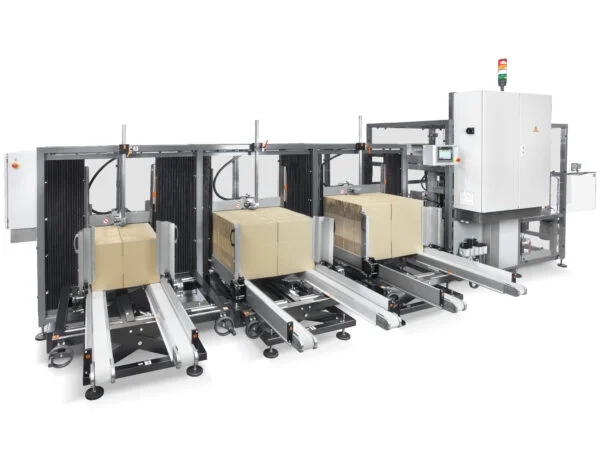

Carton preparation is an essential step in many packaging operations. Before products can be packed into shipping boxes, flat corrugated blanks must be opened, shaped, folded, and sealed into usable cartons. When this work is performed manually, it can consume valuable production time, require repetitive labor, and create inconsistencies in carton quality. As manufacturing facilities look for ways to improve efficiency, automating carton setup has become an important part of packaging line optimization.
A Case Erector Machine automates the process of turning flat carton blanks into ready-to-fill boxes. Instead of relying on employees to assemble each carton individually, the equipment performs key operations such as carton opening, bottom flap folding, and sealing. This allows packaging lines to maintain a more consistent supply of empty cartons while reducing manual preparation work.
Understanding How a Case Erector Machine Works
A case erector is designed to transform flat corrugated cardboard blanks into fully formed cartons. These blanks are typically stored in a magazine and automatically fed into the machine when required.
The equipment uses a coordinated sequence of mechanical and pneumatic movements to open each blank, establish its rectangular shape, fold the bottom flaps, and secure the base.
A typical operating cycle includes the following steps:
- Carton blank feeding: Flat cardboard blanks are stored in a magazine and supplied individually to the machine.
- Carton opening: A mechanical or vacuum-based system picks up a blank and opens it into the required box shape.
- Positioning: The opened carton is held in position to ensure accurate flap folding.
- Bottom flap folding: The lower flaps are folded into place to create a stable carton base.
- Bottom sealing: Adhesive or pressure-sensitive tape is applied to secure the bottom.
- Carton discharge: The completed carton moves toward the filling or packing station.
This automated sequence helps ensure that cartons are prepared in a repeatable manner and delivered to the next production stage.
Reducing Manual Carton Preparation
One of the main advantages of automated carton erection is the reduction of repetitive manual tasks. In traditional packaging environments, employees may need to open flat boxes, fold flaps, and seal the bottoms throughout the production shift.
These activities can become time-consuming when packaging volumes are high. They may also take workers away from tasks that require closer supervision or quality control.
By automating carton preparation, manufacturers can reduce the amount of direct labor required for routine box assembly. Operators can instead focus on monitoring equipment performance, replenishing carton blanks, checking packaging quality, and managing material flow.
This can improve workforce utilization while making carton setup more predictable.
Maintaining a Consistent Supply of Ready-to-Fill Cartons
Packaging lines depend on a steady flow of prepared cartons. If empty boxes are not available when products reach the packing station, production may slow down or stop.
Manual carton assembly can create fluctuations in supply because preparation speed depends on employee availability and working pace.
An automatic case erector helps address this challenge by producing cartons at a controlled rate. When properly synchronized with downstream filling and packing equipment, it can provide a more dependable supply of boxes.
Consistent carton availability is particularly useful in facilities where products move continuously through automated packaging stages.
Improving Carton Quality and Accuracy
Proper carton formation is important for product protection and reliable transportation. Poorly folded flaps, uneven carton shapes, or incorrectly sealed bottoms can create problems during filling, conveying, stacking, and shipping.
Automated case erection helps reduce these inconsistencies by using controlled mechanical movements to open and fold cartons.
The benefits may include:
- More uniform carton dimensions.
- Consistent bottom flap positioning.
- Reliable sealing application.
- Reduced variation caused by manual assembly.
- Better compatibility with automated filling and conveying systems.
The final carton quality still depends on factors such as corrugated board condition, blank dimensions, machine adjustment, and adhesive or tape selection. Regular inspection and maintenance remain important.
Supporting Faster Packaging Operations
As production demand increases, manufacturers need packaging equipment that can keep pace with upstream processing. Manual carton setup can become a bottleneck when employees cannot prepare boxes quickly enough for the filling station.
An automatic case erector helps improve this stage by preparing multiple cartons through a repeatable operating cycle. Depending on the machine model and carton specifications, it can support different production speeds and packaging requirements.
For effective performance, the equipment should be selected according to the required carton output rather than its maximum advertised speed alone. The case erector must also work in coordination with product loading, case packing, and downstream conveying systems.
Saving Floor Space and Improving Material Organization
Flat carton blanks generally require less storage space than fully assembled empty boxes. A case erector takes advantage of this by storing flat blanks in a magazine and forming cartons only when they are needed.
This arrangement can simplify packaging material storage and reduce the space required for pre-assembled cartons near the production line.
It can also support better organization by establishing a defined location for carton replenishment and completed box discharge.
The actual space savings depend on carton sizes, magazine capacity, production volume, and the facility’s existing material handling arrangement.
Integrating Case Erection with Other Packaging Equipment
A case erector is often one part of a larger automated packaging system. Its effectiveness depends on how well it connects with the equipment before and after it.
A typical packaging line may include:
- Carton magazine: Holds flat corrugated blanks for automatic feeding.
- Case erector: Opens and forms cartons and seals their bottoms.
- Product filling station: Loads products into prepared cartons.
- Case sealer: Closes and seals the upper carton flaps after filling.
- Conveyor system: Transfers cartons between packaging stages.
- Palletizing equipment: Arranges completed cases for storage and transportation.
When these machines operate in coordination, manufacturers can establish a more continuous packaging process.
Proper line integration should account for carton discharge height, conveyor speed, sensor placement, production capacity, and communication between equipment controls. This helps reduce accumulation and prevents one machine from restricting the performance of another.
Industries That Benefit from Automated Case Erection
Case erection technology is useful in manufacturing environments where products are packed into corrugated shipping cartons.
Food and Beverage
Food processors and beverage manufacturers use corrugated cartons to prepare packaged products for distribution. Automated case erection helps supply empty cartons for compatible product packaging formats and supports high-volume production environments.
Pharmaceuticals and Healthcare
Pharmaceutical facilities often use secondary packaging to organize medicine cartons and healthcare products for shipment. Automated carton preparation can reduce repetitive handling, provided the equipment meets the facility’s hygiene and operational requirements.
Personal Care and Cosmetics
Manufacturers of skincare products, toiletries, and cosmetics frequently handle multiple carton sizes and product configurations. Suitable case erectors can help prepare boxes consistently for different packaging runs.
Household and Consumer Goods
Businesses producing cleaning products, household accessories, and other consumer goods can use automated carton erection to improve the availability of shipping boxes and reduce manual setup activities.
Important Factors When Choosing a Case Erector
Selecting suitable equipment requires more than comparing machine speeds. Manufacturers should evaluate their packaging requirements and production environment before making a decision.
Carton Size Range: Confirm that the machine supports the minimum and maximum carton dimensions used in the facility.
Production Capacity: Choose equipment that can meet the required carton output while allowing sufficient operating flexibility.
Carton Material: Corrugated board quality, thickness, and blank consistency can affect feeding and carton formation.
Sealing Method: Determine whether tape or hot-melt adhesive is more appropriate for the carton design and shipping requirements.
Changeover Convenience: Facilities handling multiple carton sizes should consider how easily operators can adjust machine settings.
Machine Integration: Check compatibility with existing conveyors, filling equipment, case packers, and control systems.
Maintenance Requirements: Accessible components, available spare parts, and straightforward servicing can help support reliable long-term operation.
Maintenance Practices for Reliable Performance
Regular maintenance helps keep a case erector operating consistently. Dust, cardboard particles, worn suction cups, and incorrect mechanical adjustments can affect carton feeding and formation.
A basic maintenance routine should include:
- Inspecting carton feeding and pickup components.
- Cleaning vacuum cups, sensors, and contact surfaces.
- Checking belts, chains, and moving mechanical parts.
- Inspecting tape heads or adhesive application systems.
- Verifying folding mechanisms and carton alignment.
- Monitoring pneumatic connections and air pressure.
- Replacing worn components according to maintenance schedules.
Operators should also monitor carton quality during production. Early identification of feeding problems, incomplete folds, or sealing defects can help prevent repeated packaging interruptions.
Conclusion
Automating carton setup can make a meaningful difference to packaging line performance. By opening flat blanks, folding carton flaps, and sealing box bottoms automatically, a case erector reduces repetitive manual work and provides a more consistent supply of ready-to-fill cartons.
Its benefits extend beyond faster box preparation. Improved carton uniformity, organized material handling, and integration with downstream packaging equipment can help manufacturers create a more efficient production process.
Choosing the right machine requires careful consideration of carton dimensions, production requirements, sealing methods, operating conditions, and maintenance needs. With suitable equipment and proper line integration, automated case erection can become a valuable part of a reliable and productive packaging operation.