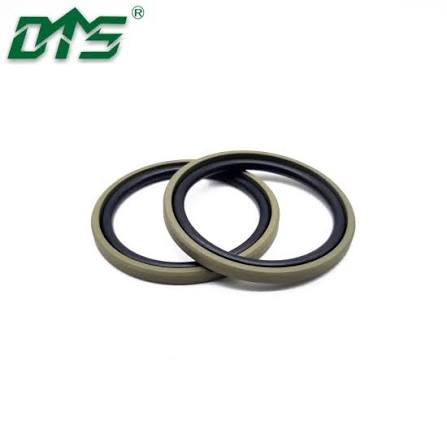

Hydraulic seals are essential components in systems that rely on pressurized fluids to generate movement and mechanical force. They prevent fluid leakage, maintain pressure, and protect internal components from dust, moisture, and other contaminants. Their performance directly affects the efficiency, reliability, and service life of hydraulic equipment used across various industries.
The manufacturing of hydraulic seals involves several carefully controlled stages, beginning with product design and material selection and continuing through production, inspection, and testing. A professional Hydraulic Seals Manufacturer must consider application requirements, operating conditions, material properties, and dimensional accuracy to produce sealing components that perform consistently in demanding environments.
1. Understanding Application Requirements Before Design
The first stage of hydraulic seal manufacturing is identifying where and how the seal will be used. Different hydraulic systems operate under different conditions, so manufacturers must understand the application before developing a suitable design.
Engineers generally evaluate several important operating parameters:
-
Operating pressure: Determines the pressure resistance required from the seal.
-
Temperature range: Influences material selection and dimensional stability.
-
Hydraulic fluid: Helps identify materials that are chemically compatible with the operating fluid.
-
Movement speed: Affects friction, heat generation, and wear.
-
Environmental conditions: Determines whether the seal needs additional resistance to dust, moisture, or contaminants.
-
Equipment dimensions: Provides the measurements needed to develop a properly fitting component.
Collecting this information early helps reduce design errors and supports better product performance.
2. Hydraulic Seal Design and Engineering
Once the application requirements are understood, engineers begin developing the seal design. This stage involves selecting the appropriate sealing profile, calculating dimensions, and determining how the component will interact with surrounding equipment.
Different hydraulic applications require different seal configurations.
Designing Piston Seals
Piston seals are designed to prevent hydraulic fluid from passing between the piston and cylinder bore. Their geometry must support effective sealing while allowing the piston to move smoothly.
Designing Rod Seals
Rod seals prevent fluid from escaping along the moving piston rod. Engineers consider contact pressure, friction, rod speed, and operating conditions when developing their profiles.
Designing Wiper Seals
Wiper seals are designed to remove dirt and other contaminants from the piston rod as it enters the hydraulic cylinder. Their shape must provide effective cleaning without creating excessive friction.
Designing Static Seals
Static seals are developed for stationary connections where components do not move relative to one another. Their dimensions and compression characteristics are important for maintaining a reliable seal.
Computer-aided design (CAD) software helps engineers develop accurate profiles and evaluate dimensional relationships. More advanced projects may also use finite element analysis (FEA) to simulate material behavior under different operating conditions.
Introduction to fluid power+1
3. Selecting the Right Materials
Material selection is one of the most important stages because the physical and chemical properties of a seal influence its durability and performance.
Manufacturers consider operating conditions, fluid compatibility, temperature resistance, mechanical strength, and expected service life before selecting a material.
Common materials used in hydraulic seal production include:
| Material | Main Characteristics | Common Applications |
|---|---|---|
| Nitrile Rubber (NBR) | Good resistance to many petroleum-based oils | General hydraulic systems |
| Polyurethane (PU) | High abrasion resistance and mechanical strength | Heavy-duty hydraulic cylinders |
| PTFE | Low friction and chemical resistance | Specialized sealing applications |
| FKM | Good high-temperature and chemical resistance | Demanding industrial environments |
| EPDM | Suitable for certain water-based fluids | Compatible fluid applications |
The selected material must match the intended operating environment. For example, a seal designed for petroleum-based hydraulic oil may not be suitable for a water-based hydraulic fluid.
Manufacturers may also use different additives and compound formulations to achieve specific hardness, flexibility, and wear-resistance characteristics.
4. Raw Material Preparation and Compounding
After selecting the material, the next stage involves preparing the raw materials for production.
For rubber and elastomeric seals, this process may include mixing the base polymer with additives, fillers, processing agents, and curing ingredients.
This process is commonly known as compounding.
The objective is to create a consistent material mixture with the properties required by the product design.
Important considerations during compounding include:
-
Material composition and consistency.
-
Hardness requirements.
-
Tensile strength and flexibility.
-
Resistance to wear and deformation.
-
Compatibility with hydraulic fluids.
-
Appropriate curing characteristics.
Proper mixing is essential because inconsistent material composition can affect the quality of the finished seals.
For thermoplastic and PTFE-based products, preparation methods may differ depending on the manufacturing process and material grade.
5. Choosing the Appropriate Manufacturing Method
The manufacturing method depends on the seal’s material, dimensions, shape, production quantity, and required precision.
Several techniques are commonly used in hydraulic seal production.
Compression Molding
Compression molding involves placing prepared rubber material inside a heated mold. Pressure and heat are applied to shape the material according to the mold cavity.
The material undergoes curing inside the mold, allowing it to develop the required physical characteristics.
This method is commonly used for producing rubber sealing components in different shapes and sizes.
Injection Molding
Injection molding involves feeding prepared material into a heated mold cavity through an injection system.
The process allows manufacturers to produce multiple components with consistent shapes and dimensions. It is particularly useful for applications requiring repeatable production.
Precision CNC Machining
CNC machining is used to manufacture seals by cutting profiles from suitable raw material stock.
Computer-controlled equipment follows programmed dimensions to produce the required sealing geometry.
This technique is useful for customized seals, prototypes, replacement components, and smaller production quantities. It can also reduce the need for dedicated molds in certain applications.
The choice between molding and machining depends on production requirements, material characteristics, tooling costs, and dimensional specifications.
FPE Seals+1
6. Molding, Curing, and Shaping
For molded rubber seals, shaping is followed by a controlled curing process.
During curing, heat and pressure help the rubber compound develop its intended mechanical properties. The correct curing conditions are important for achieving consistent hardness, elasticity, and resistance to deformation.
The process varies according to the material formulation and product design.
Once the curing stage is complete, the molded component is removed from the production tool. Manufacturers then check whether the product has achieved the required shape and whether any visible manufacturing defects are present.
Thermoplastic and machined materials follow different processing routes, so their finishing requirements may not involve the same curing procedures.
7. Trimming and Surface Finishing
After molding, some hydraulic seals contain excess material around their edges. This material, commonly called flash, must be removed to achieve the intended profile.
Finishing operations may include:
-
Mechanical trimming.
-
Manual removal of excess material.
-
Precision cutting.
-
Surface finishing.
-
Deburring and edge inspection.
-
Final dimensional adjustments.
This stage is important because unwanted material can interfere with installation or affect sealing contact.
Manufacturers must ensure that the finished product maintains the correct profile and surface condition before moving to final inspection.
8. Dimensional Inspection and Quality Control
Quality control ensures that manufactured hydraulic seals meet the required technical specifications.
Even small dimensional differences can affect installation, friction, and sealing performance. Therefore, manufacturers use measurement equipment and inspection procedures to evaluate finished components.
Common quality checks include:
Dimensional Measurement: Verifies the inner diameter, outer diameter, cross-section, and other specified dimensions.
Hardness Testing: Checks whether the material has the required hardness.
Visual Inspection: Identifies cracks, surface imperfections, incomplete molding, and other visible defects.
Material Testing: Evaluates selected physical properties and material consistency.
Profile Inspection: Confirms that the finished sealing geometry matches the design requirements.
Inspection frequency depends on the product, manufacturing process, and quality plan. Some characteristics may be checked through sampling, while critical dimensions may require more frequent or automated monitoring.
9. Performance Testing Under Operating Conditions
Dimensional accuracy is important, but a seal must also perform correctly under actual working conditions.
Manufacturers may conduct specialized performance tests to evaluate how a sealing component responds to pressure, movement, temperature, and hydraulic fluids.
Typical evaluations include:
-
Pressure resistance testing.
-
Leakage performance testing.
-
Friction and wear testing.
-
Temperature resistance evaluation.
-
Compression set testing.
-
Fluid compatibility assessment.
-
Durability testing under repeated movement.
These tests help determine whether the product is suitable for its intended application.
Testing conditions should reflect the equipment’s expected operating environment whenever possible. A seal that performs well under basic inspection conditions may behave differently when exposed to continuous pressure, high temperatures, or repeated movement.
10. Packaging, Storage, and Product Delivery
Once the products pass the required inspections, they are prepared for packaging and delivery.
Proper packaging helps protect seals from dust, moisture, direct sunlight, deformation, and other storage-related problems.
Manufacturers may organize products according to size, material, product type, and batch number. Clear identification makes it easier for industrial customers to manage inventory and select the correct replacement components.
Storage conditions also matter. Certain elastomers can deteriorate when exposed to excessive heat, ultraviolet radiation, ozone, or unsuitable environmental conditions.
Following appropriate storage recommendations helps preserve product quality before installation.
Factors That Influence Hydraulic Seal Manufacturing Quality
Several factors contribute to the overall quality of a finished hydraulic seal. Understanding them helps buyers evaluate manufacturing processes more effectively.
| Manufacturing Factor | Impact on Product Quality |
|---|---|
| Material selection | Determines chemical compatibility and durability |
| Design accuracy | Supports proper fit and sealing contact |
| Production method | Influences dimensional consistency and manufacturing efficiency |
| Curing conditions | Affect the physical properties of molded elastomers |
| Surface finishing | Helps prevent installation and sealing problems |
| Quality inspection | Identifies dimensional and material defects |
| Performance testing | Evaluates suitability for operating conditions |
These factors work together. A high-quality material cannot compensate for an incorrect design, and accurate manufacturing cannot guarantee performance if the selected material is unsuitable.
Challenges in Hydraulic Seal Manufacturing
Producing dependable hydraulic seals involves several technical challenges that manufacturers must address throughout the production process.
Maintaining Dimensional Accuracy
Seals must fit correctly within their designated grooves and housings. Manufacturing variations can create excessive friction, insufficient contact, or leakage.
Preventing Material Defects
Incorrect material preparation or processing conditions may result in inconsistent hardness, deformation, or reduced mechanical strength.
Managing High-Pressure Applications
High operating pressures can increase the risk of seal extrusion and damage. Engineers must consider the seal profile, material properties, and extrusion gaps during product development.
Balancing Friction and Sealing Performance
A seal needs sufficient contact to prevent leakage, but excessive friction can generate heat and accelerate wear.
Maintaining Production Consistency
Manufacturers must control processes carefully to ensure that products from different production batches maintain consistent specifications.
Addressing these challenges requires engineering expertise, suitable production equipment, and effective quality management.
The Importance of Working with an Experienced Manufacturer
An experienced manufacturer can help businesses identify suitable sealing products for their machinery and operating requirements.
Beyond production, technical knowledge is important when selecting materials, developing custom profiles, and resolving sealing problems.
Industrial buyers should evaluate a manufacturer’s:
-
Experience with different hydraulic seal types.
-
Material selection and processing capabilities.
-
Manufacturing equipment and production methods.
-
Quality inspection and testing procedures.
-
Ability to develop customized products.
-
Technical documentation and customer support.
These considerations help businesses assess whether a manufacturer can consistently meet their technical and purchasing requirements.
Conclusion
The hydraulic seal manufacturing process involves several interconnected stages, from understanding application requirements and developing product designs to material preparation, production, finishing, and quality testing.
Every stage contributes to the performance and reliability of the finished sealing component. Proper material selection, accurate dimensions, suitable manufacturing techniques, and thorough inspections are essential for producing seals that meet industrial operating requirements.
Understanding how hydraulic seals are manufactured also helps equipment designers, maintenance professionals, and purchasing managers make better decisions when sourcing sealing products. By evaluating manufacturing capabilities and quality control practices, businesses can select suitable components that support efficient equipment operation and long-term reliability.
Further reading: How to Design and Produce a Good Hydraulic Seal provides additional information about seal design, material selection, and production considerations.