
Designing an efficient galvanizing facility requires careful planning, as the arrangement of equipment directly influences production flow, safety, and coating quality. Every section of the plant must be positioned in a logical sequence to support smooth material movement and stable operation.
A properly planned hot dip galvanizing line ensures that steel passes through each treatment stage without interruption, reducing handling time and improving overall efficiency. Plant layout decisions also affect maintenance access, energy use, and long-term operating costs.
Importance of Plant Layout in Galvanizing Facilities
The layout of a galvanizing plant is not only about placing machines in a row. It is about creating a continuous flow where each stage supports the next.
A well-organized layout helps achieve:
- Smooth material handling
- Reduced production delays
- Improved worker safety
- Easier maintenance access
- Better energy utilization
Poor layout design can cause bottlenecks, increased handling time, and unnecessary operational complexity.
Material Flow and Process Sequence
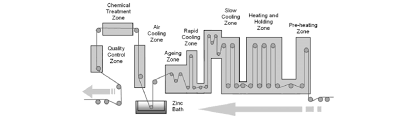
One of the most important design principles is maintaining a clear and logical material flow. Steel must move in a straight or minimally interrupted path through all process stages.
Typical flow includes:
- Surface cleaning zones
- Chemical treatment sections
- Drying and heating areas
- Zinc coating zone
- Cooling and finishing line
Each section should be positioned to minimize backtracking or unnecessary movement.
Equipment Arrangement and Space Allocation
Proper spacing between equipment is essential for safe and efficient operation. Each machine requires enough room for operation, inspection, and maintenance.
Key considerations include:
- Sufficient clearance for steel handling
- Safe distance between hot and chemical zones
- Space for maintenance tools and access
- Avoiding congestion in high-traffic areas
Good space planning improves both productivity and workplace safety.
Furnace and Heating Zone Placement
The furnace section is one of the largest and most energy-intensive parts of the plant. Its placement must support safe operation and efficient heat management.
Important design points:
- Proper insulation from surrounding areas
- Controlled ventilation for heat release
- Easy access for maintenance work
- Safe separation from chemical treatment zones
Correct positioning helps reduce heat loss and improves energy efficiency.
Zinc Bath Area Design Considerations
The zinc bath is the core of the galvanizing process and requires special attention in layout planning. It must be located in a stable and secure area with controlled access.
Key requirements include:
- Strong structural foundation to support heavy load
- Safety barriers around high-temperature zones
- Easy crane or lifting access for steel handling
- Proper ventilation to manage fumes and heat
A well-designed bath area ensures stable operation and worker protection.
Chemical Treatment Section Planning
Pickling and fluxing areas involve the use of acids and chemical solutions. These zones must be carefully separated from heating and coating areas.
Design considerations include:
- Corrosion-resistant flooring and structures
- Effective drainage systems
- Ventilation for chemical fumes
- Safe storage for chemical materials
Proper isolation of chemical zones improves safety and environmental control.
Material Handling Systems and Transport Flow
Efficient movement of steel between stages is essential for continuous production. Mechanical handling systems must be integrated into the layout design.
Common systems include:
- Overhead cranes
- Roller conveyors
- Lifting equipment
- Transfer platforms
These systems should be arranged to minimize manual handling and reduce delays.
Maintenance Access and Operational Safety
A good plant layout always considers future maintenance needs. Equipment must be accessible without disrupting surrounding operations.
Important planning points:
- Clear walkways for maintenance staff
- Access points for inspection tools
- Safe shutdown zones for repairs
- Separation of maintenance and production areas
Easy access reduces downtime and improves equipment lifespan.
Expansion Possibilities and Future Planning
Industrial plants often require expansion as production demand increases. Therefore, flexibility must be included in the initial design.
Planning should allow:
- Space for additional equipment
- Extension of processing lines
- Upgrading of automation systems
- Increased storage capacity
A flexible layout supports long-term industrial growth.
Conclusion
Plant design plays a crucial role in the efficiency, safety, and productivity of galvanizing operations. Every section must be carefully positioned to support continuous flow and stable processing conditions.
A well-planned hot dip galvanizing line ensures smooth coordination between all stages of production. By focusing on layout efficiency and operational balance, manufacturers can achieve reliable performance and long-term production stability.