

Introduction
A cottage-style bedroom isn’t about chasing trends—it’s about creating a space that feels warm, relaxed, and genuinely lived in. In interior design, this style stands out for its simplicity and comfort, drawing inspiration from countryside living. A well-designed bedroom in this style should feel effortless, as if everything belongs there naturally. The key is to focus on practical design ideas that bring comfort and character into everyday life.
Understanding the Cottage Style
Cottage style, often linked to cottage, is rooted in softness, natural materials, and a slightly imperfect look. It avoids anything too polished or overly styled. Instead, the charm comes from layering textures, mixing materials, and allowing the space to feel personal.
In bedroom design, this means prioritizing comfort over formality. The space should invite you to relax, not impress. Good interior design in this context is subtle—it works quietly in the background while making the room feel complete.
Practical Design Ideas for a Cottage-Style Bedroom
1. Use Light, Neutral Colors as a Base
Start with a simple color palette—warm white, soft beige, or light grey walls work well. These tones reflect natural light and make the bedroom feel open and calm. You can then add subtle color through bedding, cushions, or a throw blanket. Soft greens or faded blues are especially effective in cottage-style interiors.
2. Choose Comfortable, Lived-In Furniture
Avoid overly sleek or modern furniture. Instead, look for pieces that feel slightly worn or handmade. A wooden bed frame with a matte or distressed finish works well as a centerpiece. Pair it with a simple bedside table and maybe a small bench or chair. The goal is to make the bedroom feel approachable and easy to use every day.
3. Layer Bedding for Warmth and Texture
One of the easiest cottage bedroom design ideas is to focus on bedding. Use cotton or linen sheets, add a quilt or blanket, and finish with a few soft pillows. Don’t worry about everything matching perfectly—slight variation makes the bed feel more natural and inviting.
4. Add Soft Textiles Throughout the Room
Textiles play a big role in making a bedroom feel cozy. A woven rug under the bed, light curtains, and fabric lampshades can soften the space. These elements also help balance harder surfaces like wood or flooring, which is important in interior design for creating comfort.
5. Bring in Natural Elements
Cottage style is closely connected to nature. Adding a small plant, fresh flowers, or even dried branches can make a big difference. These details don’t need to be elaborate—they just help the room feel alive and grounded.
6. Keep Storage Simple and Visible
Instead of hiding everything away, use open or semi-open storage. A simple shelf with books, a few decorative objects, or a woven basket can add both function and character. This approach keeps the bedroom practical while still feeling relaxed.
7. Use Warm, Layered Lighting
Lighting should feel soft, not harsh. A bedside lamp with warm light is essential, and adding a second light source—like a wall sconce or floor lamp—can make the room feel more comfortable in the evening. Good lighting is often overlooked, but it plays a big role in how a bedroom feels.
Case Study
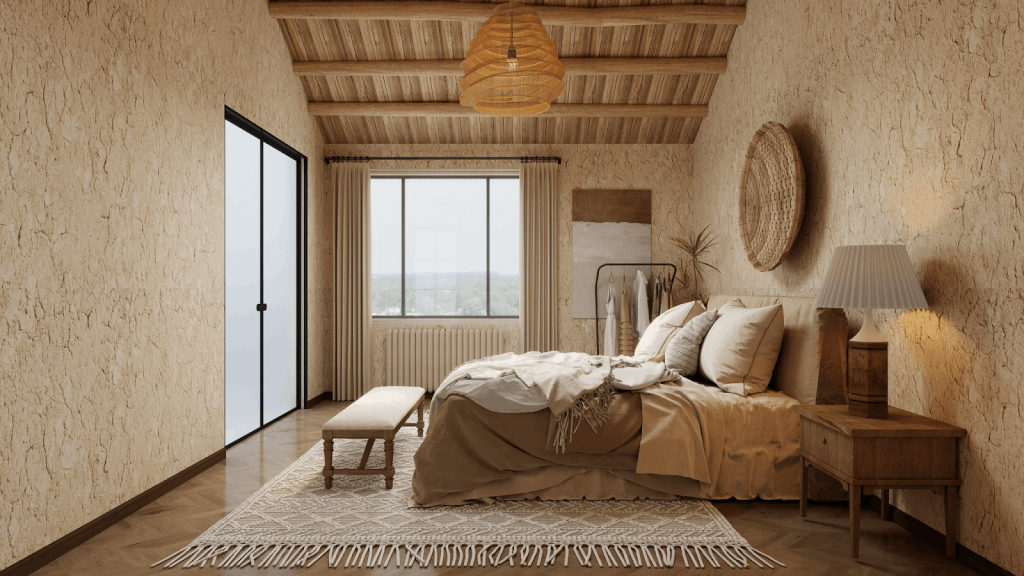
This bedroom is a refined expression of cottage-style, where warmth, texture, and simplicity come together in a very grounded way. The interior design avoids anything overly polished, instead focusing on natural materials and a calm, earthy palette that makes the space feel comfortable and lived in.
The use of textured plaster walls and exposed wooden ceiling beams immediately sets the tone. These elements give the bedroom a strong sense of character while staying true to the essence of cottage-inspired design ideas. The warm beige and soft brown tones create a cohesive backdrop, allowing light to move gently through the space and enhancing its relaxed atmosphere.
Furniture is kept simple and functional. The wooden bedside table, upholstered bench, and soft layered bedding all contribute to a space that feels approachable rather than styled. The bed itself becomes the visual anchor, dressed in natural fabrics that add depth without overwhelming the room. This kind of layering is a key part of good interior design, especially in a cottage-style bedroom where comfort is the priority.
The decor is subtle but intentional. Woven wall pieces, soft textiles, and a few organic accents introduce texture and visual interest without clutter. The lighting, particularly the woven pendant and soft bedside lamp, adds warmth and reinforces the cozy mood.
Overall, this bedroom reflects thoughtful design ideas that focus on balance and authenticity. It shows how cottage-style can be translated into a modern interior design setting—creating a bedroom that feels peaceful, inviting, and naturally connected to its surroundings.
Conclusion
Designing a cottage-style bedroom is really about making thoughtful, practical choices. By focusing on comfort, natural materials, and simple design ideas, you can create a space that feels both functional and inviting.
In the end, a good bedroom doesn’t need to be perfect—it just needs to feel right. That’s what cottage style does best: it turns everyday interior design into something warm, personal, and easy to live with.

