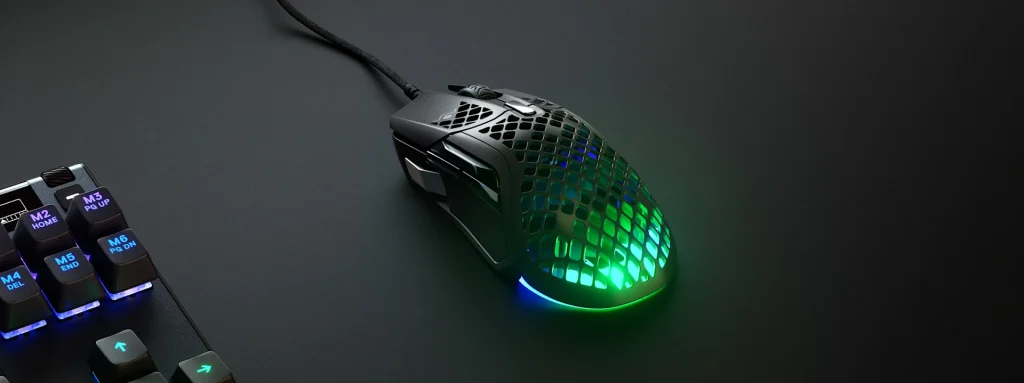

Lightweight gaming mice have become a major trend in competitive gaming, especially for fast-paced FPS titles where speed and precision matter most. By reducing weight, these mice allow smoother flicks, quicker aim adjustments, and less fatigue during long sessions. In modern esports, even a few grams can influence reaction time and control.
Many of the best lightweight gaming mice now focus on ultra-low weight designs combined with high-end sensors and wireless performance, making them a top choice for competitive and casual players alike.
Why Lightweight Gaming Mice Matter
The main advantage of a lightweight mouse is reduced inertia. This means your hand requires less effort to start, stop, and change direction while aiming.
In practical terms, lighter mice help with:
- Faster flick shots in FPS games
- Improved tracking consistency
- Reduced wrist and arm fatigue
- Better control during rapid movements
Industry testing shows that modern lightweight designs under 60g are now considered ideal for competitive play, with some esports mice going even lower for maximum speed.
Ideal Weight Range for Gaming Performance
Not all players need the lightest mouse possible. The best weight depends on grip style, sensitivity settings, and personal preference.
Typical competitive ranges include:
- 35–50g: Ultra-light, best for advanced FPS players
- 50–70g: Balanced range for most gamers
- 70g+: More stability for palm grip users
This balance ensures you get speed without losing control, especially in tactical shooters like Valorant or CS2.
Key Features to Look For
Sensor Accuracy
A high-quality sensor ensures consistent tracking without jitter or acceleration. Modern lightweight mice often use advanced optical sensors designed for esports-grade precision.
Polling Rate
Higher polling rates (1000Hz–8000Hz) reduce input delay, making movements feel more responsive and immediate.
Shape and Grip Style
Even the lightest mouse won’t perform well if it doesn’t match your grip:
- Claw grip: compact, slightly curved mice
- Fingertip grip: ultra-light and small shells
- Palm grip: slightly larger lightweight models
Build Quality
Reducing weight often involves thinner materials or honeycomb designs, but good models still maintain strong structural integrity.
Popular Types of Lightweight Gaming Mice
Ultra-Light Esports Mice
These prioritize extreme weight reduction, often below 40g, designed for professional-level FPS performance.
Balanced Lightweight Mice
These fall in the 45–60g range and offer a mix of comfort, stability, and speed—ideal for most gamers.
Wireless Lightweight Mice
Modern wireless tech now matches wired performance with near-zero latency and excellent battery efficiency, removing cable drag entirely.
Pros and Cons of Lightweight Gaming Mice
Advantages
- Faster and more responsive aiming
- Easier micro-adjustments
- Less fatigue during long gaming sessions
- Ideal for competitive FPS gameplay
Limitations
- Can feel too sensitive for new users
- May lack the “solid” feel of heavier mice
- Some ultra-light models reduce features to save weight
Who Should Use a Lightweight Mouse?
Lightweight gaming mice are best suited for:
- Competitive FPS players who rely on fast reflexes
- Gamers who use low sensitivity settings
- Users who experience wrist fatigue with heavier mice
- Players looking to improve flick accuracy and speed
Tips for Choosing the Right One
- Don’t chase the lowest weight blindly
Control and comfort matter just as much as grams. - Match the mouse to your grip style
Shape is just as important as weight. - Consider wireless options
Modern wireless mice now perform just as well as wired ones. - Balance speed and stability
Extremely light mice may feel unstable for some users.
Final Thoughts
Lightweight gaming mice are designed to give players a competitive edge by improving speed, precision, and comfort. However, the best choice is not always the lightest option—it’s the one that fits your grip, sensitivity, and playstyle. With today’s advancements in sensors and wireless technology, lightweight mice offer a powerful combination of performance and control that suits a wide range of gamers.