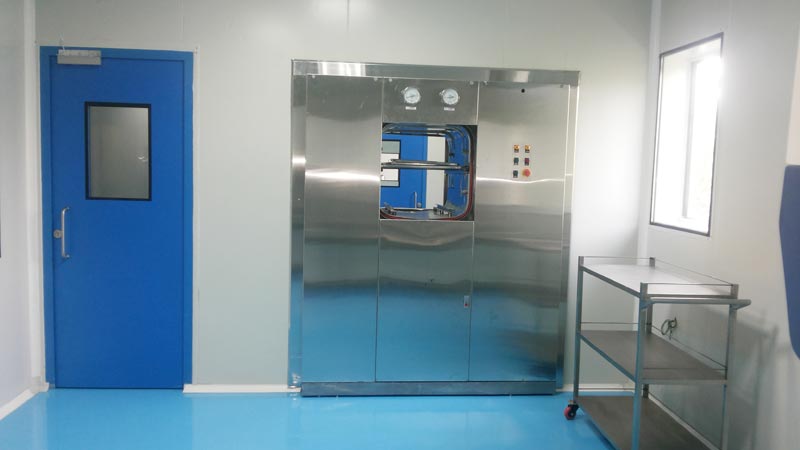

High-tech manufacturing industries operate in environments where precision, cleanliness, and process stability are non-negotiable. From semiconductor fabrication and microelectronics to advanced medical devices and aerospace components, even microscopic contamination can cause product failure, reduced efficiency, or costly production losses. As a result, cleanroom environments have become a foundational requirement for modern high-tech production systems.
However, building and maintaining such controlled environments is a highly complex task. It requires coordination between multiple engineering disciplines, strict regulatory compliance, and precise environmental control systems. To simplify this process, many manufacturers are shifting toward integrated project delivery models that combine all stages of cleanroom development into a single streamlined system.
A Turnkey Cleanroom offers this complete solution by managing the entire lifecycle of cleanroom development—from design and engineering to construction, installation, validation, and final handover. This fully integrated approach is one of the key reasons why turnkey cleanrooms are becoming increasingly popular in high-tech manufacturing industries.
High-Tech Manufacturing Demands Extreme Precision
Unlike conventional production environments, high-tech manufacturing requires extremely tight control over environmental conditions. In semiconductor fabrication, for example, even a single dust particle can damage microchips. Similarly, in aerospace and optical industries, contamination can affect performance, durability, and safety.
These industries rely on:
- Ultra-clean air environments with advanced filtration
- Precise temperature and humidity control
- Static and particle-free production zones
- Strict contamination control protocols
Because of these demands, traditional construction methods often fall short in delivering the required level of precision and consistency.
Integrated Delivery Reduces Engineering Complexity
One of the main reasons turnkey cleanrooms are preferred in high-tech manufacturing is the reduction in project complexity. Traditional cleanroom projects involve multiple contractors handling design, HVAC systems, electrical work, and validation separately, which increases the risk of miscommunication and design inconsistencies.
A turnkey approach eliminates these challenges by integrating all disciplines under one coordinated system. This ensures that every technical component is aligned from the beginning.
Key advantages include:
- Unified engineering and design coordination
- Reduced risk of system incompatibility
- Faster decision-making during project execution
- Improved alignment between design and operational needs
This integration is particularly important for high-tech environments where even minor errors can have significant consequences.
Faster Time-to-Market for Critical Products
In high-tech industries, speed is often a competitive advantage. Delays in facility construction can directly impact product launch timelines and market competitiveness. Traditional multi-vendor cleanroom projects often suffer from scheduling conflicts and extended timelines.
Turnkey delivery significantly reduces project duration by streamlining all phases under a single schedule. Design, manufacturing, and installation can overlap efficiently, reducing idle time between stages.
This leads to:
- Faster facility readiness
- Reduced production launch delays
- Improved return on investment
- Better alignment with market demand cycles
For industries like semiconductors and electronics, where product cycles are short, this advantage is particularly valuable.
Superior Environmental Control and System Integration
High-tech manufacturing requires highly stable environmental conditions to ensure product quality and consistency. Turnkey cleanroom systems are designed with integrated HVAC and filtration solutions that provide precise control over air quality and environmental parameters.
These systems typically include:
- HEPA and ULPA filtration for particle control
- Advanced airflow management systems
- Pressure cascade control between clean zones
- Real-time environmental monitoring systems
Because all systems are designed and installed within a unified framework, performance consistency is significantly improved compared to fragmented construction approaches.
Enhanced Quality Control and Reliability
Quality control is critical in high-tech manufacturing, where even small deviations can lead to significant losses. Turnkey cleanrooms ensure that quality is maintained throughout every stage of development.
This is achieved through:
- Factory-controlled manufacturing of modular components
- Standardized installation procedures
- Continuous quality inspections during construction
- Integrated testing and validation processes
By maintaining consistent standards across all phases, turnkey delivery improves long-term reliability and operational stability.
Simplified Compliance and Certification
High-tech industries must comply with strict international standards, including ISO classifications and industry-specific regulations. Managing compliance across multiple contractors can be challenging and time-consuming.
Turnkey systems simplify compliance by integrating it into the entire project lifecycle. Documentation, testing, and validation are handled systematically, ensuring smooth certification processes.
This includes:
- Installation and operational qualification (IQ/OQ)
- Performance qualification (PQ)
- Environmental monitoring and testing
- Comprehensive compliance documentation
This structured approach reduces regulatory risks and simplifies audit preparation.
Scalability for Future Expansion
High-tech manufacturing facilities often need to scale quickly to meet growing demand or accommodate new technologies. Turnkey cleanroom systems are designed with modularity and flexibility in mind, making future expansion easier and more cost-effective.
Scalability benefits include:
- Modular construction for easy expansion
- Flexible system upgrades without major redesign
- Reduced downtime during facility modifications
- Adaptability to new production technologies
This ensures that facilities remain future-ready in rapidly evolving industries.
Conclusion
Turnkey cleanrooms have become increasingly popular in high-tech manufacturing because they address the industry’s core challenges: precision, speed, compliance, and reliability. By integrating all project stages into a single coordinated system, they reduce complexity while improving performance and consistency.
As high-tech industries continue to evolve and demand more advanced production environments, the turnkey approach provides a scalable, efficient, and highly controlled solution that supports long-term manufacturing success.